
Reviewed · SHINSEKAI & TSUTENKAKU TOURS
Osaka: Shinsekai Food Tour – 13 Dishes at 5 Local Eateries
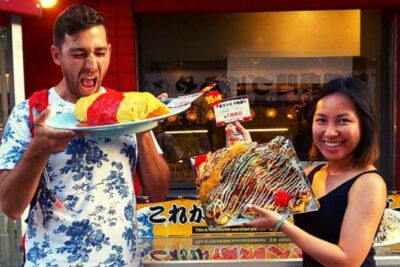
Neon at street level makes Osaka feel real fast. On this evening Shinsekai walk, you follow a guide through retro lanes and tasting stops that add up to 13 dishes across five local eateries in about three hours.
What I like most is the mix of food plus place: you’re not just eating, you’re learning why these spots work in everyday Osaka life. I also appreciate how clearly the better English-speaking guides explain what you’re having, from shrines to fried favorites like a crowd-pleasing chicken bite led by guides including Mike and Victor. A possible downside: the tour can’t accommodate gluten-free or vegan diets, so if that’s you, it may be tough.
In This Review
- Key highlights you’ll actually care about
- Why Shinsekai at 5pm feels like Osaka on fast-forward
- What you eat: 13 dishes, five eateries, and two drinks
- Price and logistics: the real value question
- The route flow: meeting near Daily Yamazaki and finishing at Tsutenkaku
- Stop 1: Shinsekai Inari Shrine for a calmer start
- Stop 2: Shinsekai retro streets and the Tsutenkaku backdrop you’ll keep seeing
- Stop 3: Jyanjyan Yokocho for tiny-eatery energy under one roof
- Stop 4: Tsutenkaku for the quick photo-and-signature ending
- Guides make or break the night: what good ones do
- Who this tour suits best (and who might not love it)
- The dishes: how to order your mindset for 13 tastes
- Should you book this Shinsekai food tour?
- FAQ
- How long is the Shinsekai food tour?
- What time does the tour start?
- How many dishes are included?
- Are drinks included?
- How big is the group?
- Can you accommodate gluten-free or vegan diets?
- Where does the tour start and end?
- Is there an admission fee for the shrine stop?
- What happens if the weather is bad?
Key highlights you’ll actually care about
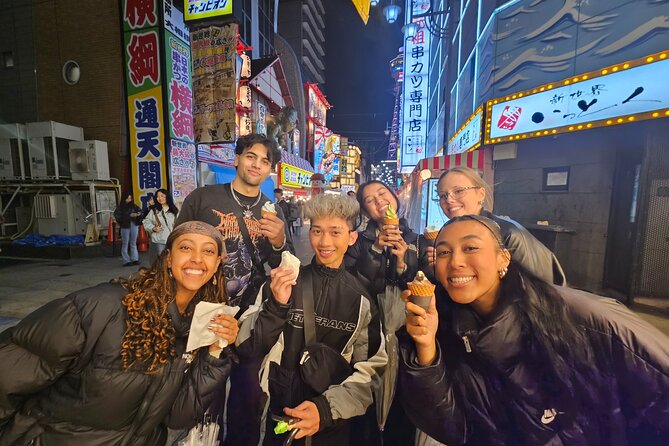
- 13 dishes, 5 eateries: enough variety to find your Osaka favorites in one night
- Shinsekai + Jyanjyan Yokocho: retro arcades and a covered street packed with tiny stalls
- Tsutenkaku area ending: an easy finish point for photos and onward plans
- Small group size (max 10): more chatting, less waiting, better pacing
- Guide quality matters: when the guide is sharp, the whole night clicks
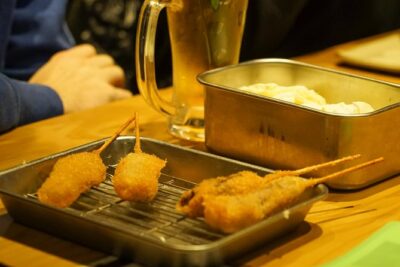
Shinsekai keeps going, kushikatsu and all


Why Shinsekai at 5pm feels like Osaka on fast-forward
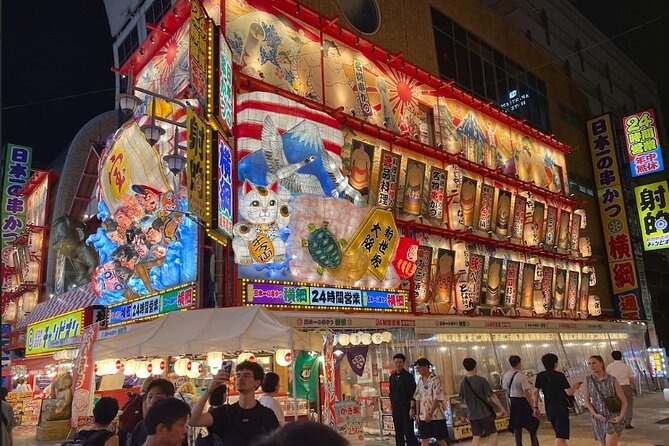
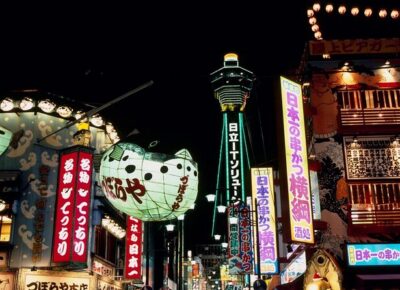
Shinsekai is one of those Osaka neighborhoods that doesn’t perform for tourists. At around the start of the evening, the lights come on, the arcades hum, and the streets feel like they’re running on habit more than hype. You get to see that older side of the city, the kind you can walk through for hours but would never fully understand on your own.
This is also why a guided format works. You’re not just crossing from one restaurant door to another; you’re reading the neighborhood. You’ll notice how the alleys connect to arcade life, why the covered shopping lanes matter, and what places look like when locals drift in for a snack and keep moving.
What you eat: 13 dishes, five eateries, and two drinks
The headline is simple: 13 dishes at five local eateries, plus two drinks. That’s a lot of food for a short, three-hour night tour, and it’s the core reason the price feels sensible compared with doing five separate meals.
Here’s what this format gives you:
- Variety without decision fatigue: you don’t have to gamble on your first pick.
- Sampling energy: you can try things you might skip when you’re hungry and reading menus under time pressure.
- A built-in rhythm: eat, walk, learn, repeat. It keeps the night moving.
One practical note: the tour doesn’t offer gluten-free or vegan swaps. If you avoid wheat or animal products, you’ll need to plan another food strategy in Osaka. Also, with 13 dishes, you should come with an appetite and not too much beer-chugging bravado—this is tasting, not speed-eating.
Price and logistics: the real value question
At about $79.07 per person for roughly 3 hours, you’re paying for three things:
1) a guide,
2) coordination across multiple small eateries,
3) the convenience of knowing you’ll eat enough to feel you got the neighborhood.
If you were to recreate this yourself, you’d likely spend a lot more time guessing which stalls are worth it, where to queue, and what portions will actually keep you satisfied. The tour is set up so you can focus on food and atmosphere rather than map work.
Also, you get a mobile ticket, and the meeting point is near public transportation. That matters in Osaka, where it’s easy to waste time if you’re late or unsure where to stand.
Come hungry: more eating your way through Osaka

The route flow: meeting near Daily Yamazaki and finishing at Tsutenkaku
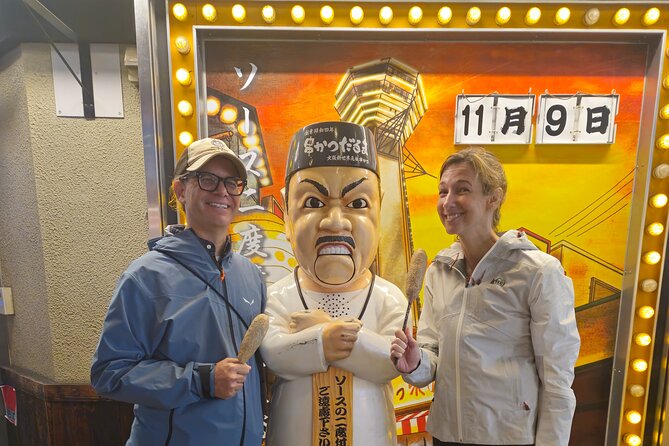
The tour starts at 5:00 pm at Daily YamazakiJapan (Naniwa Ward, Ebisuhigashi, Triton building area). The walk ends near Tsutenkaku, so you’ll finish in a spot that’s easy to keep exploring or use as a waypoint for your next stop.
The group size is limited to up to 10. That usually translates into smoother pacing—less crowding at each place and more chance to ask questions. Some people also found the route manageable even with limited mobility, though it’s still a walking tour, so comfortable shoes are non-negotiable.
Stop 1: Shinsekai Inari Shrine for a calmer start
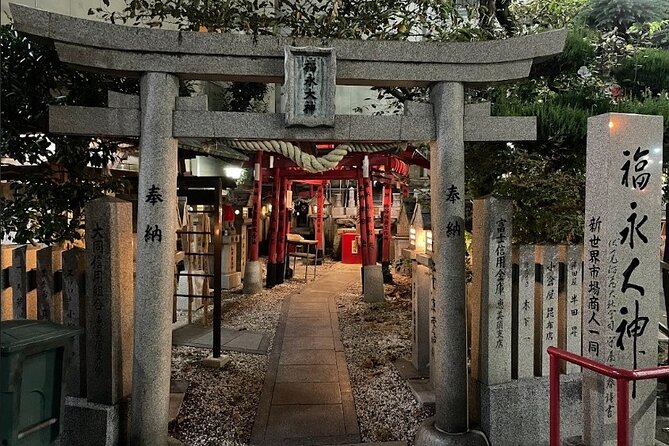
Before the neon takes over, you begin at the Shinsekai Inari Shrine. This is one of those moments that makes the tour feel more than a food crawl. You’re given a chance to slow down in a small space, then shift your brain from dinner mode to context mode.
You’ll spend about 15 minutes here, and admission is free. The shrine also includes a fortune-telling element, and the guide adds explanation about Shinto at a level that actually helps. It’s not just a photo stop. It’s a quick orientation to the spiritual side of daily life that still sits inside modern Osaka streets.
Stop 2: Shinsekai retro streets and the Tsutenkaku backdrop you’ll keep seeing
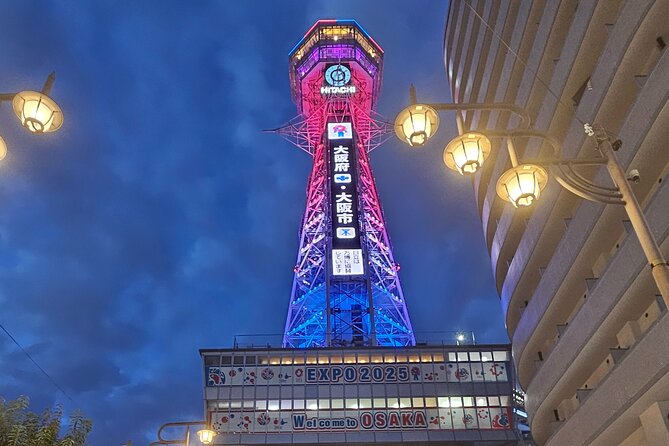
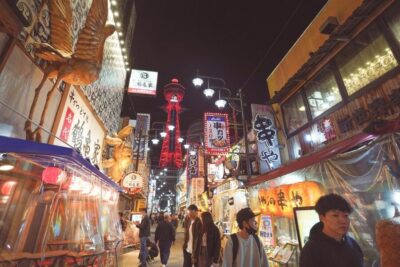
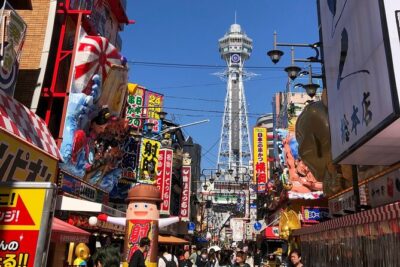
Next comes the real Shinsekai mood: neon signage, retro lanes, and the constant visual anchor of Tsutenkaku Tower in the distance. You’ll have about one hour to explore this area with your guide, moving through the neighborhood at a pace that keeps the food timing natural.
This is where the guide’s job is obvious. If you walk this section alone, you might see signs, but you won’t know what to order, where people tend to gather, or what kind of snack culture you’re looking at. With the guide, you learn how the streets are built for quick stops—food that fits into a stroll rather than a long sit-down dinner.
This part also helps you set expectations for the rest of the night. When you understand the neighborhood’s shape, the later covered street stop feels less random and more intentional.
Stop 3: Jyanjyan Yokocho for tiny-eatery energy under one roof
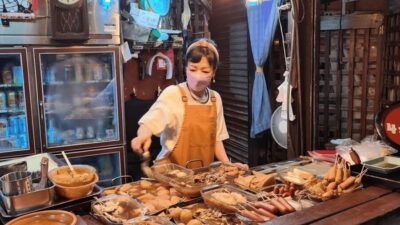
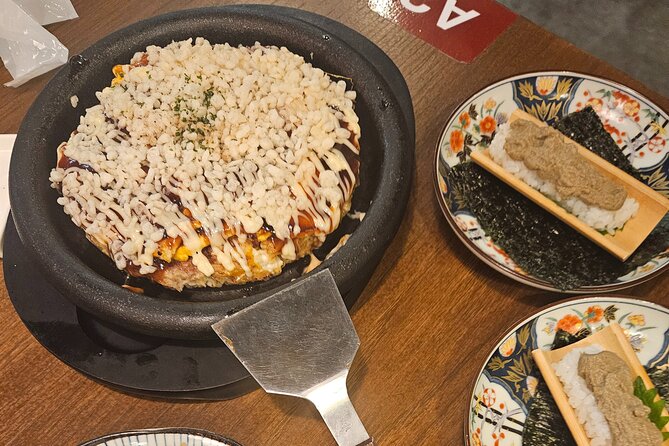
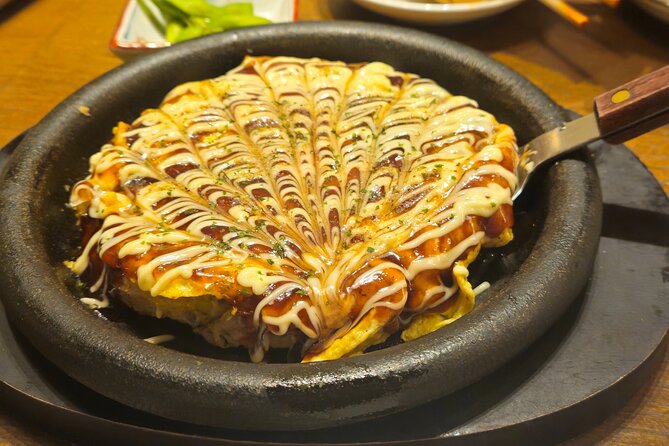
Your covered street stop is the highlight if you like atmosphere. Jyanjyan Yokocho (also tied to the Nanyodori shopping district) is a covered 180-meter stretch lined with small eateries, standing bar style counters, and game-shop energy.
You’ll spend around one hour here, and the covered layout changes how food hits. It feels like you’re moving inside a food corridor where people pop in, eat something small, and keep the flow moving.
This is also where the tour’s structure pays off. In a place like this, choosing a stall can feel like a coin flip if you don’t read the signs quickly. The guide’s selections reduce that stress, and you end up tasting more of what the street is actually known for.
Stop 4: Tsutenkaku for the quick photo-and-signature ending
After the shopping-street portion, you wrap up near Tsutenkaku. You’ll have about 15 minutes in the area, and it’s a classic Osaka landmark for a reason.
Even if you’ve seen photos online, it hits differently at night, when the whole tower area looks like it’s part of the neon system rather than a standalone monument. It’s also a convenient finish point. You can head for another drink nearby, walk toward a train connection, or simply wander while you’re still full.
Guides make or break the night: what good ones do
On this kind of tour, the guide isn’t just handing you directions. The best guides connect three dots:
- what you’re eating,
- where it fits in local life,
- and how to understand the neighborhood beyond its signs.
In the strongest examples, guides like Mike and Victor were praised for being friendly and for English-speaking clarity, and people really liked the way the night included places they wouldn’t have found alone. Another common compliment was that guides explained Shinto elements at the shrine in a way that felt understandable instead of textbook.
Still, there’s a caution you should take seriously. You’ll see rare reports of problems like a guide not showing up, or a guide who didn’t seem prepared to answer cultural questions. That doesn’t mean it’s common, but it does mean you should:
- arrive a few minutes early at the meeting point,
- keep your confirmation details handy,
- and contact the provider promptly if anything seems off.
A food tour is a simple thing—yet the human factor matters.
Who this tour suits best (and who might not love it)
This tour is best for you if:
- you want a lot of food in a short evening,
- you like walking through a neighborhood you might otherwise skip,
- you enjoy learning while you eat, not just collecting Instagram shots.
You might want to skip it if:
- you need gluten-free or vegan options (the tour can’t accommodate them),
- you dislike foods that feel adventurous or unusual,
- or you’re the type who gets stressed by small walking segments and many tasting moments.
If you love fried snacks, street-style comfort food, and the kind of neon-night Osaka that doesn’t require a ticketed museum visit, this is a strong match.
The dishes: how to order your mindset for 13 tastes
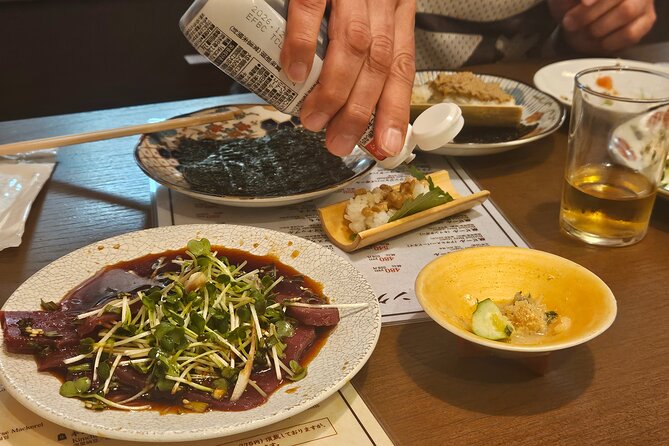
Even without a dish-by-dish menu listed here, the structure tells you what to expect: tasting portions across five eateries. That means the smart approach is to go hungry, take small bites if you need to, and don’t spend the first half of the tour trying to figure out what you’ll do in the second half.
One review highlight that stuck with me was the fried chicken spot being a favorite bite. That’s the kind of dish this tour tends to reward: comfort food that Osaka does well and that’s easy to share and compare between stops.
Tip for your attitude: assume you’ll love at least a few dishes and be neutral on one or two. That’s normal on a 13-stop tasting night. The tour’s real win is giving you enough variety that your Osaka favorites reveal themselves by accident.
Should you book this Shinsekai food tour?
Book it if you want a practical, high-food-output evening in Osaka’s older neon district, and you’re flexible enough to enjoy 13 dishes with no gluten-free or vegan substitutions. With a group capped at 10, it usually feels coordinated, and when the guide is strong, the cultural bits (especially around the shrine) make the whole night click.
Skip or consider alternatives if dietary needs limit you, or if you hate the idea of lots of walking plus lots of bites in one go. And if you do book, arrive early and confirm you know exactly where to start at 5:00 pm—simple steps that protect your night.
FAQ
How long is the Shinsekai food tour?
The tour runs for about 3 hours.
What time does the tour start?
The start time is 5:00 pm.
How many dishes are included?
You’ll taste 13 dishes across five local eateries.
Are drinks included?
Yes, the tour includes two drinks.
How big is the group?
The tour has a maximum group size of 10 travelers.
Can you accommodate gluten-free or vegan diets?
No. The tour cannot cater for gluten-free or vegan diets.
Where does the tour start and end?
It starts at Daily YamazakiJapan at the address provided in Ebisuhigashi, Osaka, and ends near Tsutenkaku.
Is there an admission fee for the shrine stop?
The shrine stop includes a free admission ticket.
What happens if the weather is bad?
This experience requires good weather. If it’s canceled due to poor weather, you’ll be offered a different date or a full refund.
If you’d like, tell me what you like to eat (noodles, grilled, fried, seafood, sweets), and I’ll suggest a good Osaka follow-up plan for after Tsutenkaku.
More Tour Reviews in Osaka
- Osaka Go Karting Tour with Funny Costume★ 5.0 · 2,658 reviews
- Osaka Castle: Museum and Tower Entry Ticket★ 4.5 · 2,380 reviews
- Osaka: Shinsekai Food Tour with 13-15 Dishes at 5 Eateries★ 4.8 · 2,204 reviews
- Osaka Food Tour: 13 Dishes at 5 Local Eateries★ 5.0 · 2,149 reviews
- Hungry Osaka Street Food Tour:15 Tastings & 3 Drinks with a Local★ 5.0 · 1,727 reviews
The Kuidaore List: Eat More of Osaka
- Osaka: Shinsekai Food Tour with 13-15 Dishes at 5 Eateries★ 4.8 · 2,204 reviews
- Osaka Food Tour: 13 Dishes at 5 Local Eateries★ 5.0 · 2,149 reviews
- Hungry Osaka Street Food Tour:15 Tastings & 3 Drinks with a Local★ 5.0 · 1,727 reviews
- Deep Backstreet Osaka Tours (Option to add Dinner)★ 5.0 · 1,290 reviews
- Osaka Local Foodie Walking Tour in Dotonbori and Shinsekai★ 5.0 · 985 reviews
Under Tsutenkaku Tower
- Osaka: Shinsekai Food Tour with 13-15 Dishes at 5 Eateries★ 4.8 · 2,204 reviews
- Osaka Local Foodie Walking Tour in Dotonbori and Shinsekai★ 5.0 · 985 reviews
- Osaka: Tsutenkaku Tower Entry Ticket★ 3.8 · 125 reviews
- Osaka: Local Foodie Tour in Dotonbori and Shinsekai★ 4.7 · 95 reviews
- Retro Osaka Street Food Tour: Shinsekai★ 4.5 · 77 reviews
The Newest Osaka Write-Ups
- Private Photoshoot in Osaka with a Professional Photographer
★ 5.0 · 3 reviews - Osaka Early Morning Osaka Castle Tour Avoid Crowds
★ 5.0 · 3 reviews - Nara Private Tour with Pick and Drop and English Speaking Driver
★ 3.5 · 3 reviews - Osaka: Modern Vegetarian Sushi Cooking Class
★ 5.0 · 3 reviews - Nara Day Trip from Osaka with a Licensed Guide
★ 5.0 · 3 reviews
Shinsekai & Tsutenkaku Tours, compared.
 ★ 4.8Shinsekai Food Tour with 13-15 Dishes at 5 EateriesFrom $532,204 reviews
 ★ 5.0Osaka Local Foodie Walking Tour in Dotonbori and ShinsekaiFrom $111985 reviews
 ★ 3.8Tsutenkaku Tower Entry TicketFrom $8125 reviews
 ★ 4.7Local Foodie Tour in Dotonbori and ShinsekaiFrom $10895 reviews
 ★ 4.5Retro Osaka Street Food Tour: ShinsekaiFrom $21777 reviews
 ★ 5.0Night Soul Food Tour in Shinsekai with a local guideFrom $8528 reviews
 ★ 5.0Osaka Morning Tour: Shitennoji Temple, Shinsekai &DoutonboriFrom $7423 reviews
 ★ 5.0Let’s Dance Bon Odori Japanese folk Dance near TsutenkakuFrom $1916 reviews
Browse the lists this tour appears in