
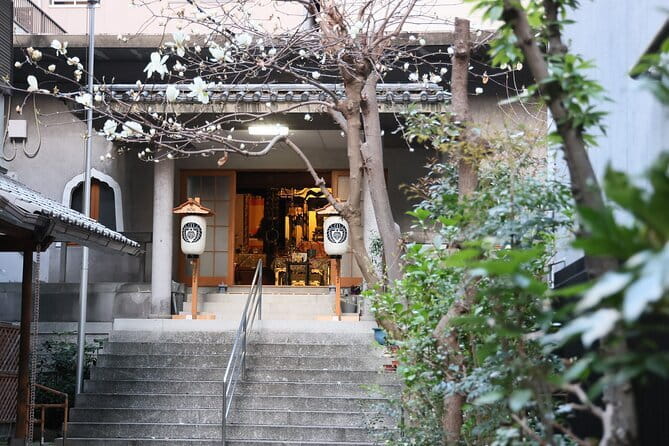
Reviewed · OSAKA TEMPLES & SHRINES
Osaka:Bamboo Healing Massage at the Temple <90-min>
A temple massage in Osaka is a rare kind of reset. This experience mixes bamboo fascia release with a full-body oil massage, then finishes with a calming tea ceremony and a yukata photo moment. I especially like the way the temple setting keeps everything grounded and quiet, and how you get small culture add-ons (like worship guidance and shrine moments) without turning it into a boring lecture. One thing to consider: the meeting point can be a little tricky to find, so build in extra time.
You’ll be welcomed by staff in traditional kimonos, and you can wear a yukata too. It’s also private—just your group—so the pace feels comfortable, even if you’re traveling solo. You should plan for about 2 hours total, and a portion of that time is spent on the cultural parts (foot bath, shrine time, and tea), not only the massage.
In This Review
- Bamboo Healing Massage at a Temple: The Setting and First Moments
- Your Welcome Routine: Foot Bath Before the Massage
- Bamboo Fascia Release: What You’re Actually Getting
- Shrine Time and Mini Meditation Moments
- Yukata Photo: A Souvenir That Fits the Mood
- Tea Ceremony With Wagashi: The Finish That Sticks
- Price and Time: Does $130.31 Feel Worth It?
- Logistics: Where to Meet and How to Not Get Stuck
- Who This Temple Massage Suits Best
- Should You Book the Osaka Bamboo Healing Massage?
- FAQ
- How long is the Osaka bamboo healing massage experience?
- What’s included besides the massage?
- Do I get to wear a yukata?
- Is this a private experience?
- How do I get the ticket?
- Where is the meeting point?
- What if I need to contact the temple?
- Is it refundable if my plans change?
Bamboo Healing Massage at a Temple: The Setting and First Moments
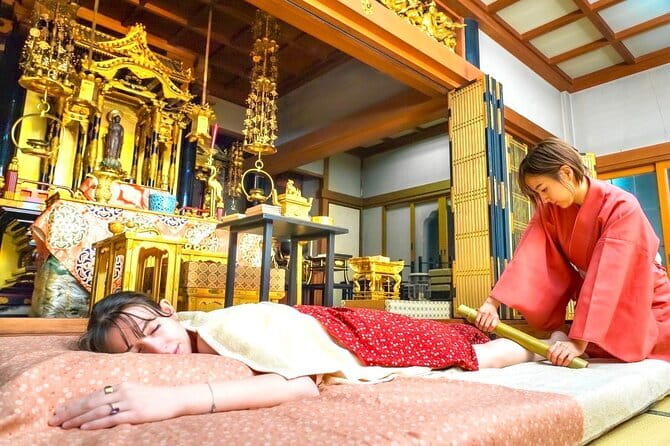
The day starts with a warm temple arrival. Staff dressed in kimonos greet you, then help you settle in. One of the nicer touches here is the chance to wear a yukata. It instantly changes the whole mood. You stop feeling like a tourist with a phone and start feeling like you’re taking part.
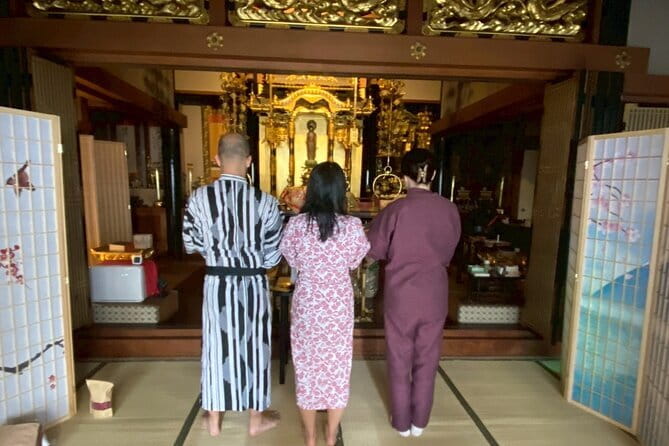
Before anything physical happens, you’re guided through the basics: the history and origins of the temple, and how worship works there. Instead of vague “cultural vibes,” you get practical guidance using guidebooks. That matters, because it keeps you from wandering in confusion. You’ll know what you’re looking at and why people behave a certain way in the space.
This isn’t a fast, check-the-box ritual. It’s more like a calm introduction, then a sequence of relaxation steps. If you like experiences where you understand the why, this format makes the temple feel real, not staged.
Quieter corners: more Osaka temples and shrines
Your Welcome Routine: Foot Bath Before the Massage
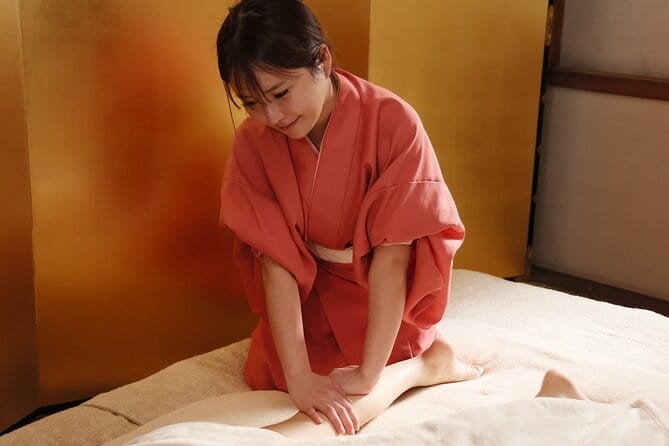
Next comes one of the best parts: the foot bath. It’s the kind of warm-up that makes a massage feel more intentional. Your body is already telling you to relax, and your mind follows.
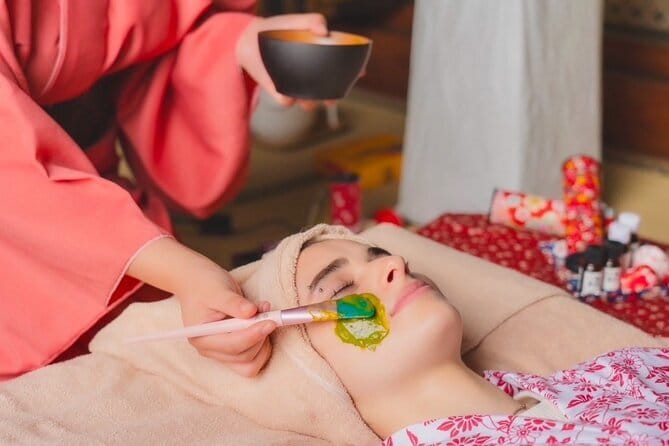
After the foot bath, you shift into the main bodywork. You’ll do a full-body oil massage using your favorite essential oil. Choosing the oil is a small decision, but it helps you feel in control. You’re not stuck with whatever scent the room picks for you.
Here’s the practical angle: the oil massage is designed to release tension. That often means you’ll feel rhythmic, steady pressure and focus on stiffness areas. If you’re sensitive to strong scents or you don’t like heavy fragrance, it’s smart to choose an essential oil you genuinely like.
Bamboo Fascia Release: What You’re Actually Getting
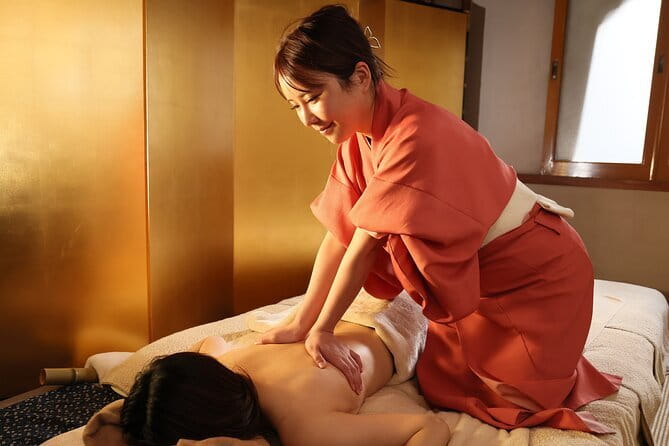
The signature element is fascia release with a bamboo stick. This is where the experience goes beyond a standard massage. The idea is to work through tightness that can build up in connective tissue and “hold” your muscles in place.
So what does that mean for you in real life? You’ll likely notice two things:
- A change in how your body feels after the treatment, especially in areas that usually feel stiff
- A sensation during the work that may be deeper than a light spa massage
Bamboo is part of the charm, but the key is the technique. The goal is easing deep-seated tightness using the massage and fascia release together—so the relaxation isn’t just surface-level.
If you’ve never had fascia-focused work before, treat this as a mindful try. Pay attention to how your body responds. You don’t need to “tough it out” to get value. If something feels too intense, you can adjust your comfort level through communication.
Also, remember you’re in a temple environment. That tends to mean calmer pacing, fewer distractions, and an overall more respectful atmosphere than a typical massage studio.
Shrine Time and Mini Meditation Moments
In addition to the massage and tea ceremony, there are small shrine moments that add meaning without dragging the experience out.
One highlight from the experience description is guided worship context. And in at least one account of the event, there’s also a mini meditation in the shrine. That combination is powerful for two reasons:
- It turns the massage into part of a bigger routine, not a random appointment.
- It helps your nervous system wind down before the bodywork kicks in.
You don’t need to be a meditation expert. The point is to slow down and follow along. If you’re someone who gets tense while traveling—especially when you’re by yourself—these quiet pauses can feel like a safety net.
Ease into somewhere warm, more soaks and spas
Yukata Photo: A Souvenir That Fits the Mood
Right after the cultural setup, you’ll get a complimentary photo taken while you’re dressed in a yukata. This is a smart inclusion. It gives you a real memory without requiring extra planning or paying for a separate photographer.
And because the photo is tied to the flow of the experience, it doesn’t feel forced. It happens as part of your time there, not as a separate “tour stop” that interrupts your relaxation.
Practical tip: if you’re prone to rushing, slow yourself down here. The yukata moment is one of the easiest ways to make the experience feel like more than a massage. I’d treat it like a calm photo session in a quiet place, not a photo sprint.
Tea Ceremony With Wagashi: The Finish That Sticks
After the massage and shrine moments, the experience ends with an authentic tea ceremony. You’ll also have wagashi, traditional Japanese sweets.
This part matters because it completes the body-mind rhythm. You leave the main physical work, then switch to something slow and precise. That’s often what makes this kind of experience last in your memory. You’re not just leaving with sore muscles soothed; you’re leaving with a calmer pace inside your head.
For you, the value is in the contrast:
- Massage loosens tension
- Tea ceremony trains stillness
- Together, you feel less “wired” after the appointment ends
You’ll want to be present during the tea ceremony. That sounds obvious, but it’s easy to get tempted by your phone or checking transit. Put your attention on the process—how the ceremony is explained and how it’s done step by step. Even if you don’t catch every word, you’ll feel the structure.
Price and Time: Does $130.31 Feel Worth It?
The price is $130.31 per person, and the schedule runs about 2 hours (often described as a 90-minute course). On paper, it might sound steep if you’re comparing it to a quick 60-minute massage.
But here’s why it can feel fair in the real world: you’re paying for a full package, not just massage time. The experience includes:
- A foot bath that sets the tone
- An essential-oil full-body massage
- Bamboo fascia release work aimed at deep tightness
- Cultural guidance about the temple and worship basics
- A mini shrine moment (including mini meditation in at least one account)
- A complimentary yukata photo
- An authentic tea ceremony with wagashi
Also, it’s private for your group only. That usually means less waiting around, fewer awkward pauses, and more attention. If you want a calmer, more personal format than a public class or shared studio appointment, that private structure often justifies the cost.
One more detail: it’s commonly booked about 46 days in advance. That’s a sign the slots go fast, especially around travel peaks. If you’re planning a limited Osaka itinerary, booking earlier can save you from scrambling.
Logistics: Where to Meet and How to Not Get Stuck
The meeting point is listed as:
Tossa de coracao 1-chōme-6-19 Kitahorie, Nishi Ward, Osaka, 550-0014, Japan
It also notes that the end time returns you to the meeting point. That’s helpful for planning dinner or a next stop after you leave.
Two practical cautions:
- The location may be a bit hard to find if you rely on vague directions. In one account, the site directions didn’t match reality, so I’d follow the exact address and plan extra time.
- You shouldn’t contact the temple directly. The instructions specifically say not to call Saishoji Temple directly, and to use email for reservations or inquiries.
Because it’s near public transportation, you should be able to reach it without a taxi. Still, Osaka walking routes can be a bit tricky if you’re balancing directions and transit at the same time. If your appointment is midday, I’d aim to arrive early so you can find the spot without rushing.
What to bring is simple: arrive ready for massage and ceremony. Wear clothes you can change out of easily if you’re moving into a yukata. And bring yourself—this is mostly about calming attention, not technical equipment.
Who This Temple Massage Suits Best
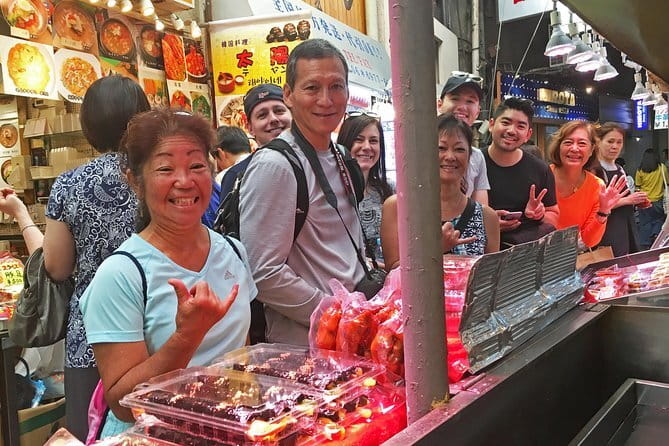
This experience is a great fit if you:
- Like massages and want something more special than a generic studio visit
- Want a mind-body-spirit blend with a temple setting
- Prefer a quiet experience with guided context (history, worship basics, shrine moments)
- Appreciate cultural add-ons that feel integrated, not tacked on
It’s also a strong choice for solo travelers. A key theme from the accounts is that the experience feels comfortable and supportive, even when you’re not traveling with a group.
Two other practical notes from the details you have:
- Service animals are allowed.
- Most travelers can participate.
Should You Book the Osaka Bamboo Healing Massage?
If you want relaxation plus authentic atmosphere, I think this is an easy yes. The mix of bamboo fascia release, essential-oil massage, and a tea ceremony gives you a full reset that doesn’t feel like standard spa routine. And the yukata photo turns a calm visit into a real memory you can keep.
I’d only hesitate if you’re extremely location-sensitive and don’t want to do any map work at all. Since finding the meeting point can be slightly annoying, plan extra time. Also, if you’re only in Osaka for one afternoon and you hate any schedule that includes cultural pacing, you might find the tea ceremony and shrine time adds less value than you hoped.
Otherwise, this is a smart purchase for travelers who like their wellness with meaning.
FAQ
How long is the Osaka bamboo healing massage experience?
The program is listed as about 2 hours (approx.). It also references a 90-minute course format, so plan for a longer block including the foot bath, massage, shrine moments, and tea ceremony.
What’s included besides the massage?
You can expect a soothing foot bath, a full-body oil massage with your choice of essential oil, bamboo fascia release, and an authentic tea ceremony with wagashi. The experience also includes staff guidance about the temple and worship, plus a complimentary photo in a yukata.
Do I get to wear a yukata?
Yes. You have the opportunity to wear a yukata, and there is a complimentary souvenir photo taken during the experience.
Is this a private experience?
Yes. It’s listed as a private tour/activity, so only your group participates.
How do I get the ticket?
You’ll receive a mobile ticket.
Where is the meeting point?
The meeting point is at Tossa de coracao 1-chōme-6-19 Kitahorie, Nishi Ward, Osaka, 550-0014, Japan.
What if I need to contact the temple?
The instructions say not to call Saishoji Temple directly. For reservations or inquiries, contact the provider via email.
Is it refundable if my plans change?
Free cancellation is available. You can cancel up to 24 hours in advance for a full refund. If you cancel less than 24 hours before the experience starts, the amount paid will not be refunded.
More Tour Reviews in Osaka
- Osaka Go Karting Tour with Funny Costume★ 5.0 · 2,658 reviews
- Osaka Castle: Museum and Tower Entry Ticket★ 4.5 · 2,380 reviews
- Osaka: Shinsekai Food Tour with 13-15 Dishes at 5 Eateries★ 4.8 · 2,204 reviews
- Osaka Food Tour: 13 Dishes at 5 Local Eateries★ 5.0 · 2,149 reviews
- Hungry Osaka Street Food Tour:15 Tastings & 3 Drinks with a Local★ 5.0 · 1,727 reviews
Hot Water and Quiet Rooms
- From Osaka: Himeji Castle, Arima Onsen & Mt. Rokko Day Tour★ 4.6 · 339 reviews
- Osaka Temple Cool Foot Bath & Matcha Experience〈45min〉★ 4.9 · 82 reviews
- Osaka: Solaniwa Onsen Hot Spring Visit★ 4.6 · 51 reviews
- Osaka: Mind & Spirit Balance Temple Reiki Healing★ 5.0 · 41 reviews
- Himeji Castle, Arima Onsen & Mt. Rokko: 1-Day Bus Tour from Osaka★ 4.0 · 28 reviews
Temple Gates and Shrine Paths
- Osaka: Minoh, Katsuoji Temple, & Minoh Falls Full-day Tour★ 4.9 · 172 reviews
- Full Day Kyoto Tour : Bamboo Forest, Golden Temple, Fushimi Inari★ 5.0 · 84 reviews
- Osaka Temple Cool Foot Bath & Matcha Experience〈45min〉★ 4.9 · 82 reviews
- Osaka: Mind & Spirit Balance Temple Reiki Healing★ 5.0 · 41 reviews
- Katsuo-ji Temple, Arashiyama Forest, & Nara Park★ 4.0 · 37 reviews
The Newest Osaka Write-Ups
- Private Photoshoot in Osaka with a Professional Photographer
★ 5.0 · 3 reviews - Osaka Early Morning Osaka Castle Tour Avoid Crowds
★ 5.0 · 3 reviews - Nara Private Tour with Pick and Drop and English Speaking Driver
★ 3.5 · 3 reviews - Osaka: Modern Vegetarian Sushi Cooking Class
★ 5.0 · 3 reviews - Nara Day Trip from Osaka with a Licensed Guide
★ 5.0 · 3 reviews
Osaka Temples & Shrines, compared.
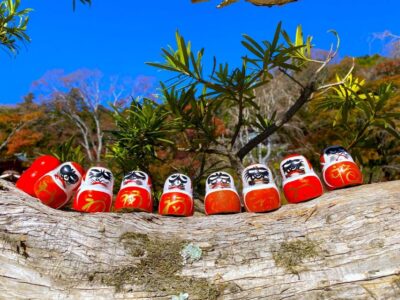 ★ 4.9Minoh, Katsuoji Temple, & Minoh Falls Full-day TourFrom $135172 reviews
Full Day Kyoto Tour : Bamboo Forest, Golden Temple, Fushimi InariFrom $10584 reviews
★ 4.9Minoh, Katsuoji Temple, & Minoh Falls Full-day TourFrom $135172 reviews
Full Day Kyoto Tour : Bamboo Forest, Golden Temple, Fushimi InariFrom $10584 reviews
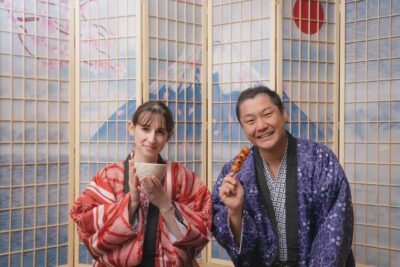 ★ 4.9Osaka Temple Cool Foot Bath & Matcha Experience〈45min〉From $3482 reviews
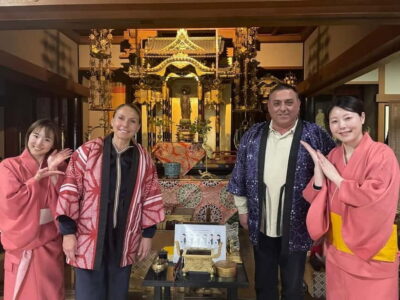 ★ 5.0Mind & Spirit Balance Temple Reiki HealingFrom $16141 reviews
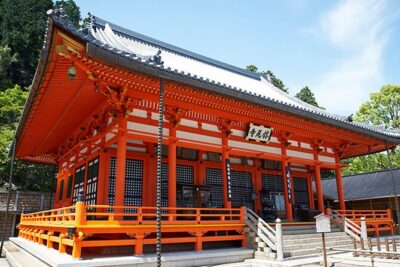 ★ 4.0Katsuo-ji Temple, Arashiyama Forest, & Nara ParkFrom $9137 reviews
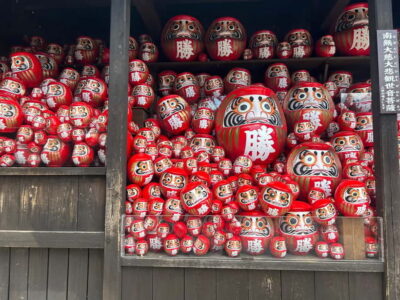 ★ 4.7Minoh Waterfall & Katsuo-ji Temple Half-Day TourFrom $4727 reviews
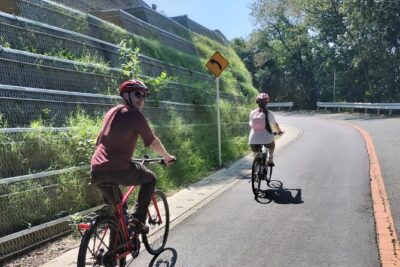 ★ 5.0Osaka Half-day E-bike Adventure: Minoh Falls & Katsuoji TempleFrom $3425 reviews
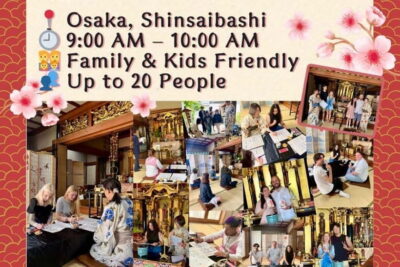 ★ 4.9Temple Tour and Traditional Calligraphy LessonFrom $2024 reviews
Browse the lists this tour appears in