
Reviewed · SHINSEKAI & TSUTENKAKU TOURS
Osaka: Shinsekai Food Tour – 13 Dishes and 4 Eateries
Shinsekai has a way of pulling you in fast. This Osaka street food tour turns that old-school district into a flavor map, starting at Daily Yamazaki and sending you through iconic bites like kushikatsu plus a quieter stop at Shinsekai Inari Shrine. I love how much you pack into just 3 hours, and I also like that you get food, streets, and story instead of a random snack parade. One consideration: you’ll likely want to come hungry, because there are 13 dishes to work through.
The tour runs in English with a live guide, and it’s built around a simple rhythm: meet up at Ebisu Higashi, walk through the neighborhood’s backstreets, then pause at the right moments so the experience feels fun, not frantic. You’ll also visit Janjan Yokocho alley for atmosphere and Instagram-worthy street energy, then finish with that classic Shinsekai feeling of full stomachs and big Osaka memories.
In This Review
- Quick take
- Starting at Daily Yamazaki in Ebisu Higashi
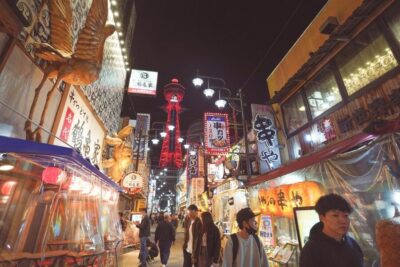
- Shinsekai streets: nostalgia you can taste
- Janjan Yokocho alley: where the neighborhood gets interesting
- Shinsekai Inari Shrine: the calm break you’ll appreciate
- The 13-dish lineup: takoyaki, taiyaki, kushikatsu, doteyaki, and more
- How to pace yourself during a 3-hour food walk
- English guidance that actually helps you order and understand
- Price and value: what $77 buys you in Osaka time
- Who this tour suits best (and who should think twice)
- Should you book this Shinsekai food tour?
- FAQ
- Where does the tour start?
- How long is the Osaka: Shinsekai Food Tour?
- How many food stops and dishes are included?
- What language is the tour guide?
- What are some of the dishes included?
- Which extra stops are part of the tour besides eating?
- How much does the tour cost?
- What is the cancellation policy?
- Is reserve and pay later available?
Quick take
- Daily Yamazaki meetup in Ebisu Higashi so you start in a local, real-world place
- 13 dishes across 4 eateries meaning variety without food overload stress
- Janjan Yokocho alley adds the flavor of the district, not just the food
- Shinsekai Inari Shrine gives you a calm pause between snacks
- Big Osaka hits include takoyaki, taiyaki, kushikatsu, and doteyaki
- English live guide (for example, Bell and Tara show up in guides’ highlights) so you’re not guessing
Shinsekai keeps going, kushikatsu and all

Starting at Daily Yamazaki in Ebisu Higashi
The tour begins at Daily Yamazaki in Ebisu Higashi, where you meet your local, English-speaking guide before you step into Shinsekai. I like this setup because it’s clear and easy: you’re not trying to coordinate with strangers on a busy street. It also puts you close to where the neighborhood energy actually lives, not far away in a convenient tourist zone.
From the first minutes, the guide’s role matters. You’re tasting food, yes, but you’re also learning what to order and how to eat it like locals. That means you get more value out of each stop, especially with Japanese street snacks that can feel confusing if you’re just reading menus.
Shinsekai streets: nostalgia you can taste
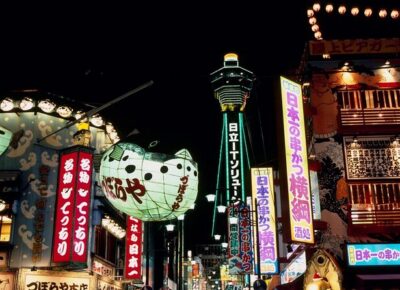
Shinsekai has an almost throwback feel, and that’s not just decoration. It changes how you experience the food. When you’re walking through backstreets where everyday life still shows up, every bite feels less like a souvenir and more like something you could return to on a normal day.
As you move through the area, you’ll stop often enough to keep your appetite awake, but you won’t spend the whole time in one loud place. That balance is key in Osaka street food: the best tours keep you moving while still making time to notice the little details—signs, alleyways, and the specific corners where certain snacks feel at home.
Janjan Yokocho alley: where the neighborhood gets interesting
One of the stops I’d pencil in as the mood-changer is Janjan Yokocho alley. This is the kind of lane that instantly feels different from the wider streets. It’s narrower, more “in the scene,” and it helps the tour feel like a guided walk through Osaka, not just a series of food transactions.
Why it matters for you: when you’re eating multiple items back-to-back, the tour needs pauses that refresh your senses. An alley stop does that naturally. It also gives you time to slow down and look around, so the whole experience sticks in your memory for more than taste alone.
Come hungry: more eating your way through Osaka

Shinsekai Inari Shrine: the calm break you’ll appreciate
After the street noise and food momentum, the tour takes you to Shinsekai Inari Shrine. This is a smart move. Food tours can sometimes feel like a nonstop sprint, but a shrine stop gives your brain a reset point.
I like that it’s not just a photo stop. Your guide explains the shrine, including history and context—something that came through in guides like Bell, who’s highlighted for knowing the shrine’s background. You’ll feel the contrast: the neighborhood’s energy stays present, but you get a quiet moment where the tour shifts from snack-hunting to cultural understanding.
Practical tip: bring your “inside voice” during this pause. Keep it calm, respectful, and let the moment do its job.
The 13-dish lineup: takoyaki, taiyaki, kushikatsu, doteyaki, and more
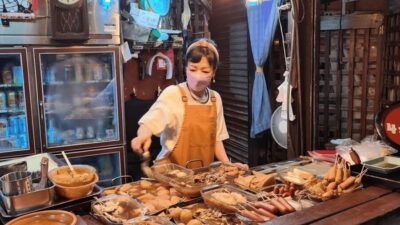
This is the heart of the tour. You’re set up to sample 13 dishes across 4 eateries, with several signature Osaka items included. The list you’ll almost certainly care about most includes:
- Takoyaki: sizzling, often made to order, and perfect for that street-snack crunch-and-soft combo
- Taiyaki: a warm, flaky pastry shaped like a fish, great when you want something sweet after savory bites
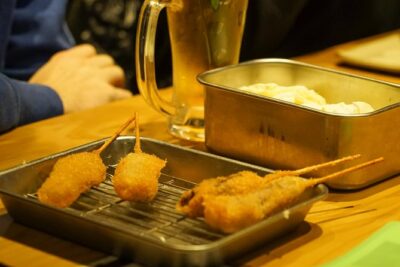
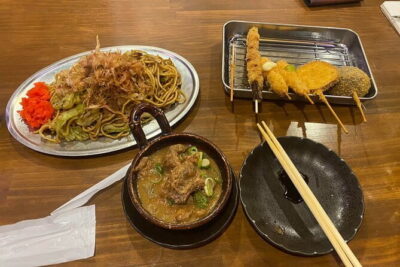
- Kushikatsu: golden skewers that come out crisp and inviting
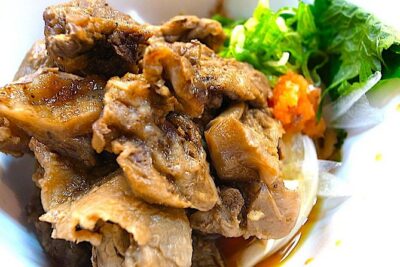
- Doteyaki: a comfort-style Osaka dish that tends to feel rich and warming
If you’re wondering about “more sweet or more savory,” this tour balances both. You get the classic savory Osaka hits, and you also get a pastry stop with taiyaki so your taste buds don’t feel stuck in one gear.
One more point I appreciate: a 13-dish tasting is not just about quantity. It’s about getting variety in a short window. Many people who visit Osaka focus on one or two famous foods and miss the supporting cast. Here, you get enough range that you can figure out what you genuinely like, not what you just ordered because it sounded famous.
And yes, the overall quality matters. In the feedback, kushikatsu repeatedly lands as a standout, with people calling it too good to stop at just one pass.
How to pace yourself during a 3-hour food walk
A 3-hour tour is short enough to stay energetic, but long enough that your choices matter. Here’s how to think about it:
You’ll be walking between tastings, so wear shoes that don’t punish you after 30 minutes. Osaka street food also runs hot and fast, so you may want to take water breaks when you can, especially if you’re eating something fried or dense.
Most of the tastings are likely to be handled in small-to-medium portions since the goal is 13 dishes. Still, plan like you’re eating. If you have a sensitive stomach, you’ll want to eat normally before the tour rather than arriving starving and going straight into heavy fried items.
Timing matters too: you’ll likely start with something immediate and iconic (takoyaki is the kind of early anchor that works), then move into other textures and flavors. By mid-tour, expect your favorites to hit again in your head: crisp, saucy, warm, then sweet.
English guidance that actually helps you order and understand
The tour includes a live English guide, and this isn’t just for translation. The best part is knowing what you’re tasting and why it works.
From the guide highlights you’ll see named in customer notes—Bell and Tara—the emphasis falls on both food and context. That combination helps you avoid the most common street-food mistake: eating without understanding what makes that dish special. When you know the story and how to approach the food, you taste more layers.
I also like that the guide helps manage the flow. A street food crawl can get chaotic if you’re on your own. Here, the schedule is structured enough that you spend your attention on the tastings, not on where to go next or whether you’re doing it right.
Price and value: what $77 buys you in Osaka time
At $77 per person for 3 hours and 13 dishes, the real value is less about the number and more about what you’re avoiding.
On your own, street food can turn into a scavenger hunt:
- figuring out where each dish is made well
- translating names
- choosing shops that actually serve what you want
- and somehow eating enough variety to learn what you like
This tour bundles that effort into one guided loop. You pay for convenience, but you also pay for confidence. The result is a tasting that’s designed for learning your preferences quickly.
Is it “cheap”? It’s not trying to be. But for Osaka, where street food is plentiful, a guided route helps you get a higher hit rate per hour. If you’re only in Osaka for a short time and want the highlights without doing homework, this pricing starts to make sense fast.
Who this tour suits best (and who should think twice)
This Shinsekai food tour is a strong fit if you:
- want a focused way to eat 13 Osaka dishes in limited time
- like street scenes and neighborhood walking, not just sitting in one restaurant
- want an English guide who can explain what you’re eating and why it matters
- enjoy both savory and sweet, since taiyaki shows up in the mix
- appreciate contrast stops, like the energetic lanes and the calm Inari Shrine pause
You might think twice if you:
- hate walking between multiple stops
- have food restrictions that aren’t covered in the provided details (the data doesn’t list specific dietary accommodations)
- prefer to control every order on your own without a set tasting plan
If you’re flexible and hungry, you’re the target audience.
Should you book this Shinsekai food tour?
If you want a single, well-structured way to experience Osaka street food culture, I’d book it. The mix of Shinsekai atmosphere, guided context at spots like Janjan Yokocho alley and Shinsekai Inari Shrine, plus the included classics (takoyaki, taiyaki, kushikatsu, doteyaki) makes this more than a “try random snacks” outing.
My final advice: come with room for variety, wear comfortable shoes, and let the guide steer your ordering. At $77 for 3 hours, you’re paying for both the food and the route quality, and that’s exactly where tours usually earn their keep.
FAQ
Where does the tour start?
The tour starts at Daily Yamazaki in Ebisu Higashi.
How long is the Osaka: Shinsekai Food Tour?
It lasts 3 hours.
How many food stops and dishes are included?
You’ll sample 13 dishes across 4 eateries.
What language is the tour guide?
The tour includes a live English guide.
What are some of the dishes included?
The tour includes classic Osaka street foods such as takoyaki, taiyaki, kushikatsu, and doteyaki.
Which extra stops are part of the tour besides eating?
You’ll visit Janjan Yokocho alley and Shinsekai Inari Shrine.
How much does the tour cost?
The price is $77 per person.
What is the cancellation policy?
You can cancel up to 24 hours in advance for a full refund.
Is reserve and pay later available?
Yes. You can reserve and pay later, keeping your plans flexible by booking now and paying nothing today.
More Tour Reviews in Osaka
- Osaka Go Karting Tour with Funny Costume★ 5.0 · 2,658 reviews
- Osaka Castle: Museum and Tower Entry Ticket★ 4.5 · 2,380 reviews
- Osaka: Shinsekai Food Tour with 13-15 Dishes at 5 Eateries★ 4.8 · 2,204 reviews
- Osaka Food Tour: 13 Dishes at 5 Local Eateries★ 5.0 · 2,149 reviews
- Hungry Osaka Street Food Tour:15 Tastings & 3 Drinks with a Local★ 5.0 · 1,727 reviews
The Kuidaore List: Eat More of Osaka
- Osaka: Shinsekai Food Tour with 13-15 Dishes at 5 Eateries★ 4.8 · 2,204 reviews
- Osaka Food Tour: 13 Dishes at 5 Local Eateries★ 5.0 · 2,149 reviews
- Hungry Osaka Street Food Tour:15 Tastings & 3 Drinks with a Local★ 5.0 · 1,727 reviews
- Deep Backstreet Osaka Tours (Option to add Dinner)★ 5.0 · 1,290 reviews
- Osaka Local Foodie Walking Tour in Dotonbori and Shinsekai★ 5.0 · 985 reviews
Under Tsutenkaku Tower
- Osaka: Shinsekai Food Tour with 13-15 Dishes at 5 Eateries★ 4.8 · 2,204 reviews
- Osaka Local Foodie Walking Tour in Dotonbori and Shinsekai★ 5.0 · 985 reviews
- Osaka: Tsutenkaku Tower Entry Ticket★ 3.8 · 125 reviews
- Osaka: Local Foodie Tour in Dotonbori and Shinsekai★ 4.7 · 95 reviews
- Retro Osaka Street Food Tour: Shinsekai★ 4.5 · 77 reviews
The Newest Osaka Write-Ups
- Private Photoshoot in Osaka with a Professional Photographer
★ 5.0 · 3 reviews - Osaka Early Morning Osaka Castle Tour Avoid Crowds
★ 5.0 · 3 reviews - Nara Private Tour with Pick and Drop and English Speaking Driver
★ 3.5 · 3 reviews - Osaka: Modern Vegetarian Sushi Cooking Class
★ 5.0 · 3 reviews - Nara Day Trip from Osaka with a Licensed Guide
★ 5.0 · 3 reviews
Shinsekai & Tsutenkaku Tours, compared.
 ★ 4.8Shinsekai Food Tour with 13-15 Dishes at 5 EateriesFrom $532,204 reviews
 ★ 5.0Osaka Local Foodie Walking Tour in Dotonbori and ShinsekaiFrom $111985 reviews
 ★ 3.8Tsutenkaku Tower Entry TicketFrom $8125 reviews
 ★ 4.7Local Foodie Tour in Dotonbori and ShinsekaiFrom $10895 reviews
 ★ 4.5Retro Osaka Street Food Tour: ShinsekaiFrom $21777 reviews
 ★ 4.5Shinsekai Food Tour – 13 Dishes at 5 Local EateriesFrom $7929 reviews
 ★ 5.0Night Soul Food Tour in Shinsekai with a local guideFrom $8528 reviews
 ★ 5.0Osaka Morning Tour: Shitennoji Temple, Shinsekai &DoutonboriFrom $7423 reviews
Browse the lists this tour appears in