
Reviewed · KYOTO DAY TRIPS FROM OSAKA
Kyoto 1 Day Tour from Osaka
Kyoto in a single day can work, if you let a good plan do the heavy lifting. This Osaka-to-Kyoto tour strings together Kyoto’s headline sights with guide-led timing and included transport, so you’re not wasting your one free day figuring out bus routes.
I especially like the hit list of stops: three UNESCO World Heritage sites plus Fushimi Inari Taisha and Sanjusangendo Hall with its 1,001 Bodhisattva statues. Another plus is the steady pace—many people finish feeling like they saw a lot without being completely run over.
One thing to consider: the day is long and the group is big (up to 40), so if you’re the type who needs slow, quiet sightseeing—or you struggle to hear a guide over a crowd—this may feel a bit tight.
In This Review
- Key takeaways before you book
- The Osaka-to-Kyoto timeline: 11 hours that start early
- Getting there on JR and coach: what “non-reserved” really means
- Nijo Castle: the fortress stops you, then the interiors impress
- Kinkaku-ji (Golden Pavilion): why this is the face of Kyoto
- Kyoto Imperial Palace: impressive, but your day depends on closures
- Fushimi Inari Taisha: red torii photos plus a real walk
- Sanjusangendo Hall: 1,001 statues in a single wooden sweep
- Kiyomizu-dera: terrace views and the shopping lane effect
- Lunch breaks: Japanese set menu vs Indian thali vs no lunch
- Pacing with a group of up to 40: when it feels right and when it doesn’t
- Weather and schedule changes: plan for the day to flex
- Price and value: is $183.93 per person a fair deal?
- Who this Kyoto day trip from Osaka is best for
- Should you book this Kyoto 1-Day Tour from Osaka?
- FAQ
- How long is the Kyoto 1 day tour from Osaka?
- Where does the tour start and end?
- What UNESCO World Heritage sites are included?
- What other major sights are included besides the UNESCO stops?
- Is lunch included in the price?
- What happens if Kyoto Imperial Palace is closed?
- Is the train reserved seating included?
- Are there backup options if Nijo Castle is closed?
Key takeaways before you book
- JR rail + coach: you get the Osaka-to-Kyoto transport built in, not pieced together on your own
- UNESCO in one day: Nijo Castle, Kinkaku-ji (Golden Pavilion), and Kiyomizu-dera
- Sanjusangendo’s 1,001 statues: a stop you can’t easily recreate on your own on a time crunch
- Fushimi Inari torii time: enough for photos and the main shrine vibe, plus a short walk from the lot
- Group reality check: around 40 people can mean limited hearing and lots of moving as a unit
- Lunch is optional but structured: Japanese-style set menu or Indian thali when you choose the lunch option
Kyoto sits thirty minutes away, more ways there


The Osaka-to-Kyoto timeline: 11 hours that start early
This tour starts at 7:15 am at Hotel Granvia Osaka (Hotel Granvia Osaka, Umeda). You’ll take the morning rail ride to Kyoto, then spend the rest of the day moving by coach between major sites. Expect to be back near the end of the day at Osaka Station around 6:30 pm, with no hotel drop-off—plan to head back to your base on your own.
It’s the kind of schedule that makes sense when you have limited time. If you’re staying in Osaka and want Kyoto “done” without changing hotels or coordinating tickets, the structure is the value.
Getting there on JR and coach: what “non-reserved” really means
The tour uses public transportation between Osaka and Kyoto, specifically non-reserved seats. That matters. You might get a seat, but you also might not—especially in peak season. One review specifically mentioned a standing-only train experience in high season, which lines up with what “non-reserved” can mean in practice.
Once you reach Kyoto, you switch to an air-conditioned/heated coach for moving between stops. This is helpful because Kyoto’s sites are spread out, and you don’t want your day to turn into a transfer marathon.
Practical tip: bring a small day bag with water, a light layer (temples can be chilly or hot depending on season), and something for ear comfort. When a group is large, it can be hard to hear guide commentary from farther back.
Nijo Castle: the fortress stops you, then the interiors impress
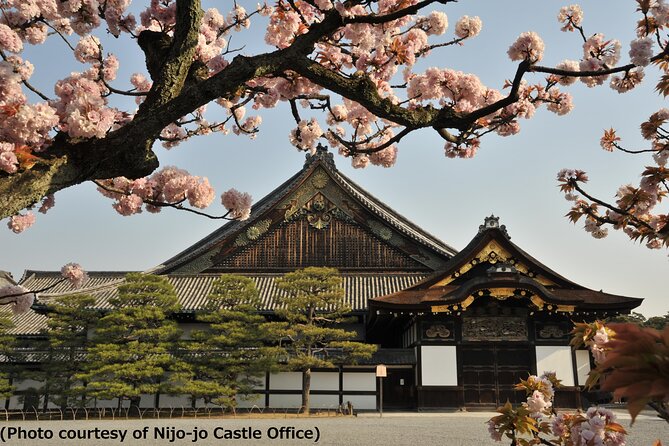
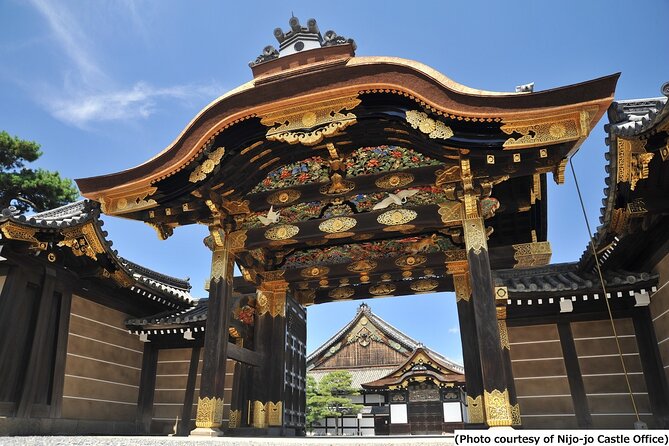
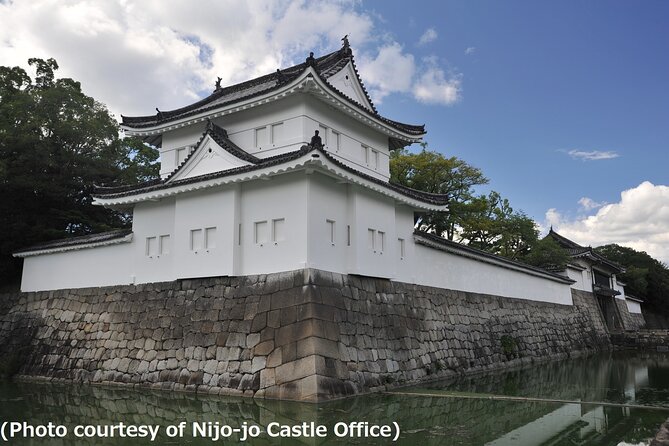
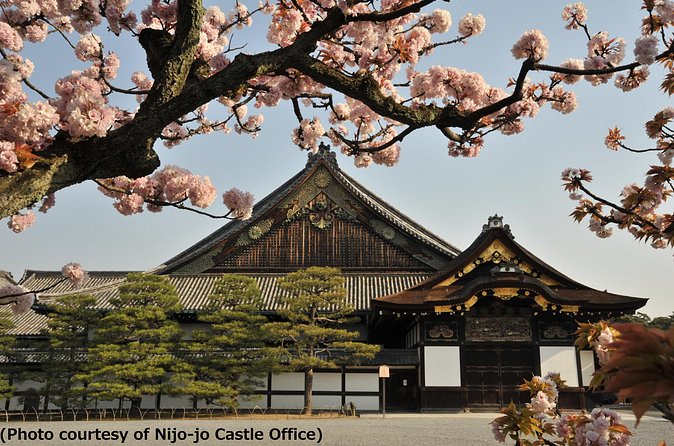
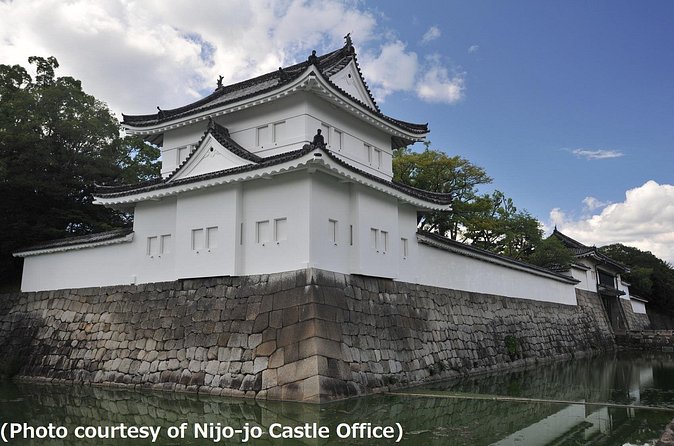
Your first major stop is Nijo Castle, a UNESCO site completed in 1626. On the surface it’s all gates, walls, and fortress seriousness. Then the interior details shift the mood—gold leaf interiors create a striking contrast that makes this more than just an outdoor photo stop.
The allotted time is 50 minutes, with an admission ticket included. That’s enough to see the main highlights without turning it into a museum marathon.
Backup plan matters here: Nijo Castle is closed on Tuesdays in January, July, August, and December. If that happens, the tour visits Ryoan-ji Temple instead. You’ll lose that specific castle experience, but you still get a major temple stop that fits the schedule.

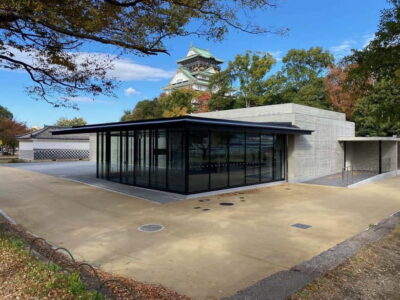


Kinkaku-ji (Golden Pavilion): why this is the face of Kyoto
Next up is Kinkaku-ji Temple (the Golden Pavilion), another UNESCO World Heritage site. The big visual here is simple: the pavilion is covered in thin layers of pure gold, and it sits by a pond, so reflections do part of the work for you.
You get 45 minutes, and admission is included. This is one of those places where your brain says real estate is expensive, and your camera says thank you.
In reviews, the Golden Pavilion comes up as a standout even when weather or pacing wasn’t perfect. That tracks with what you’ll see: even if the day feels rushed, this stop tends to land.
Kyoto Imperial Palace: impressive, but your day depends on closures

The tour includes Kyoto Imperial Palace with a 40-minute stop and free admission. It was the Emperor’s residence until about 150 years ago, so think formal grounds, palace structures, and a sense of “power done quietly.”
Important twist: Kyoto Imperial Palace is not always open to visitors. The tour notes closures on Mondays (or the following day if Monday is a holiday) and on days when there’s an Imperial Household Agency event. If it’s closed, the tour swaps to Kitano Tenmangu Shrine. If the closure falls on the 25th, the tour visits Nishi Hongan-ji Temple instead.
This matters because it affects the feel of the third major stop. If you’re strongly attached to the palace itself, check your day-of-week before you book.
Fushimi Inari Taisha: red torii photos plus a real walk
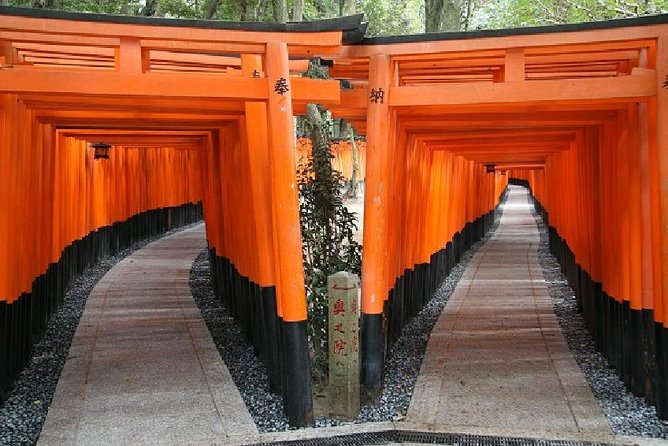
Then comes Fushimi Inari Taisha, famous for its vermilion torii gates. You get 30 minutes and admission is free. The highlight is the photo sequence—rows of torii that guide your eye forward—and the shrine atmosphere that feels old and lived-in.
One logistics note: the tour includes walking from the parking lot to the shrine grounds, about 15 minutes one-way. So wear shoes you can walk in without thinking about it. This is not a “sit and snack” stop.
Also, time is tight. With only 30 minutes, you’ll likely do the main route for photos rather than climb deep into the higher trails. That’s fine for a first Kyoto day, but if you want the long, serious hike version of Inari, you’ll need a different plan.
Sanjusangendo Hall: 1,001 statues in a single wooden sweep
After Inari’s bright red, Sanjusangendo Hall turns the volume down. This stop is Sanjusangendo Temple, described as Japan’s longest wooden structure and home to 1,001 life-size Bodhisattva statues (Kannon deities) dating back to the 13th century.
You’ll have 30 minutes, and admission is included. This is one of those places where the scale hits you. The statues aren’t just decoration; they’re part of the room’s “everything is the same, and yet it’s not” feeling. Even when you’re moving as a group, it’s a stop that rewards paying attention.
Kiyomizu-dera: terrace views and the shopping lane effect
Your final temple stop is Kiyomizu-dera. It gets 1 hour 10 minutes, and admission is included. The big draw is the view over Kyoto from the terrace, plus the historic shopping lane leading up to the temple, which adds motion and street flavor to what could otherwise be a static viewpoint.
This stop also tends to offer the best “I finally get Kyoto” moments because it mixes architecture, scenery, and the classic street approach. In reviews, even when weather was awful, people still felt Kiyomizu-dera was worth the effort.
One fun local-style activity people mention is the tradition of walking between the love rocks with eyes closed, which you can typically do around the temple area. If that’s your kind of silly, this is where it fits.
Lunch breaks: Japanese set menu vs Indian thali vs no lunch
Lunch is where the tour gives you options, depending on what you select during booking.
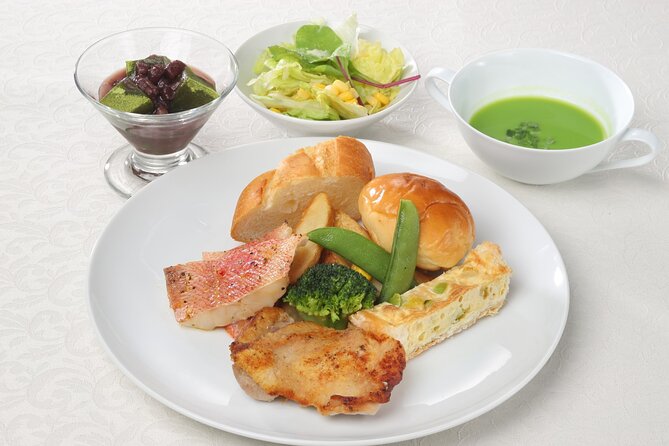
- If you choose With Lunch, you’ll get a Western-style set menu (per the tour notes). Vegetarian requests are possible if you inform them in advance. Halal and gluten-free are not available, and same-day changes can’t be accepted.
- If you choose the Indian Thali lunch option, it’s a vegetarian thali set menu. The menu is listed as 3 kinds of curry (bean, vegetable, spinach and potato), vegetable pakora, plain yogurt, naan or roti, rice, salad, and a non-alcoholic drink.
If you choose No Lunch, you get free time to eat on your own around Kyoto Station. That’s not part of the temple circuit, so it’s actually useful if you want to take a break from scheduled meals and choose something simpler.
One review also praised the lunch quality compared to typical tour lunches, which is a good sign. Still, if you’re picky about dietary needs, plan ahead because the tour data is clear that certain dietary accommodations aren’t offered.
Pacing with a group of up to 40: when it feels right and when it doesn’t
This tour keeps the major stops moving in a single day. That’s why many people like it: it covers Kyoto’s top targets efficiently. The flip side is also real: the day can feel full and tiring because you’re constantly switching locations.
Reviews highlight both ends of the experience:
- Some people said the pacing was good and they didn’t feel rushed.
- Others noted the group was large enough that it was hard to hear guide comments, especially if you were farther back or the guide’s voice was low.
My practical advice: sit toward the front when you can on the coach, and don’t assume you’ll catch every detail at every stop. Use the guide for the big picture—why a site matters, what to notice—then use your own eyes for the rest.
Also, the tour is designed so you can move on quickly. If you want to linger, talk to craftspeople, or slow-walk through back streets, you’ll likely want extra days in Kyoto after this.
Weather and schedule changes: plan for the day to flex
Kyoto weather can change fast. The tour itself includes some flexibility via alternate destinations when specific sites are closed. But when conditions get extreme, you can still see changes.
One review mentioned the tour being shortened due to a typhoon, which is a reminder that weather can override even a well-run plan. Another review mentioned heavy rainfall spoiling the experience. So if you’re booking during rainy season or typhoon season, bring waterproof layers, and keep expectations realistic.
Crowds matter too. A strong piece of advice from reviews: avoid booking on major holidays, since key sights can get crowded.
Price and value: is $183.93 per person a fair deal?
At $183.93 per person, you’re paying for a full-day bundle: round-trip transport from central Osaka (JR rail plus coach), an English-speaking guide, admissions for several stops, and an air-conditioned/heated vehicle.
Is it “cheap”? No. Is it good value for one-day Kyoto? Often yes, because the alternative is you piecing together:
- train tickets and timing
- admission tickets
- bus or taxi rides between far-apart sights
- and the mental energy of planning all of that for a single day
Where the price can feel less worth it is if you’re the type who wants to spend extra time at only one or two sites. For slow travelers, the fixed schedule can feel limiting.
But if you want a “see the highlights with less hassle” day, the included structure is what you’re really buying.
Who this Kyoto day trip from Osaka is best for
This tour works well if you:
- have one day for Kyoto and want to hit the major icons
- prefer a guide to point out what’s worth your time
- like photo opportunities, especially seasonal scenes like cherry blossoms or autumn leaves (the tour notes this as a backdrop)
It may be less ideal if you:
- hate group settings and loud movement
- need lots of time to sit and study
- want add-ons like kimono dressing (one review specifically wished for a kimono option)
If you bring the right mindset—see the highlights, then come back later for the deep cut—you’ll get the most out of it.
Should you book this Kyoto 1-Day Tour from Osaka?
If you’re short on time, I’d say yes—this is a practical way to see Kyoto’s top UNESCO sights plus Inari and Sanjusangendo in one day. The included admissions, guide support, and transport do real work for you.
I’d hold off or book a different style of trip if you’re very sensitive to hearing the guide, you want slow sightseeing, or you’re traveling on a day when major sites you care about are likely closed. For the best odds, aim for a calm travel day and wear comfortable shoes—your schedule is busy, and you’ll be doing real walking.
FAQ
How long is the Kyoto 1 day tour from Osaka?
The tour runs for about 11 hours and returns you to Osaka around 6:30 pm.
Where does the tour start and end?
It starts at Hotel Granvia Osaka in Umeda and ends at Osaka Station. There’s no hotel drop-off, so you’ll need to get back on your own.
What UNESCO World Heritage sites are included?
The tour includes Nijo Castle, Kinkaku-ji (Golden Pavilion), and Kiyomizu-dera.
What other major sights are included besides the UNESCO stops?
You also visit Fushimi Inari Taisha, Sanjusangendo Hall, and Kyoto Imperial Palace (or a replacement if it’s closed).
Is lunch included in the price?
Lunch is included only if you select the With Lunch option when booking. The tour offers a Western-style set menu or an Indian thali option (vegetarian).
What happens if Kyoto Imperial Palace is closed?
If it’s closed (for example, on Mondays or due to Imperial Household Agency events), the tour visits Kitano Tenmangu Shrine instead. If the closure date falls on the 25th, it goes to Nishi Hongan-ji Temple.
Is the train reserved seating included?
No. The tour uses non-reserved seats between Osaka and Kyoto, so seating is not guaranteed.
Are there backup options if Nijo Castle is closed?
Yes. Nijo Castle is closed on certain Tuesdays in January, July, August, and December. If closed, the tour visits Ryoan-ji Temple instead.
More Tour Reviews in Osaka
- Osaka Go Karting Tour with Funny Costume★ 5.0 · 2,658 reviews
- Osaka Castle: Museum and Tower Entry Ticket★ 4.5 · 2,380 reviews
- Osaka: Shinsekai Food Tour with 13-15 Dishes at 5 Eateries★ 4.8 · 2,204 reviews
- Osaka Food Tour: 13 Dishes at 5 Local Eateries★ 5.0 · 2,149 reviews
- Hungry Osaka Street Food Tour:15 Tastings & 3 Drinks with a Local★ 5.0 · 1,727 reviews
Kyoto, Just Up the Line
- Osaka/Kyoto: Hiroshima Miyajima Bus Tour & Shinkansen Ticket★ 4.7 · 919 reviews
- From Kyoto/Osaka: Kyoto Top Highlights 1-Day Guided Bus Tour★ 4.5 · 714 reviews
- Ancient Capital Tour: Kyoto and Nara Highlights from Kyoto/Osaka★ 4.5 · 332 reviews
- Osaka/Kyoto: Amanohashidate & Miyama Tour with Boat & Lunch★ 4.6 · 207 reviews
- Kyoto and Nara Day Trip from Osaka★ 4.0 · 175 reviews
The Newest Osaka Write-Ups
- Private Photoshoot in Osaka with a Professional Photographer
★ 5.0 · 3 reviews - Osaka Early Morning Osaka Castle Tour Avoid Crowds
★ 5.0 · 3 reviews - Nara Private Tour with Pick and Drop and English Speaking Driver
★ 3.5 · 3 reviews - Osaka: Modern Vegetarian Sushi Cooking Class
★ 5.0 · 3 reviews - Nara Day Trip from Osaka with a Licensed Guide
★ 5.0 · 3 reviews
Kyoto Day Trips from Osaka, compared.
 ★ 4.7Osaka/Kyoto: Hiroshima Miyajima Bus Tour & Shinkansen TicketFrom $277919 reviews
 ★ 4.5From Kyoto/Osaka: Kyoto Top Highlights 1-Day Guided Bus TourFrom $51714 reviews
 ★ 4.5Ancient Capital Tour: Kyoto and Nara Highlights from Kyoto/OsakaFrom $90332 reviews
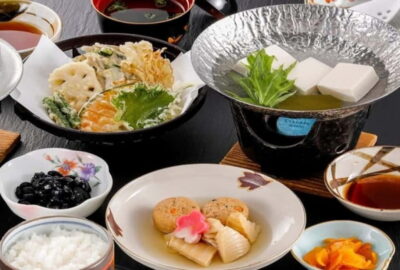 ★ 4.6Osaka/Kyoto: Amanohashidate & Miyama Tour with Boat & LunchFrom $71207 reviews
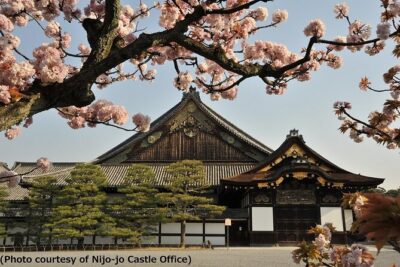 ★ 4.0Kyoto and Nara Day Trip from OsakaFrom $198175 reviews
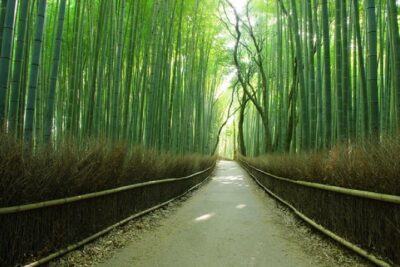 ★ 4.5Sagano Romantic Train & Arashiyama, Kiyomizudera, Fushimi Inari Taisha Day TourFrom $82171 reviews
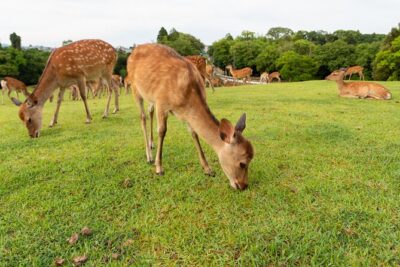 ★ 5.0Full Day Guided Tour to Kyoto and Nara from Osaka by VanFrom $96144 reviews
 ★ 4.8Volleyball in Osaka, Kobe & Kyoto with locals!From $6131 reviews
Browse the lists this tour appears in