
Reviewed · SHINSEKAI & TSUTENKAKU TOURS
Hidden Osaka Foodie Tour: Nishinari Backstreets & Local Dining
Osaka has a side most people miss. This small-group tour threads together Nishinari backstreets (locals call it Deep Osaka), retro street art, and stops at neighborhood restaurants where each dish comes with a drink. Between meals, you follow part of an old samurai pilgrim route while your guide connects the dots between Edo-era history and today’s everyday city life.
Two things I really like: the pacing and the people. With a maximum of 5 guests, you get more back-and-forth than the usual big-group shuffle, and you’re steered toward family-run dining during quieter hours. One thing to keep in mind is that you’re walking through a less polished part of town, so comfy shoes and an open mind help—especially if you prefer very touristy settings.
If you want a food tour that doubles as a neighborhood story, this one works. And if you’re sensitive to crowded streets or have strict dietary needs, it’s smart to ask ahead what kinds of local dishes are planned, since the focus is authentically local dining.
In This Review
- Key things to know before you go
- Nishinari’s Deep Osaka: what makes this tour different
- Starting point at Lawson Haginochaya: easy to locate, smart to arrive ready
- Stop in the Kamagasaki zone near Nishinari Dobutsuen-mae
- How the eating part works: local restaurants, set dishes, and drinks
- Walking the old samurai pilgrim route and the street art you’ll actually notice
- The guiding style: small group, real conversation, and area context
- Finishing at Tengachaya Station: quick exit, easy transit back
- Price and value: $84.92 for 3–4 hours of neighborhood access
- Who should book this Osaka foodie tour—and who might skip
- Should you book Hidden Osaka Foodie Tour (Nishinari Backstreets & Local Dining)?
- FAQ
- How long is the Hidden Osaka Foodie Tour?
- Where does the tour start?
- Where does the tour end?
- What is the group size limit?
- How much does it cost?
- Do I get a mobile ticket?
- How far in advance should I book?
- Is it easy to reach by public transportation?
- Are service animals allowed?
- Is free cancellation available?
- Will I receive confirmation after booking?
Key things to know before you go
- Max 5 guests means a more personal, question-friendly walk.
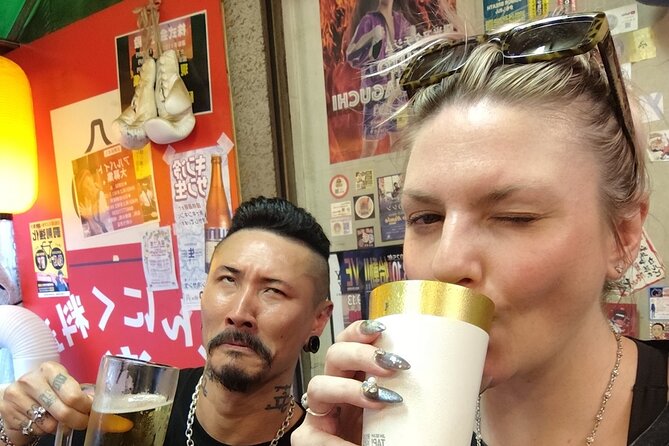
- Food + a drink each stop keeps the “this is a tour, not a classroom” vibe.
- Nishinari Kamagasaki context gives the why behind what you see on the street.
- Old samurai pilgrim route segments add structure to the wandering.
- Ends at Tengachaya Station so you can slip back into the city fast.
- Mobile ticket and a clear meeting point make it easier to find the start.
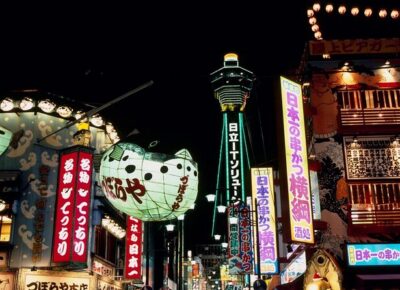
Shinsekai keeps going, kushikatsu and all

Nishinari’s Deep Osaka: what makes this tour different
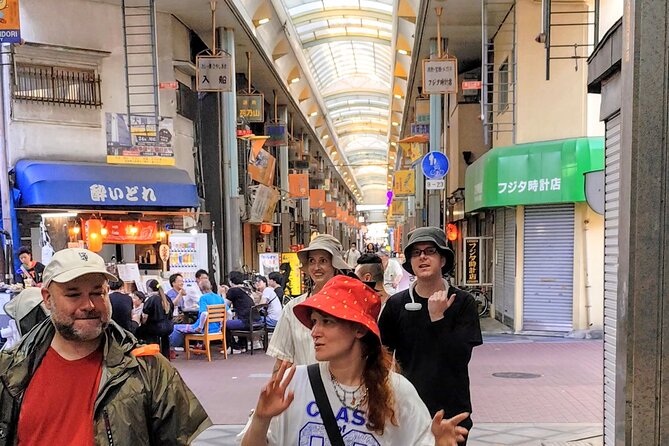
Nishinari is the kind of neighborhood that makes Osaka feel real. The big sights are still in the city, of course, but here you learn how local life keeps going—through change, through hardship, and through daily creativity.
What I like is that the tour doesn’t treat food as a separate activity. You’re walking the neighborhood, seeing the textures of the streets, and then sitting down to eat what people actually order. That rhythm matters. It turns “I ate some good stuff” into “I understood the place I ate in.”
This is also built for comfort and focus. The group cap is 5 travelers, and the whole thing runs about 3 to 4 hours, so you’re not stuck for half a day. It’s long enough to eat properly and walk enough to feel you’ve moved through the neighborhood, not just crossed it.
Starting point at Lawson Haginochaya: easy to locate, smart to arrive ready
You meet at LAWSON Haginochaya 1 Chome Store (1-chōme-6-20 Haginochaya, Nishinari Ward). A Lawson start is one of my favorite kinds of meeting spots in Japan: it’s recognizable, well-situated, and easy to confirm from transit.
From there, the tour sets the tone in Kamagasaki, an area often described by locals as Deep Osaka. You’ll get a guided walk that connects the neighborhood’s past—Edo Period samurais—with modern urbanization and social unrest. It’s the kind of explanation that helps you read what you’re seeing. Street art, old pathways, and everyday storefront life all start to make more sense when you know what the guide is pointing at.
Timing also matters. Arrive a few minutes early so you can settle in. This kind of walking tour works best when you’re not doing last-minute navigation while the group is already rolling.
Stop in the Kamagasaki zone near Nishinari Dobutsuen-mae
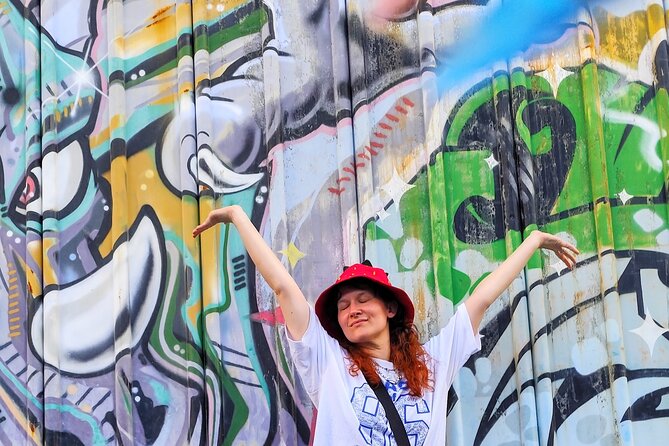
The tour’s first featured segment takes place in the Kamagasaki area, around Nishinari Dobutsuen-mae. The idea here isn’t just to start with food—it’s to frame the neighborhood first.
You’ll explore back streets together, and your guide will walk you through the historical arc: from Edo-era samurai pilgrim traditions to the reality of a city that has had to adapt again and again. The “why” is important. Without it, you might see street art and older urban corners as random visuals. With it, you understand them as part of how people express themselves and survive.
This opening stop also includes an admission ticket labeled free. In practice, that means you’re getting access to something along the way without paying extra on top of the tour price. Even if you don’t care about the ticket details, it signals that the tour is designed with built-in value, not just a chain of street-level snacks.
Come hungry: more eating your way through Osaka

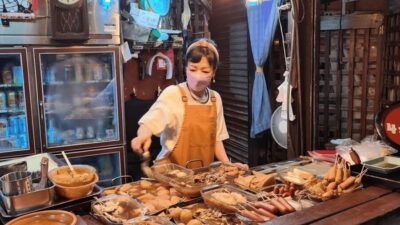
How the eating part works: local restaurants, set dishes, and drinks
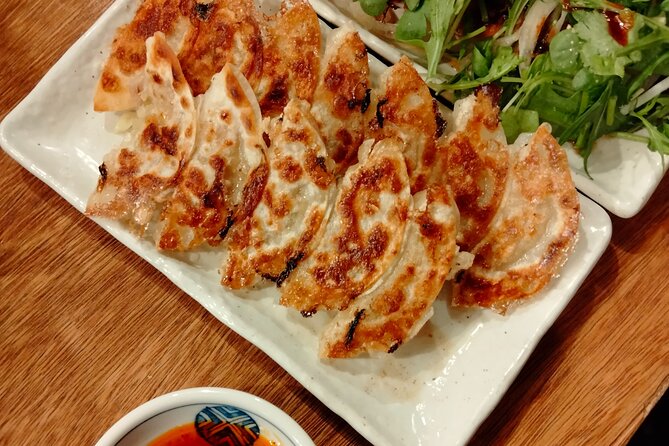
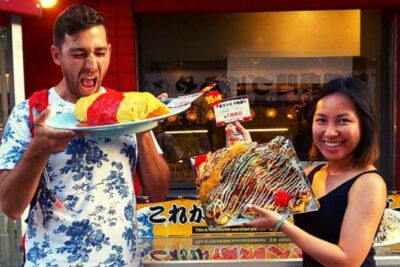
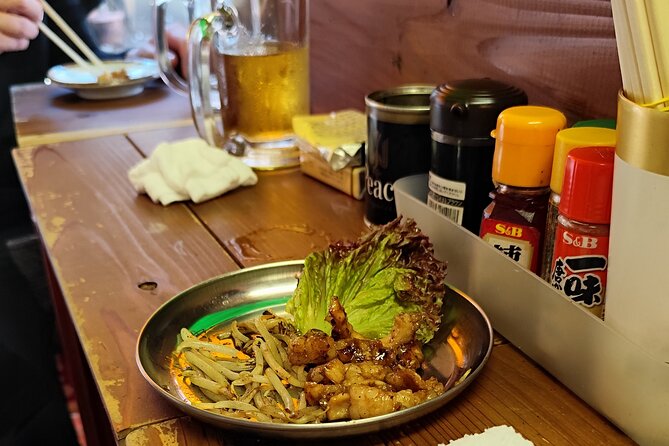
This is called a Hidden Osaka Foodie Tour for a reason: you’re not running a tasting-menu marathon at famous places. You’ll visit hand-picked neighborhood restaurants, and each food stop includes a drink.
That “each served with a drink” detail is one of the best value clues in the whole description. In many food tours, drinks are treated like an optional add-on or you’re stuck ordering what the restaurant has at tourist pricing. Here, the structure feels more like a guided local meal schedule. You get to sample what the restaurant does well, without turning every stop into a separate negotiation.
The tour also emphasizes quieter hours and family-run businesses. That’s more than feel-good branding. In real life, smaller places often do best when they’re not competing with daytime crowds and tour groups. When the tour routes you there at the right time, you’re supporting the people behind the seats, not just checking a box.
One practical point: because the tour is built around authentic local dining, it’s not optimized for Western tastes. You’ll likely encounter flavors and menu styles that are distinctly Osaka. If you’re picky, expect to rely on the guide to help you choose what’s right at each stop—or to help you interpret what you’re eating.
Walking the old samurai pilgrim route and the street art you’ll actually notice
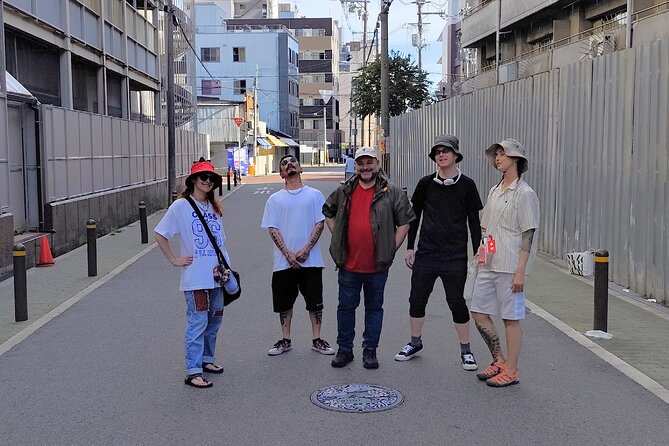
Between meals, you follow part of an old samurai pilgrim route. That does two things for you. First, it gives the tour a logical backbone, so you’re not just wandering. Second, it makes the streets feel intentional—like you’re moving along paths that matter, not just cutting across blocks.
Then there’s the street art. Nishinari’s backstreets come with colorful street art and history, and this tour is the kind that makes you look up. One of the reviews highlights graffiti artist works and how good history plus art guidance made the area click fast. The takeaway for you: don’t treat the art like decoration. With the guide’s context, you’ll start noticing what’s painted where and why it’s part of the neighborhood’s voice.
You’ll also hear stories of resilience and creativity—how everyday Osaka life continues, even under pressure. The guide’s goal isn’t to be dramatic. It’s to show you how neighborhoods function when they’re doing the real work of housing, livelihood, and community.
If you walk in expecting “a fun snack walk,” you might still enjoy it. But if you walk in ready to connect story to place, this part becomes the highlight.
The guiding style: small group, real conversation, and area context
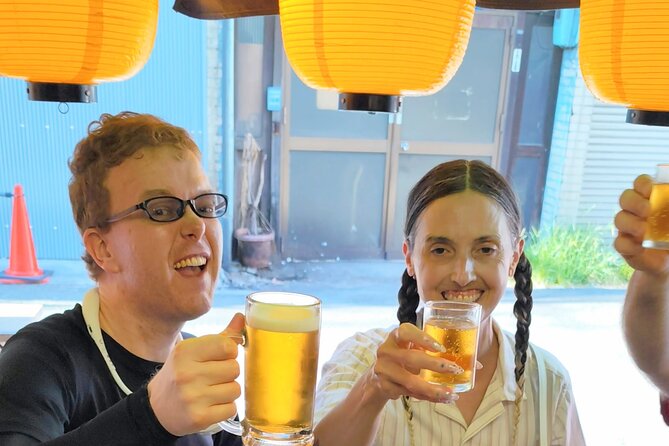
The guide matters on a walking food tour because you need someone to translate what you see. In at least one set of experiences, the guide named Jaymie is called out for being informative and for pairing neighborhood history with the food and art. That’s a great sign of what you should expect: a blend of explanation and active guiding, not just leading the group from restaurant to restaurant.
Here’s the practical benefit for you: you’ll know what to ask about while you’re there. When the tour is small, questions land naturally. You can ask why a street feels the way it does, why a dish is local, or what to look for as you walk. Big tours often move too fast for that.
Also, the tour ends with you feeling oriented. You’re not dropped into the chaos and told good luck.
Finishing at Tengachaya Station: quick exit, easy transit back

The tour wraps up at Tengachaya Station, which is a smart choice. It’s not an awkward “now you’re on your own in the middle of nowhere” ending.
Tengachaya Station also connects you to Osaka Metro lines and the Nankai Line. There’s also a taxi stand in front of the station if you want a faster ride back. For most visitors, that means you can keep your evening plans without stress—either take transit or grab a taxi if you’re tired.
This kind of ending is especially helpful because walking and eating can add up quickly. You’ll be glad you can transition smoothly to your hotel or next stop.
Price and value: $84.92 for 3–4 hours of neighborhood access
At $84.92 per person, this isn’t a budget-only food stop. But it doesn’t pretend to be. For the money, you’re getting:
- a small group (max 5)
- multiple hand-picked restaurant stops
- a drink served with each dish
- guided walking with neighborhood context, including samurai-route history and street art interpretation
- an ending that’s easy to reach at Tengachaya Station
- a free cancellation window up to 24 hours before the start time
So how does that feel as value? In my view, the strongest value piece is the drink + guided structure. A lot of “food tours” end up being snack tastings plus transit time. Here, the format turns it into something closer to a curated local meal series, with context built in so it feels like more than eating.
Also, the tour supports family-run businesses during quieter hours, which is exactly where your spend matters. You’re paying for access to the right places at the right time, guided by someone who knows how to match story to food.
If you love history, street art, and local neighborhoods, it’s priced like an experience, not a random group dinner. If you only want a few bites and don’t care about the background, you might feel it’s more than you need.
Who should book this Osaka foodie tour—and who might skip
This tour is best for you if:
- you like neighborhood walking more than landmark chasing
- you want authentic local dining with drink pairing
- you enjoy history that’s tied to what you see on the street
- you prefer small-group pacing
- you want to understand Nishinari’s identity beyond headlines
You might skip or at least ask questions first if:
- you dislike walking in less tourist-oriented areas
- you’re only comfortable eating at highly controlled menu places
- you have strict dietary needs (since the tour focuses on local dishes rather than customization, and no diet policy details are listed)
Also, service animals are allowed, and the tour is near public transportation—good notes if you’re planning your day and need practical mobility options.
Should you book Hidden Osaka Foodie Tour (Nishinari Backstreets & Local Dining)?
My honest take: if you want Osaka that feels lived-in, this is a solid choice. The mix of local restaurants, street art, and a samurai-route storyline makes it more memorable than a standard “eat-and-walk” meal tour.
Book it if you’re the kind of traveler who enjoys small streets, asks questions, and likes to return to your hotel feeling like you met a place instead of just passed through it. With a max group size of 5 and a 3–4 hour duration, it’s also the right length for most schedules.
Book something else if your idea of a great tour is mostly polished sights and big-name stops. This one trades “famous” for “real,” and that’s the point.
If you’re on the fence, I’d still lean toward booking—especially since it’s commonly booked about 12 days in advance, and free cancellation up to 24 hours gives you flexibility if plans shift.
FAQ
How long is the Hidden Osaka Foodie Tour?
It lasts about 3 to 4 hours.
Where does the tour start?
The start point is LAWSON Haginochaya 1 Chome Store, 1-chōme-6-20 Haginochaya, Nishinari Ward, Osaka.
Where does the tour end?
The tour ends at Tengachaya Station in Nishinari Ward, Osaka.
What is the group size limit?
The tour has a maximum of 5 travelers.
How much does it cost?
It costs $84.92 per person.
Do I get a mobile ticket?
Yes, the tour uses a mobile ticket.
How far in advance should I book?
On average, it’s booked about 12 days in advance.
Is it easy to reach by public transportation?
Yes, it is near public transportation, and the meeting and ending points are transit-accessible.
Are service animals allowed?
Yes, service animals are allowed.
Is free cancellation available?
Yes. You can cancel up to 24 hours in advance for a full refund.
Will I receive confirmation after booking?
Confirmation is received at the time of booking.
More Tour Reviews in Osaka
- Osaka Go Karting Tour with Funny Costume★ 5.0 · 2,658 reviews
- Osaka Castle: Museum and Tower Entry Ticket★ 4.5 · 2,380 reviews
- Osaka: Shinsekai Food Tour with 13-15 Dishes at 5 Eateries★ 4.8 · 2,204 reviews
- Osaka Food Tour: 13 Dishes at 5 Local Eateries★ 5.0 · 2,149 reviews
- Hungry Osaka Street Food Tour:15 Tastings & 3 Drinks with a Local★ 5.0 · 1,727 reviews
The Kuidaore List: Eat More of Osaka
- Osaka: Shinsekai Food Tour with 13-15 Dishes at 5 Eateries★ 4.8 · 2,204 reviews
- Osaka Food Tour: 13 Dishes at 5 Local Eateries★ 5.0 · 2,149 reviews
- Hungry Osaka Street Food Tour:15 Tastings & 3 Drinks with a Local★ 5.0 · 1,727 reviews
- Deep Backstreet Osaka Tours (Option to add Dinner)★ 5.0 · 1,290 reviews
- Osaka Local Foodie Walking Tour in Dotonbori and Shinsekai★ 5.0 · 985 reviews
Under Tsutenkaku Tower
- Osaka: Shinsekai Food Tour with 13-15 Dishes at 5 Eateries★ 4.8 · 2,204 reviews
- Osaka Local Foodie Walking Tour in Dotonbori and Shinsekai★ 5.0 · 985 reviews
- Osaka: Tsutenkaku Tower Entry Ticket★ 3.8 · 125 reviews
- Osaka: Local Foodie Tour in Dotonbori and Shinsekai★ 4.7 · 95 reviews
- Retro Osaka Street Food Tour: Shinsekai★ 4.5 · 77 reviews
The Newest Osaka Write-Ups
- Private Photoshoot in Osaka with a Professional Photographer
★ 5.0 · 3 reviews - Osaka Early Morning Osaka Castle Tour Avoid Crowds
★ 5.0 · 3 reviews - Nara Private Tour with Pick and Drop and English Speaking Driver
★ 3.5 · 3 reviews - Osaka: Modern Vegetarian Sushi Cooking Class
★ 5.0 · 3 reviews - Nara Day Trip from Osaka with a Licensed Guide
★ 5.0 · 3 reviews
Shinsekai & Tsutenkaku Tours, compared.
 ★ 4.8Shinsekai Food Tour with 13-15 Dishes at 5 EateriesFrom $532,204 reviews
 ★ 5.0Osaka Local Foodie Walking Tour in Dotonbori and ShinsekaiFrom $111985 reviews
 ★ 3.8Tsutenkaku Tower Entry TicketFrom $8125 reviews
 ★ 4.7Local Foodie Tour in Dotonbori and ShinsekaiFrom $10895 reviews
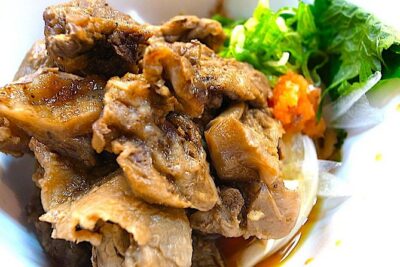 ★ 4.5Retro Osaka Street Food Tour: ShinsekaiFrom $21777 reviews
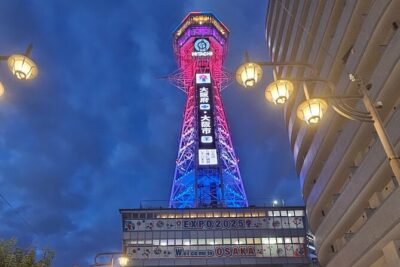 ★ 4.5Shinsekai Food Tour – 13 Dishes at 5 Local EateriesFrom $7929 reviews
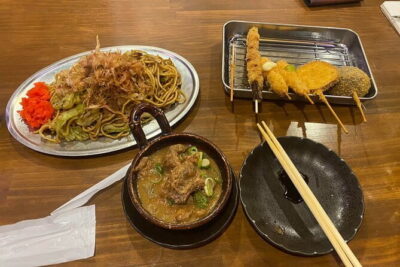 ★ 5.0Night Soul Food Tour in Shinsekai with a local guideFrom $8528 reviews
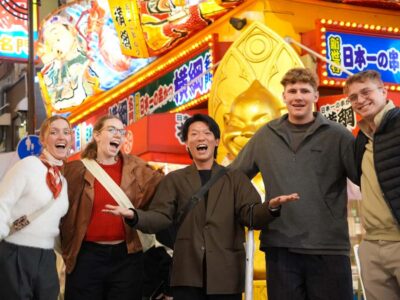 ★ 5.0Osaka Morning Tour: Shitennoji Temple, Shinsekai &DoutonboriFrom $7423 reviews
Browse the lists this tour appears in