
Reviewed · OSAKA LIVE SHOWS
Traditional Japanese Music show & Experience Tour in Osaka
Traditional Japanese instruments sound different when you’re close. This Osaka session pairs a live hogaku concert with hands-on time, so you’re not just watching from the back row. You get professional musicians on hand, a chance to ask questions, and a short photo moment with the instruments you’ve tried.
What I really like is the balance: 25 minutes of listening, then 25 minutes of getting your hands on the real thing. I also like the up-close setup and the fact that the program includes instruments like shamisen, koto, and wadaiko, plus more depending on the day.
One thing to consider: the whole experience is only about 60 minutes. If you’re hoping for a long concert or a deep study session, this format may feel quick, and the exact instruments and content can vary by day.
In This Review
- Key things to know before you go
- How the 60-Minute Hogaku Session Works in Osaka
- Hearing Shamisen, Koto, Wadaiko, and More Up Close
- Hands-On Instrument Time: What You Actually Get to Do
- Questions for the Pros: Turning Curiosity Into Real Understanding
- Photos With Instruments and Why It’s Not Just a Souvenir
- Price and Value: Is $46.12 Worth It?
- Meeting Point in Minamisenba: Easy to Build Into Your Day
- Best Fit: Who This Tour Suits in Osaka
- Should You Book This Traditional Music Experience in Osaka?
- FAQ
- What’s included in the Traditional Japanese Music show and experience?
- How long does the experience take?
- Which instruments can I expect to hear and try?
- How many people are in the group?
- Where is the meeting point?
- Is free cancellation available?
Key things to know before you go
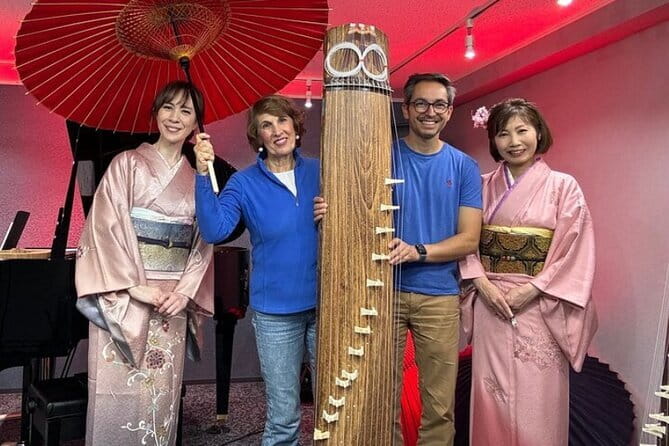
- Live hogaku, then hands-on playing: concert time is matched with a try-it-yourself session
- Small group size (up to 7): it stays personal enough for real questions
- Instruments include shamisen, koto, and wadaiko: plus additional traditional instruments depending on the day
- Program runs about 60 minutes total: 25 + 25 + 10, then you’re done
- Mobile ticket and a fixed meeting point: easy to plan around in Minamisenba
More curtains going up around Osaka

How the 60-Minute Hogaku Session Works in Osaka
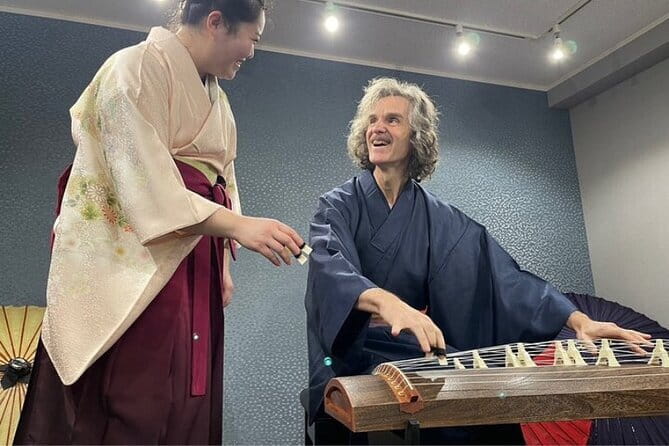
This experience is built like a tight three-part arc. First, you settle in for an authentic concert lasting about 25 minutes. Second, you shift from listener mode to participant mode for another 25 minutes, where you can try playing traditional instruments. Finally, you wrap up with about 10 minutes for photos with the instruments and performers, so you can take home something more tangible than just memories.
That timing matters. In a city like Osaka, it’s easy to tack on something small and cultural without losing an entire evening. Here, you get a clear rhythm: hear it, touch it, photograph it. It’s also long enough to learn the basics of what you’re hearing, but short enough that you’re unlikely to feel stuck in a slow pace.
The program you get can change depending on the day. The core concept stays the same, but the instrument line-up and content vary. Wednesday has an 11:00 start, and Friday has an 18:30, so if you’re choosing between the two, think about what fits your schedule more comfortably.
Hearing Shamisen, Koto, Wadaiko, and More Up Close
The concert portion is where you really get the sound-world of traditional Japanese music. You’ll hear multiple instruments live, including shamisen (a Japanese lute), koto (a Japanese harp), and wadaiko (Japanese drums), along with additional instruments that may appear depending on the day’s program.
I like that this isn’t presented as a single-instrument demo. Multiple instruments means you can compare tones and roles: string instruments often carry melody and texture, while drums tend to shape rhythm and energy. Even in a short concert, you can start noticing how hogaku instruments communicate with each other in real time.
Another plus is the closeness. The whole structure of the tour makes you feel nearer to the performance than you would in a typical big venue. That proximity helps you catch details like how the players control timing, how accents land, and how the music changes when different instruments enter.
Hands-On Instrument Time: What You Actually Get to Do
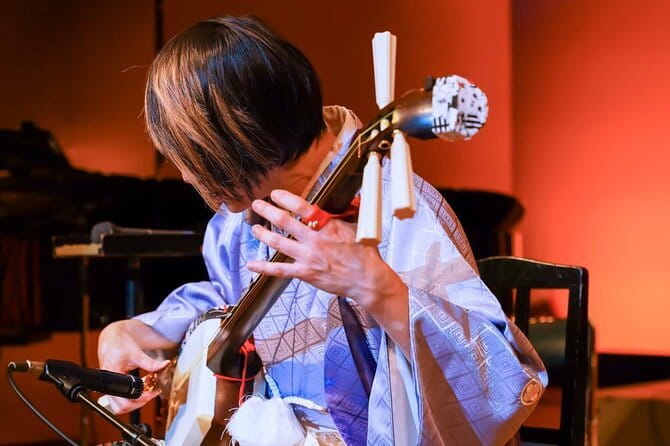
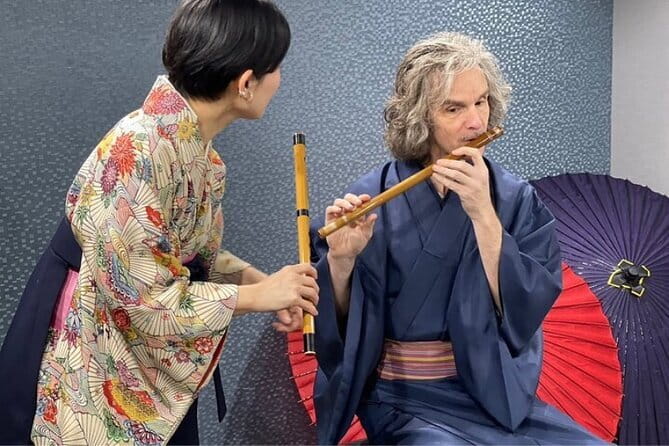
The second half is the part most people remember: you get to try playing. The activity includes a Japanese musical instrument for the experience, so you’re not left wondering whether you’ll get any hands-on time. It’s set up specifically so you can handle and play the instruments yourself, not just watch someone else demonstrate from afar.
This section usually works best if you mentally switch from performance expectations to learning expectations. Think of it as a first contact. You’re there to explore the feel of the shamisen-like string sounds, the way koto techniques change the tone, or how wadaiko rhythm works when you’re the one producing it. You’re not on stage for a full-length recital. You’re participating in the music-making process.
I also like that this format turns the concert into something practical. When you later listen to similar music elsewhere, you’ll recognize what the instruments are doing physically. That’s why this kind of “hear it and try it” setup tends to feel more valuable than a straight show.



Questions for the Pros: Turning Curiosity Into Real Understanding
One of the simplest joys of this tour is the Q-and-A energy. Professional musicians are there, and you can ask as many questions as you like. That matters because traditional instruments have real technique behind them, and most people won’t know what to ask until they’re standing there hearing it live.
If you’ve ever wondered things like how a player controls pitch or rhythm, or how different instruments fit together, this is the time to ask. The best part is that your questions can be tailored to what you noticed in the concert segment. You’re not guessing what’s important. You can point to what you just heard and ask directly.
The small group size helps here too. With a maximum of 7 people, you’re less likely to feel like you’re competing for attention. You can get answers that actually connect to your experience, which makes the whole thing feel more personal.
Photos With Instruments and Why It’s Not Just a Souvenir

At the end, you get about 10 minutes for photos with the instruments and performers. This isn’t just a random photo stop. It’s timed after the hands-on playing, which means you’re photographing something you already interacted with.
From a practical standpoint, this is also smart: you’re not scrambling for photos while the music is happening. You’re not trying to remember what the instrument looked like before you touched it. You leave with images that match what you did.
One small tip: bring a phone you’re comfortable using quickly. You don’t have long, so you’ll want to spend time choosing shots rather than fighting with settings. If you’re using a camera or want multiple angles, decide ahead of time what you want, then use the time efficiently.
Price and Value: Is $46.12 Worth It?
The price is $46.12 per person for an experience that runs about one hour. On paper, that might look like a short show. In practice, the value comes from the combination: live concert plus hands-on instrument time, plus photo time.
Also, what’s included is meaningful. The tour includes a Japanese musical instrument for the experience, which removes a common travel hassle: paying for instruction but not really getting access to the hands-on part. Here, the try-it component is built in.
What’s not included is private transportation. So you’ll want to plan your own trip to the meeting point using public transportation. If you’re already in central Osaka, that’s usually an easy add-on, and the short duration helps you avoid “transport tax” in time and cost.
The other value factor is the group size. Up to 7 people keeps it more intimate, which is exactly what you want for something like instrument handling and Q-and-A. That’s where this experience tends to feel special compared with larger, more one-direction performances.
Meeting Point in Minamisenba: Easy to Build Into Your Day
You start at アルファ 心斵橋3-chōme-5-27, Minamisenba, Chuo Ward, Osaka 542-0081. The good news is that it’s near public transportation, so you should be able to reach it without complicated routing.
This activity ends back at the meeting point. That keeps things simple: you’re not left navigating a different drop-off area after the music session.
Practical move: arrive a little early so you have a minute to orient yourself before the concert begins. With an hour total, you don’t want to lose time at the start. If you’re taking transit, add buffer for station-to-street walking.
Best Fit: Who This Tour Suits in Osaka
This tour is a strong fit if you want more than a passive cultural stop. If you love music and you enjoy learning by doing, you’ll likely appreciate the structure: hear the instruments live, then try them yourself right after. It’s also a great choice if you’re curious about hogaku and want a guided path into understanding it quickly.
It’s especially good for groups of friends because of the shared, hands-on element. The photo moment also helps everyone leave with something you can point to later.
If you only want a long, uninterrupted concert performance, this might not match your expectations. The program is designed to be short and interactive, not to stretch into a full evening of listening.
Also note the logistics: a minimum of 2 participants is required. If the session doesn’t meet that minimum, you may be offered a different date/experience or a full refund. That’s normal for small-group activities, and it’s worth bearing in mind when you’re booking around a tight itinerary.
Should You Book This Traditional Music Experience in Osaka?
If your goal is a high-value cultural experience that mixes listening with actual instrument time, I’d book it. For the price, you get a compact concert, hands-on playing, and a photo moment, all in a small group setting where you can ask real questions. That combination is rare, and it’s what makes this kind of tour feel worth scheduling.
I’d skip it only if you strongly prefer long, uninterrupted performances or you’re looking for a passive museum-style experience. This is an interactive session, and the whole point is that you participate.
If you can do either the Wednesday 11:00 or Friday 18:30 slot, choose based on what fits your day best. Then show up ready to listen carefully for 25 minutes, and treat the playing time as a first practical lesson rather than a test. That mindset is what helps you get the most out of the hour.
FAQ
What’s included in the Traditional Japanese Music show and experience?
The experience includes a Japanese musical instrument for you to try playing during the session.
How long does the experience take?
It runs about 1 hour total, with 25 minutes of concert, 25 minutes to try playing instruments, and about 10 minutes for photos.
Which instruments can I expect to hear and try?
You can expect instruments such as shamisen, koto, and wadaiko, plus other traditional instruments depending on the day’s program.
How many people are in the group?
The tour has a maximum of 7 travelers, and it requires a minimum of 2 participants to run.
Where is the meeting point?
You meet at アルファ 心斵橋3-chōme-5-27, Minamisenba, Chuo Ward, Osaka, 542-0081, Japan. It ends back at the same meeting point.
Is free cancellation available?
Yes. You can cancel for a full refund up to 24 hours before the experience’s start time.
More Tour Reviews in Osaka
- Osaka Go Karting Tour with Funny Costume★ 5.0 · 2,658 reviews
- Osaka Castle: Museum and Tower Entry Ticket★ 4.5 · 2,380 reviews
- Osaka: Shinsekai Food Tour with 13-15 Dishes at 5 Eateries★ 4.8 · 2,204 reviews
- Osaka Food Tour: 13 Dishes at 5 Local Eateries★ 5.0 · 2,149 reviews
- Hungry Osaka Street Food Tour:15 Tastings & 3 Drinks with a Local★ 5.0 · 1,727 reviews
Showtime in Osaka
- Osaka: Sumo Show & Experience w/ Optional Kimono & Hot Pot★ 4.5 · 609 reviews
- Osaka: Sumo Stage Show with Bento or Snack + Fight & Photo★ 4.3 · 364 reviews
- Osaka: English Stand Up Comedy Show at Osaka Comedy Club★ 4.7 · 203 reviews
- Osaka: UTAGE Japanese Taiko Live Show★ 4.9 · 167 reviews
- Osaka Sumo Experience with Live Show and Audience Challenge★ 5.0 · 162 reviews
The Newest Osaka Write-Ups
- Private Photoshoot in Osaka with a Professional Photographer
★ 5.0 · 3 reviews - Osaka Early Morning Osaka Castle Tour Avoid Crowds
★ 5.0 · 3 reviews - Nara Private Tour with Pick and Drop and English Speaking Driver
★ 3.5 · 3 reviews - Osaka: Modern Vegetarian Sushi Cooking Class
★ 5.0 · 3 reviews - Nara Day Trip from Osaka with a Licensed Guide
★ 5.0 · 3 reviews
Osaka Live Shows, compared.
 ★ 4.5Sumo Show & Experience w/ Optional Kimono & Hot PotFrom $77609 reviews
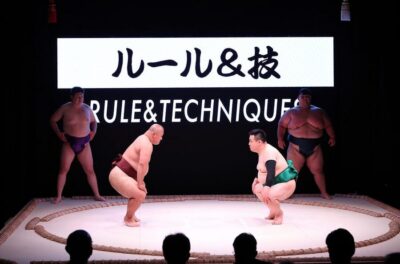 ★ 4.3Sumo Stage Show with Bento or Snack + Fight & PhotoFrom $93364 reviews
 ★ 4.7English Stand Up Comedy Show at Osaka Comedy ClubFrom $19203 reviews
 ★ 4.9UTAGE Japanese Taiko Live ShowFrom $40167 reviews
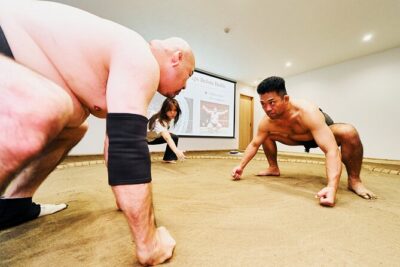 ★ 5.0Osaka Sumo Experience with Live Show and Audience ChallengeFrom $55162 reviews
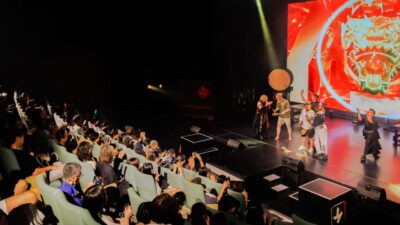 ★ 4.8OSAKA NIGHT FUSION Japanese Taiko Kabuki Samurai Dance ShowFrom $40155 reviews
 ★ 5.0UTAGE Modern Japanese Taiko Live ShowFrom $1981 reviews
 ★ 4.5A Modern Samurai, Kabuki, Taiko, & Dance ShowFrom $1966 reviews
Browse the lists this tour appears in