
Reviewed · OSAKA PRIVATE TOURS
Osaka: Full-Day Private Guided Tour of the Historical City
Osaka history hits different when you walk it. This full-day private tour strings together Sumiyoshi-taisha (Shinto), Shitennoji (early Buddhism), Osaka Castle, and Shinsekai in one smooth route that also explains the city’s mix of religion, politics, and everyday life.
I love how the day gives you context, not just photos. First, it’s built around the places where Osaka’s belief systems and power stories meet. Second, having a guide like Mouloud means you get real answers and practical help, not a rushed lecture.
The main thing to plan for is walking. You’ll spend hours on foot between stops, so bring comfortable shoes and expect a long but satisfying day.
Key things I’d plan around
- Shinto first, always: Start at Sumiyoshi-taisha, then let the day flow into Buddhism and beyond
- Early Buddhism spotlight: Shitennoji dates from 593 and fits history lovers perfectly
- Osaka Castle as a samurai timeline: Late 16th-century power, explained in plain terms
- Shinsekai’s retro Osaka mood: Tsutenkaku and a 1970s-style atmosphere on foot
- A guide who answers questions: Mouloud took time for follow-ups and even helped with ticket and train logistics
In This Review
- Osaka’s History, Told in Four Real Neighborhood Moods
- Sumiyoshi-taisha: Start With the Spiritual Osaka (Not the Tourist Osaka)
- Shitennoji Temple (Dating From 593): Buddhism’s Early Footprint
- Osaka Castle: Samurai-Era Power You Can Read Like a Story
- Shinsekai and Tsutenkaku: Ending in Retro Osaka Mode
- Price and Logistics: What $225 Gets You (and What Costs Extra)
- Your Guide Makes the Difference (And Mouloud’s Strength Is Answers)
- How Much Time You’ll Spend (and Why It Works)
- Who This Private Tour Is Best For
- Should You Book This Osaka Historical Private Tour?
- FAQ
- What’s the duration of the Osaka private guided tour?
- What does the tour price include?
- What costs extra during the tour?
- Where does the tour start and end?
- Which languages are available for the live tour guide?
- Is this a private group tour?
- Is the tour wheelchair accessible?
- What are the main stops on the itinerary?
- Is there free cancellation?
- Can I reserve without paying immediately?
Osaka’s History, Told in Four Real Neighborhood Moods
Osaka doesn’t do history like a museum. It does it like a street map. One area feels spiritual and ancient. Another feels political and strategic. Then the day ends in a retro pocket where you can almost hear old radio jingles and snack vendors.
This is a full-day private guided tour (8 hours) that moves on foot and by public transport. You get pickup in Osaka and end the day at Ebisucho Station, so you’re not stuck backtracking. And because it’s private, the guide can pace things around your questions and comfort level.
The biggest value isn’t only the sights. It’s how the tour connects them. You’re not just collecting landmarks—you’re building a sense of how Osaka thinks, worships, and rules at different moments in time.
A guide to yourselves, more private days out

Sumiyoshi-taisha: Start With the Spiritual Osaka (Not the Tourist Osaka)
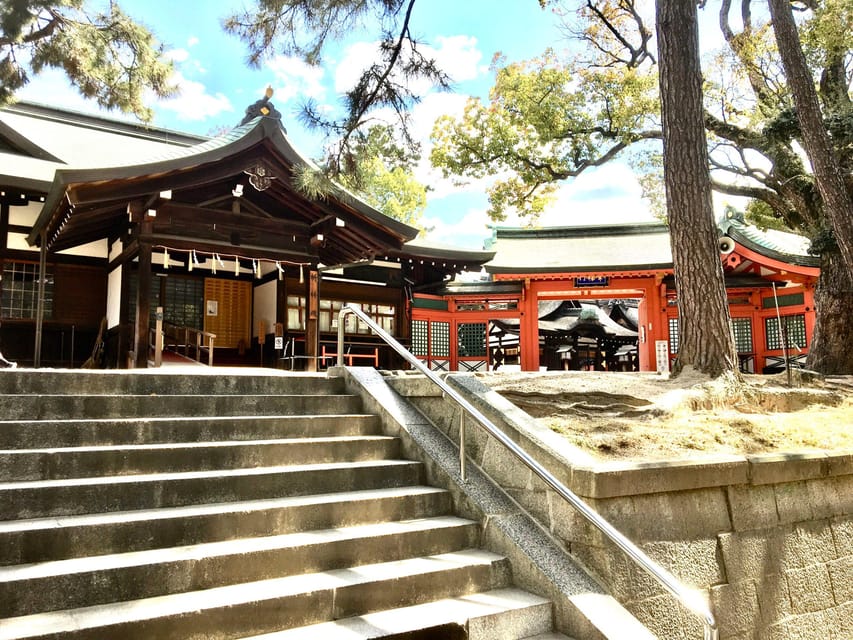
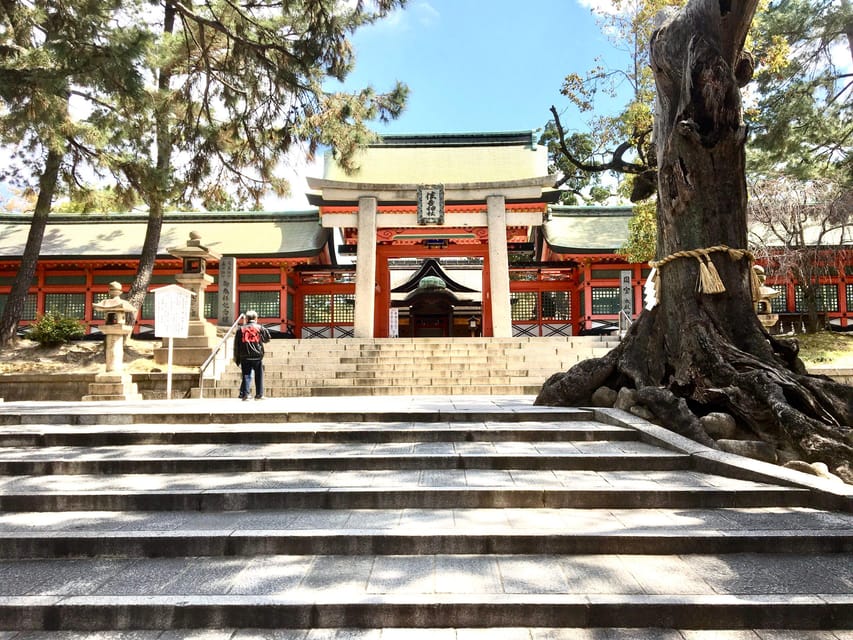
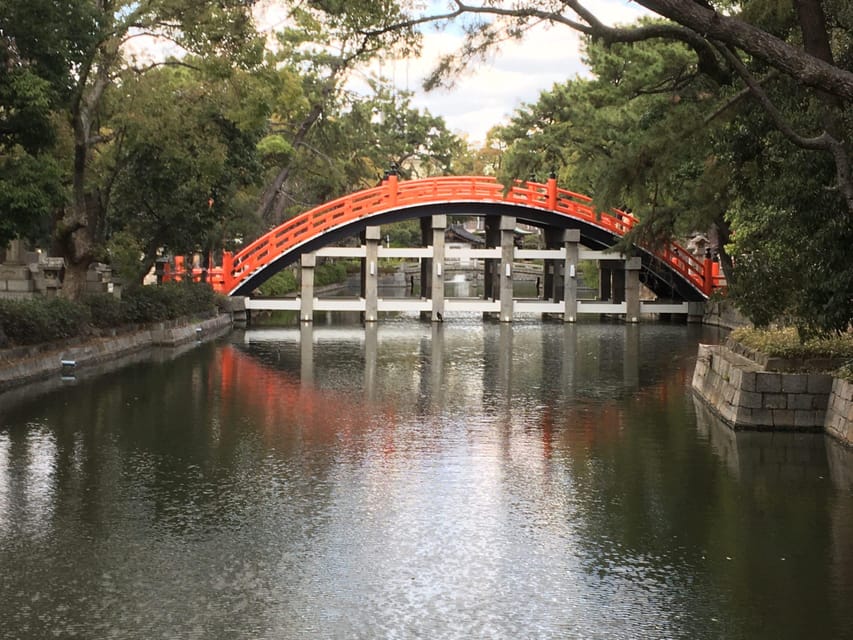
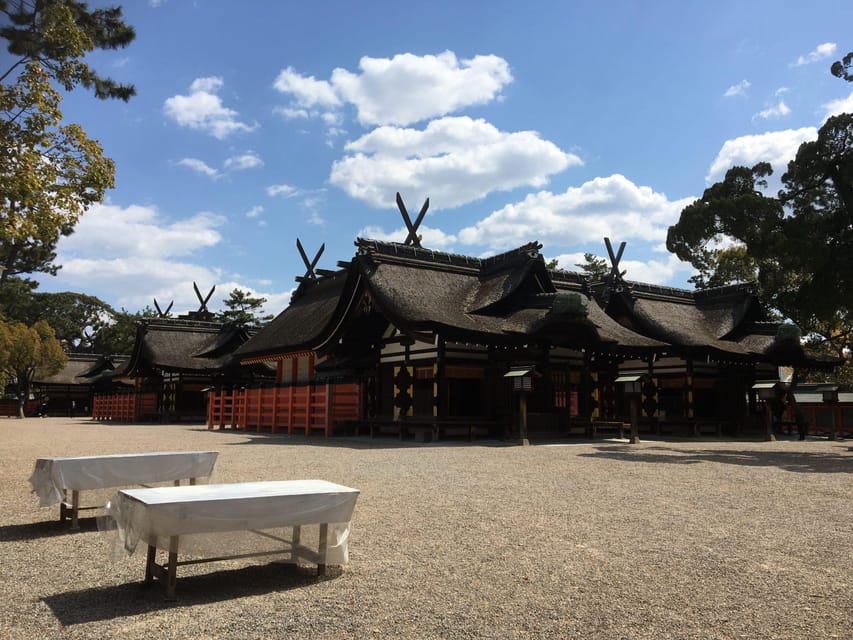
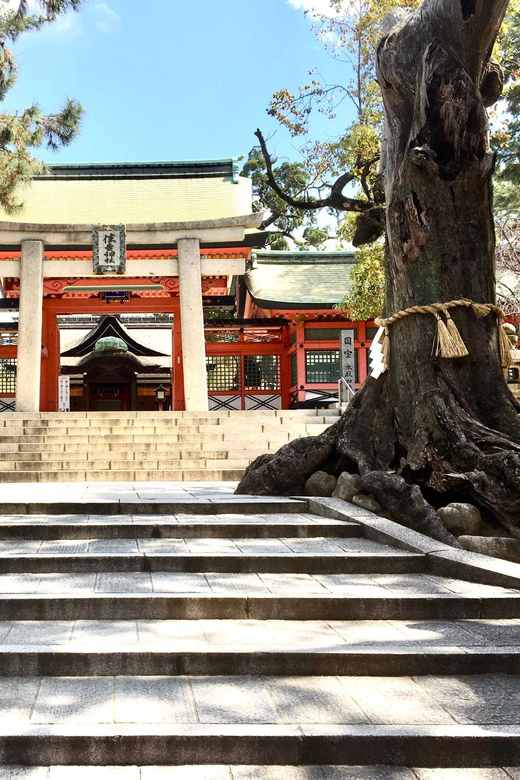
You’ll begin at Sumiyoshi-taisha Shinto Shrine, with a history stretching back about 1,800 years. This sets the tone in a way that matters. When you start with Shinto, you understand that religion in Japan isn’t only something you visit—it shapes community rhythm, identity, and even how people interpret places.
I like that this stop isn’t treated like a quick photo stop. You get a guided visit and time to walk, so you can actually notice the traditional architecture rather than sprint past it. The shrine feels designed for slowing down. The details invite you to look longer than you expected.
What to watch for: if you’re the type who likes architecture and atmosphere, this first segment is where you’ll feel the payoff. If you prefer big “wow” monuments only, you’ll still appreciate this, but you’ll want to lean into the calm.
Shitennoji Temple (Dating From 593): Buddhism’s Early Footprint
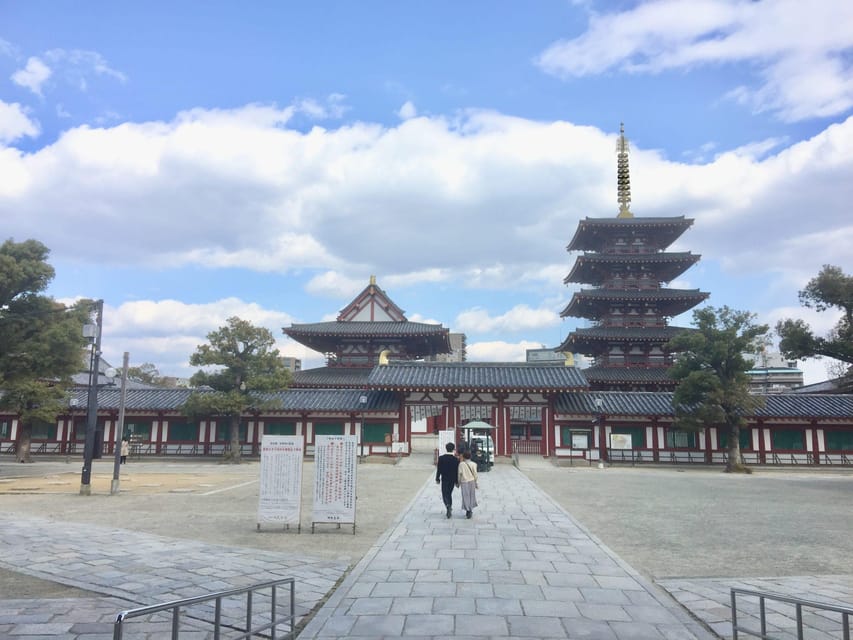
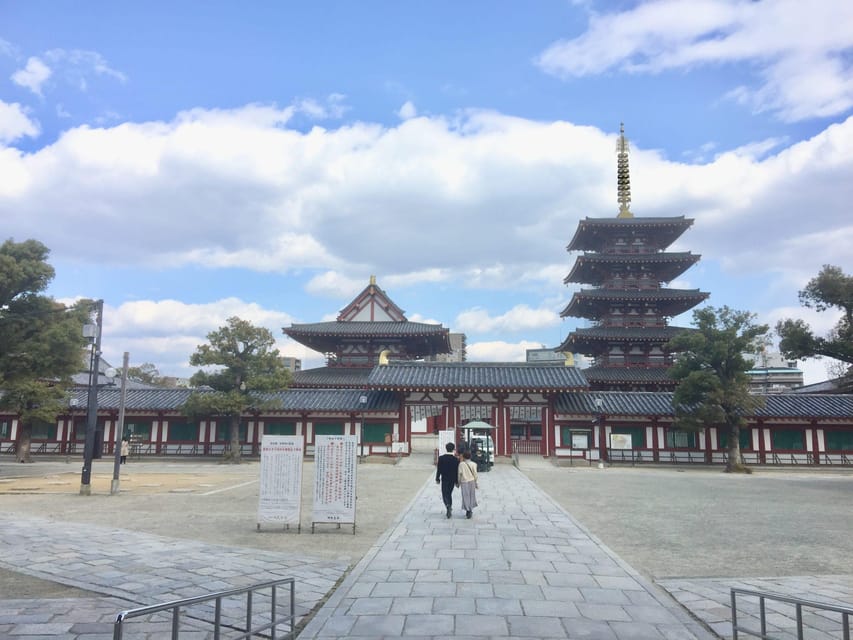
Next up is Shitennoji Temple, dating from 593. That date matters because it places the site at the start of Buddhism taking root in Japan. This stop is a strong match for history lovers because you’re standing in a location tied to one of the earliest phases of Buddhist arrival.
The tour keeps the story grounded in what you can see and experience. You’ll get guided time for the temple and enough walking to let the place settle into your brain. You’ll also hear the kind of framing that helps religion make sense in the broader picture—especially alongside politics, power, and cultural change.
Potential drawback: temple visits can vary a bit in what’s emphasized depending on the day and the flow of the site. So if you’re hoping for an ultra-specific focus (like one particular structure only), bring a question to your guide early.
Osaka Castle: Samurai-Era Power You Can Read Like a Story
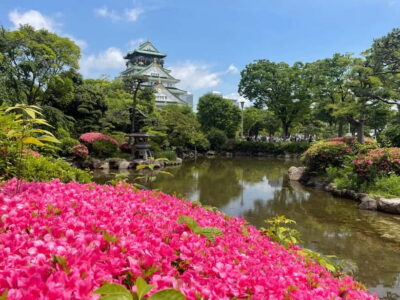
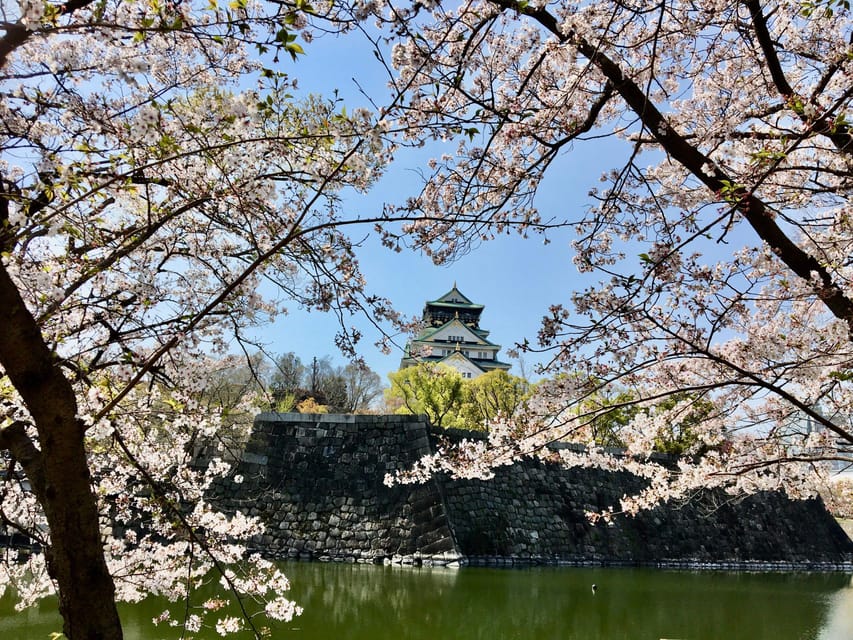
Then the tour pivots into Osaka Castle, a medieval castle dating from the late 16th century. Even if you’ve seen castle photos before, this is different because the day gives you historical scaffolding. The guide ties the castle to the samurai era and helps you understand why a place like this mattered beyond its looks.
I like how Osaka Castle works on two levels. It’s a major visual landmark, but it’s also a learning tool. When someone explains the city’s power shifts while you’re standing in the setting, the facts stick better. You stop memorizing and start connecting.
Practical tip: plan for more walking time around the castle grounds and areas where you’ll move between viewpoints. If you’re wearing the wrong shoes, Osaka will remind you fast.
The wider Osaka sweep, done a few ways

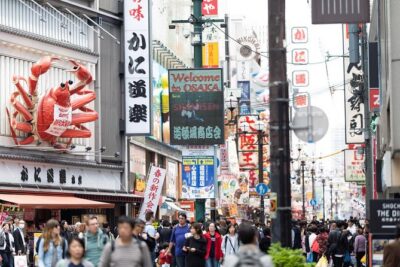
Shinsekai and Tsutenkaku: Ending in Retro Osaka Mode
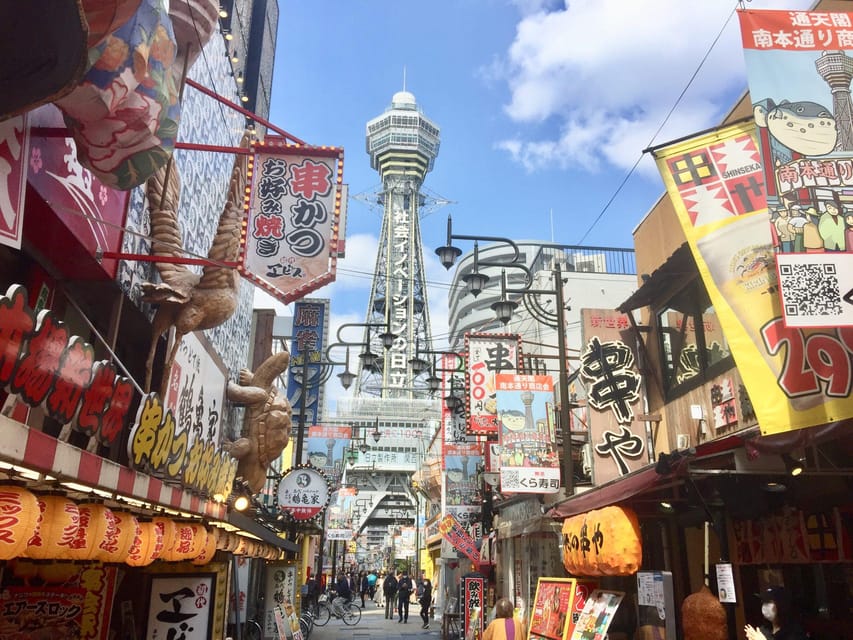
After the castle, the tour moves to Shinsekai, a district known for its retro atmosphere and the landmark Tsutenkaku tower. This stop changes the mood in a good way. The day shifts from “how Osaka formed” to “how Osaka still feels,” and that contrast is part of the charm.
This isn’t just nostalgia for nostalgia’s sake. Shinsekai gives you a sense of how ordinary city life can preserve style and mood over time. The guide’s storytelling here matters because you get to understand why the district feels the way it does, instead of treating it like a themed photo zone.
What you’ll likely enjoy most: the walk itself. Shinsekai rewards slow wandering. It’s a neighborhood where the vibe comes from the streets, the signs, and the sense of time travel—without needing a gimmick.
Price and Logistics: What $225 Gets You (and What Costs Extra)
At $225 per person for an 8-hour private guided day, you’re paying mainly for the guide, their time, and the value of having someone manage transitions across multiple historic stops. This is not a cheap snack tour. It’s a full service history day.
Here’s what’s included: the guide and the guide fee. The tour also runs with pickup in Osaka and ends at Ebisucho Station.
Here’s what’s not included (so you can budget):
- Transport fee, around 2,000 JPY per person
- Shitennoji Temple fee, around 200 JPY per person
- Lunch fee, around 2,000 JPY per person
Is it good value? For me, it makes sense if you want context on religion and politics, not just a route with timestamps. It also helps if you like asking questions and staying flexible. One review stood out because the guide, Mouloud, didn’t just explain the sights—he also took time to help with things like ticket buying and train traffic information. That sort of practical guidance is worth real money when you’re in a new city.
One consideration: because transport and lunch aren’t included, you’ll want to plan your budget with those fixed add-ons in mind. If you’re on a strict cost cap, compare this with a cheaper group walking tour and see what you’d be giving up: private pacing and a guide who can handle questions.
Your Guide Makes the Difference (And Mouloud’s Strength Is Answers)
The best part of this tour experience isn’t a single landmark. It’s the way the guide handles the day. In my case, my guide was Mouloud, and his style was all about clarity and follow-through.
I appreciate guides who can answer your questions without treating them like distractions. Mouloud did exactly that—taking time to respond and even sharing helpful ideas for other activities. He also offered practical help around tickets and train logistics, including guidance that reduced the usual stress of figuring out the rail flow on the fly.
That matters because an 8-hour day has lots of small moments: getting from place to place, choosing how long to linger, and interpreting what you’re seeing. A guide who helps with those moments turns the day from educational to genuinely easy.
How Much Time You’ll Spend (and Why It Works)
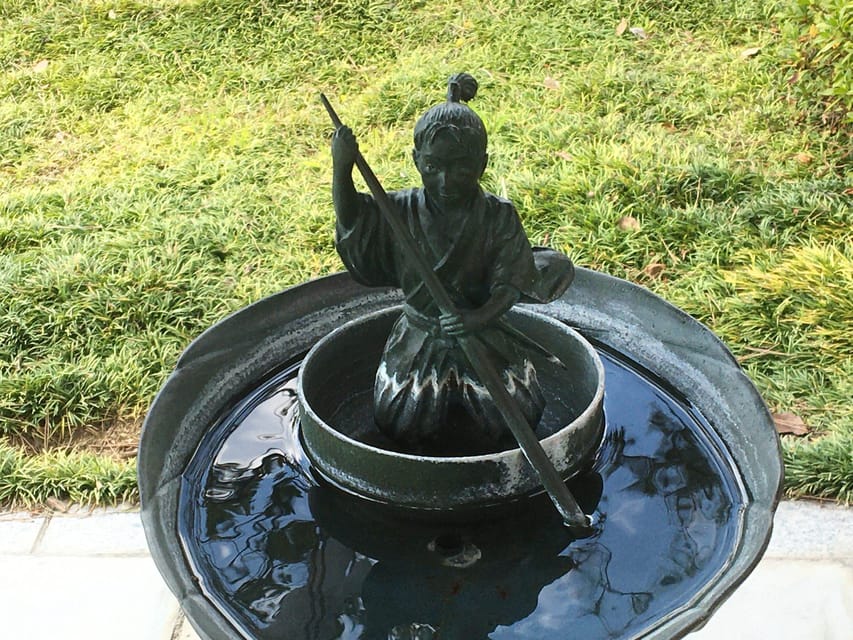
The flow is built around a full day with guided visits and walking time at each main stop:
- Sumiyoshi-taisha: guided time plus walking
- Shitennoji: guided time plus walking
- Osaka Castle: guided time plus walking
- Shinsekai: guided time plus walking
The point isn’t speed. It’s rhythm. You get enough time to notice details and still move toward the next story beat. If you rush, Osaka history feels like captions on a screen. If you take your time, it feels like you’re watching the city grow up in front of you.
What to do: set expectations for walking and plan snacks/water accordingly. The tour structure is rewarding, but you’re not sitting between stops.
Who This Private Tour Is Best For
This is a strong fit if you:
- Want a history-focused Osaka day with religion and politics in the mix
- Like major landmarks but also care about context and meaning
- Prefer private pacing over joining a larger group
- Appreciate a guide who helps with real-world questions like train traffic and ticket logistics
It’s also a good choice for travelers who want accessibility-friendly planning. The tour is wheelchair accessible, and it’s built as a private group, which can make it easier to manage your comfort level during the day.
If you’re the type who only wants the shortest possible route with minimal walking, this may feel long. But if you can handle a full day on foot, you’ll likely leave with a sharper understanding of why Osaka looks the way it does.
Should You Book This Osaka Historical Private Tour?
I think you should book it if your goal is to understand Osaka, not just pass through it. The combination of Sumiyoshi-taisha, Shitennoji, Osaka Castle, and Shinsekai gives you an easy-to-follow story arc—from early spiritual roots to Buddhism’s arrival, then to power and samurai-era symbolism, ending with a neighborhood that still feels like a time capsule.
Pass on it if you want a strictly “must-see only” itinerary with minimal time on foot. Also, if you dislike temple fees and extra transit costs, you might prefer a tour where more is bundled into the price.
FAQ
What’s the duration of the Osaka private guided tour?
The tour lasts 8 hours.
What does the tour price include?
It includes the guide and the guide fee.
What costs extra during the tour?
Transport is around 2,000 JPY per person, Shitennoji Temple is around 200 JPY per person, and lunch is around 2,000 JPY per person.
Where does the tour start and end?
Pickup is in Osaka, and the tour finishes at Ebisucho Station.
Which languages are available for the live tour guide?
The guide is available in French, English, and Japanese.
Is this a private group tour?
Yes, it’s a private group.
Is the tour wheelchair accessible?
Yes, the tour is wheelchair accessible.
What are the main stops on the itinerary?
You’ll visit Sumiyoshi-taisha, Shitennoji, Osaka Castle, and Shinsekai.
Is there free cancellation?
Yes. You can cancel up to 24 hours in advance for a full refund.
Can I reserve without paying immediately?
Yes. You can reserve now and pay later.
The Full Osaka Circuit
- Osaka: City Highlights Bike Tour★ 4.7 · 20 reviews
- Private departure transfer from central Osaka city to Itami airport (ITM)★ 5.0 · 17 reviews
- Osaka Castle Tour – With Optional City Highlights (3 hours)★ 4.5 · 14 reviews
- Osaka: Full-Day City Tour with a Guide and Public Transport★ 5.0 · 5 reviews
- Private Departure Transfer: Osaka City to Osaka Itami Airport★ 5.0 · 5 reviews
More Tour Reviews in Osaka
- Osaka Go Karting Tour with Funny Costume★ 5.0 · 2,658 reviews
- Osaka Castle: Museum and Tower Entry Ticket★ 4.5 · 2,380 reviews
- Osaka: Shinsekai Food Tour with 13-15 Dishes at 5 Eateries★ 4.8 · 2,204 reviews
- Osaka Food Tour: 13 Dishes at 5 Local Eateries★ 5.0 · 2,149 reviews
- Hungry Osaka Street Food Tour:15 Tastings & 3 Drinks with a Local★ 5.0 · 1,727 reviews
Your Osaka, at Your Pace
- Private Osaka Walking Tour: Highlights & Hidden Gems★ 5.0 · 569 reviews
- Osaka 4hr Private Tour with Government-Licensed Guide★ 5.0 · 314 reviews
- 3/4/5 Hours Private Tour in Osaka with Local Guide★ 5.0 · 189 reviews
- Osaka’s Best and Brightest: Private Full-Day Tour by Vehicle★ 5.0 · 147 reviews
- Kyoto & Nara Private customized tour with English speaking Guide★ 4.5 · 99 reviews
The Newest Osaka Write-Ups
- Private Photoshoot in Osaka with a Professional Photographer
★ 5.0 · 3 reviews - Osaka Early Morning Osaka Castle Tour Avoid Crowds
★ 5.0 · 3 reviews - Nara Private Tour with Pick and Drop and English Speaking Driver
★ 3.5 · 3 reviews - Osaka: Modern Vegetarian Sushi Cooking Class
★ 5.0 · 3 reviews - Nara Day Trip from Osaka with a Licensed Guide
★ 5.0 · 3 reviews
Osaka Private Tours, compared.
 ★ 5.0Private Osaka Walking Tour: Highlights & Hidden GemsFrom $81569 reviews
 ★ 5.0Osaka 4hr Private Tour with Government-Licensed GuideFrom $105314 reviews
 ★ 5.03/4/5 Hours Private Tour in Osaka with Local GuideFrom $95189 reviews
 ★ 5.0Osaka’s Best and Brightest: Private Full-Day Tour by VehicleFrom $600147 reviews
 ★ 5.0Full Day Tour of Kyoto with Private TransportationFrom $247130 reviews
 ★ 4.5Kyoto & Nara Private customized tour with English speaking GuideFrom $54999 reviews
 ★ 4.6Private Custom Walking Tour with a Local GuideFrom $6297 reviews
 ★ 4.93/4/5 Hours Private Tour With Local GuideFrom $11686 reviews
Browse the lists this tour appears in