
Reviewed · OSAKA FOOD & TASTING TOURS
Osaka Food Quest: Self-Guided Culinary & History Adventure
Osaka can taste like a timeline. This self-guided smartphone quest turns Dotonbori and nearby landmarks into a hands-on food history hunt. You solve 10 puzzles as you walk, and the stories point you toward what Kansai ate, why it ate it, and how the city’s culture shifted over time.
I love that it’s self-paced. I also love the mix of practical sights—markets, temples, and performance places—paired with food clues you can act on right away.
One thing to consider: there’s no physical guide. If you’re the type who gets stuck without a person to ask, or if your phone struggles with the app, you may feel a little on your own.
In This Review
- Key takeaways before you go
- Why This Osaka Food Quest Feels Like Osaka, Not a Lecture
- Timing, Timing: How Long You’ll Spend Walking
- Ebisu Bridge: A Shortcut Between Shopping Streets and Legends
- Konamon Museum and Takoyaki: The Best Kind of Food Detour
- Showa Taishu Horumon Dotonbori: When You’re Curious About Offal
- Hozenji Temple (Built 1637): Food Culture Meets Sacred Space
- National Bunraku Theater: The Stage Behind the Stories
- Kuromon Market: The Black Gate and Fish-Market Roots
- Namba Yasaka Shrine: Emperor Stories That Moved Across Osaka
- What You’ll Eat (and How to Plan Without Getting Rushed)
- Price and Value: $7.85 for a Smart Self-Guided Day
- Smartphone-First Tips (Especially If You’re Worried About App Performance)
- Who This Osaka Food Quest Is Best For
- Should You Book This Osaka Food Quest?
- FAQ
- Is there a physical tour guide?
- How long does the Osaka Food Quest take?
- What do I do during the quest?
- What’s included in the price?
- Where does the quest start and end?
- Are tickets or entry fees required?
- What areas does it cover?
- What if my group is small?
- When is it available?
- Can I get a full refund if I cancel?
Key takeaways before you go
- 10 smartphone puzzle stops across classic Osaka areas, designed as a walkable route
- Food-meets-history prompts that explain customs and traditions as you move through the neighborhood
- Konamon Museum is built around takoyaki—eat, learn, and even make it
- A temple-and-theater pairing: Hozenji Temple plus the National Bunraku Theater
- Kuromon Market connects food stalls to its fish-market origins and even a temple gate legend
- You can pause and resume whenever you want, which matters in real streets
Come hungry: more eating your way through Osaka

Why This Osaka Food Quest Feels Like Osaka, Not a Lecture
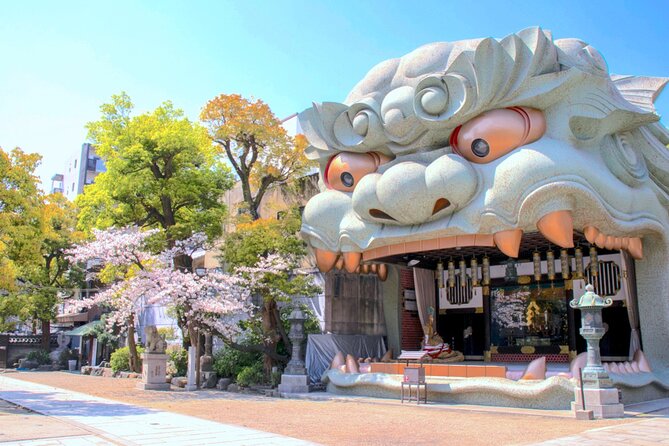
This is the kind of activity that works well in a place like Osaka because the city is already built for wandering. Instead of a sit-down tour, you follow a story using your phone. The “quest” format nudges you to look closely—at signage, streets, temple details, and the rhythms of Dotonbori life.
What makes it smart is the balance between food and context. You’re not just told that Osaka has snacks. You get little cultural reasons behind dishes and customs. That turns your walk into something you can remember, even after the photos fade.
You also get a real-world route through areas you’d likely want to see anyway, from entertainment streets to market corridors and sacred spaces. And because it’s private for your group, you’re not stuck matching a stranger’s pace.
Timing, Timing: How Long You’ll Spend Walking
The experience is listed at about 1 hour. In practice, that usually means you’re moving steady and solving quickly.
One key practical note: you can slow down. The format lets you pause and resume anytime, which is great when you want to stop for a snack or check a menu without rushing. A good target is 2 to 3 hours if you want to solve the puzzles and still have time to taste a few specialties.
Also, plan to use your phone thoughtfully. If you’re constantly switching apps, the quest experience can feel harder than it needs to be.
Ebisu Bridge: A Shortcut Between Shopping Streets and Legends
Your first stop is Ebisu Bridge, a connection point between Shinsaibashi-suji and Ebisubashi-suji. It was built to provide access to Ebisu Shrine, and it sits in a spot where foot traffic naturally flows—so your puzzle feels like part of the neighborhood, not a staged activity.
The clue here mixes the practical with the playful. Yes, the bridge is a way to move through the shopping districts. But it also has a legend tied to Osaka sports, specifically a curse associated with the Hanshin Tigers.
This is a good opener because it gets you in the mindset fast: look around, find the answer, then move on. You’re learning while walking, which is exactly what you want in Dotonbori.
Older Osaka, walked a few more ways
Konamon Museum and Takoyaki: The Best Kind of Food Detour
Next up is Konamon Museum. This is where the experience gets especially hands-on, centered on takoyaki—Osaka’s famous soul food.
The museum format is straightforward: you can eat, learn about, and make takoyaki. That’s a big difference from most “food tours,” which just point at dishes. Here, the quest nudges you to understand what you’re tasting by connecting it to how it’s made and what it represents.
Be aware: takoyaki tends to be more than a quick bite. If you want to do the making and not feel rushed, give yourself extra time at this stop. It’s the kind of place you’ll enjoy more if you treat it like an activity, not a checkbox.
Showa Taishu Horumon Dotonbori: When You’re Curious About Offal
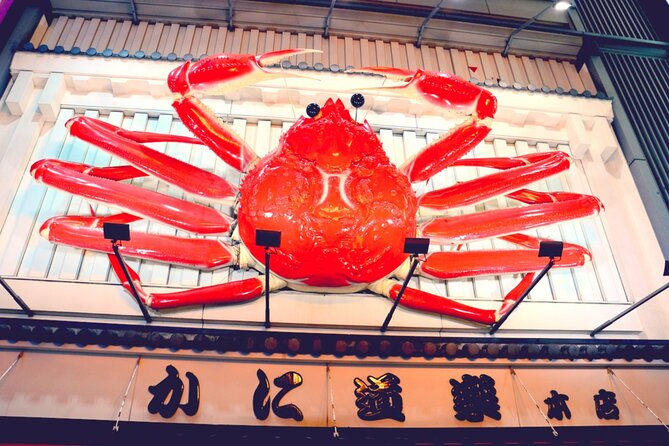
Then you’ll reach Showa Taishu Horumon Dotonbori, a horumon restaurant focused on beef offal.
This stop is useful because it expands what “Osaka food” can mean. Many visitors arrive thinking they only need to eat the obvious highlights. But horumon is part of local dining culture, and the quest pushes you to look at that tradition with curiosity.
If you’re not into offal, you can still use this stop as a cultural checkpoint. Read the clue, learn the context, and then decide how adventurous you want to be with your actual meal. The key value here is understanding that Osaka has more than one food identity.
Hozenji Temple (Built 1637): Food Culture Meets Sacred Space
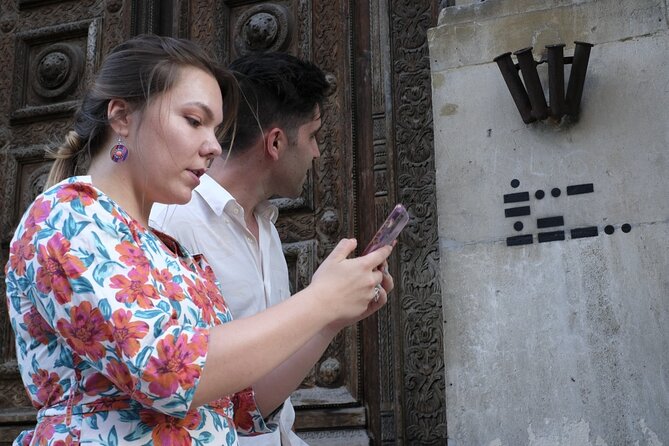
The route then shifts from street food energy to temple quiet at Hozenji Temple, built in 1637. The temple is tied to Fudo Myoo, one of the five Buddhist guardians.
What I like about this stop is the way it reframes the whole area. During the 1600s, the surrounding Namba/Dotonbori area was already known for entertainment. Think dramatic performance culture such as kabuki and bunraku happening in the district.
So the puzzle here isn’t just about a building. It’s about why people in this area showed up for stories, shows, and rituals—and how that kind of crowd energy overlaps with the food scene you see today.
If you take even a moment to notice temple details instead of only the food signs, you’ll leave with a better sense of why Dotonbori feels the way it does.
National Bunraku Theater: The Stage Behind the Stories
After Hozenji, you’ll visit the National Bunraku Theater. It was established in 1984 and is the home of Bunraku in the Kansai region.
This theater has two halls: a main hall with 753 seats and a small hall with 159 seats. The main hall is used mainly for Bunraku performances, but it also hosts traditional Japanese dance performances and other drama.
Why this belongs in a food quest: because Osaka’s identity isn’t only edible. It’s also performance-based and story-driven. When you understand that, you’ll interpret Dotonbori differently. The neon and snack stalls suddenly feel like part of a bigger cultural machine—people gathering for emotion, not just food.
Even if you don’t catch a performance, the stop helps you connect daily life to the arts.
Kuromon Market: The Black Gate and Fish-Market Roots
Now you get back to the kind of place where food is the main event: Kuromon Market.
The name literally means black gate, and the market has roots as a fish market opening around 1822. It was approved as an official market in 1902. There’s also a legend behind the name tied to the black gate of Enmyo Temple, which stood in the area until 1912 (the last year of the Meiji Period).
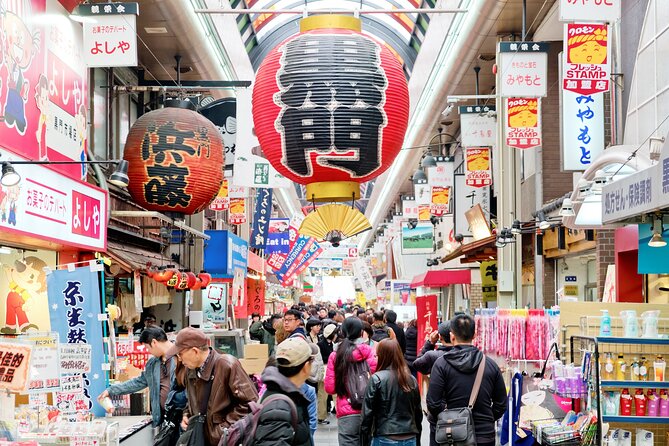
This is a great spot for slow walking and decision-making. You’ll likely see plenty of foods you want to taste, and you can pair what you’re seeing with what the quest makes you think about: where this market came from, and how food vending became a core part of daily Osaka life.
Practical tip: go in hungry, but keep your choices manageable. A market can make you over-order quickly.
Namba Yasaka Shrine: Emperor Stories That Moved Across Osaka
The final cultural stop is the Namba Yasaka Shrine.
The background story here is classic Osaka-meets-Japan: it’s said to have been commissioned by Emperor Hanzei in honor of his father, Emperor Nintoku. The shrine’s original site is said to be in what’s now Kawachi Matsubara City, but it was moved to its present location after Hideyoshi Toyotomi began construction of Osaka castle.
So the puzzle isn’t only about finding an answer. It’s about movement—how power changes cities and how sacred places relocate when the city retools itself.
This is a strong “wrap-up” style stop because it pulls the story forward to Osaka as it is now. You finish with the feeling that you saw streets, not just landmarks.
What You’ll Eat (and How to Plan Without Getting Rushed)
This experience is built around discovering Osaka’s food scene and its history, with tastings suggested along the way. The one food-centered stop called out clearly is takoyaki at Konamon Museum. Another big food identity marker is horumon at Showa Taishu Horumon Dotonbori.
Because meals aren’t included as a package, you’ll want to budget for snacks or whatever you decide to buy. I suggest picking a couple “tasting targets” so you don’t feel overwhelmed by options—especially around markets where everything smells like a decision.
Also, since you’re solving puzzles while walking, avoid cramming too much into tight time windows. If you’re tight on time, plan for one main snack and one smaller bite. If you have the luxury, then you can go longer.
Price and Value: $7.85 for a Smart Self-Guided Day
At $7.85 per person, this is priced in the “low-commitment, high-fun” category. You’re paying for a smartphone-based experience: mobile access code, 10 puzzle-based challenges, and story content focused on Osaka food and history.
That’s good value because it does three things you’d otherwise pay more to get separately:
- It gives you a reason to keep walking and looking closely
- It adds context while you’re already seeing the sights
- It replaces the need for a physical guide
Group discounts are mentioned, which can make it even better for pairs and families traveling together.
The main value trade-off is simple: you’re running the show yourself. There’s no physical tour guide, so you’ll rely on your phone and your own pacing.
Smartphone-First Tips (Especially If You’re Worried About App Performance)
There’s one concern that pops up with smartphone walking quests: the app can feel slow if your phone is busy or your data connection is unstable.
In one response related to an issue, the quest’s size was clarified as about 2.5MB, which suggests it shouldn’t be a huge data hog by itself. If your phone is struggling, the more likely culprit is other apps eating bandwidth at the same time.
My practical advice:
- Start with your phone fully charged
- Keep background apps from downloading or syncing during the quest
- If something feels stuck, pause, restart the session, and only then panic
You’ll get the best experience when the phone acts like a quiet helper, not another chore.
Who This Osaka Food Quest Is Best For
This fits especially well if you:
- Love food but also like learning the why behind dishes
- Want an activity you can do on your schedule (not a fixed group tour time)
- Are traveling solo, as a couple, or with a family and prefer self-guided flexibility
- Enjoy puzzle-style sightseeing more than lecture-style sightseeing
It’s also a strong “first day in Osaka” option because it takes you through Dotonbori and connects you to markets, temples, and performance culture—so you get a wide snapshot in a short amount of time.
If you’re uncomfortable navigating without a guide, consider bringing a little extra patience. This is a quest that expects you to be active.
Should You Book This Osaka Food Quest?
Book it if you want an easy, affordable way to turn Dotonbori into a story you can solve and taste. The big strengths are the 10 puzzle challenges, the food/history pairing, and the fact that you can control your pace. The takoyaki-focused stop and the temple-and-theater stops add real variety.
Pass or think twice if you want a human guide to clarify questions on the spot, or if you know your phone and apps tend to be unreliable. In that case, you might prefer a guided tour that doesn’t depend on your screen.
If your travel style is curiosity plus walking, this is an excellent match.
FAQ
Is there a physical tour guide?
No. This is a self-guided activity with a smartphone experience.
How long does the Osaka Food Quest take?
It’s listed at about 1 hour.
What do I do during the quest?
You use your smartphone to solve 10 puzzle-based challenges while walking through Osaka.
What’s included in the price?
You get a mobile access code, the 10 puzzle challenges, story content focused on Osaka food and history, and the ability to pause and resume.
Where does the quest start and end?
It starts at 1 Chome-6 Dotonbori, Chuo Ward, Osaka, and ends at 2-chōme-9-19 Motomachi, Naniwa Ward, Osaka.
Are tickets or entry fees required?
Some stops specifically note admission ticket free, and the included parts of the experience are built around the quest format. Specific entry rules for every stop are not listed for each location.
What areas does it cover?
You’ll walk through well-known areas including Dotonbori, with stops such as Ebisu Bridge, Kuromon Market, Hozenji Temple, and the National Bunraku Theater.
What if my group is small?
It’s private, so only your group participates.
When is it available?
The listed opening hours are daily, from 12:00 AM to 11:59 PM, within the stated validity dates.
Can I get a full refund if I cancel?
Yes. You can cancel up to 24 hours in advance for a full refund. If you cancel within 24 hours, the amount paid is not refunded.
The Older Layers of Osaka
- Osaka: Castle History Walking Tour / Castle Tower Admission★ 4.9 · 230 reviews
- Osaka: Osaka Castle & Historical Museum Guided Tour★ 4.8 · 28 reviews
- Osaka Castle & Samurai History Walking Tour★ 5.0 · 22 reviews
- (Ticket Included) Explore Osaka Castle & Museum of History★ 4.8 · 21 reviews
- Osaka: Kyoto & Nara & Uji Historical and Scenic One-Day Tour★ 4.7 · 21 reviews
More Tour Reviews in Osaka
- Osaka Go Karting Tour with Funny Costume★ 5.0 · 2,658 reviews
- Osaka Castle: Museum and Tower Entry Ticket★ 4.5 · 2,380 reviews
- Osaka: Shinsekai Food Tour with 13-15 Dishes at 5 Eateries★ 4.8 · 2,204 reviews
- Osaka Food Tour: 13 Dishes at 5 Local Eateries★ 5.0 · 2,149 reviews
- Hungry Osaka Street Food Tour:15 Tastings & 3 Drinks with a Local★ 5.0 · 1,727 reviews
The Kuidaore List: Eat More of Osaka
- Osaka: Shinsekai Food Tour with 13-15 Dishes at 5 Eateries★ 4.8 · 2,204 reviews
- Osaka Food Tour: 13 Dishes at 5 Local Eateries★ 5.0 · 2,149 reviews
- Hungry Osaka Street Food Tour:15 Tastings & 3 Drinks with a Local★ 5.0 · 1,727 reviews
- Deep Backstreet Osaka Tours (Option to add Dinner)★ 5.0 · 1,290 reviews
- Osaka Local Foodie Walking Tour in Dotonbori and Shinsekai★ 5.0 · 985 reviews
The Newest Osaka Write-Ups
- Private Photoshoot in Osaka with a Professional Photographer
★ 5.0 · 3 reviews - Osaka Early Morning Osaka Castle Tour Avoid Crowds
★ 5.0 · 3 reviews - Nara Private Tour with Pick and Drop and English Speaking Driver
★ 3.5 · 3 reviews - Osaka: Modern Vegetarian Sushi Cooking Class
★ 5.0 · 3 reviews - Nara Day Trip from Osaka with a Licensed Guide
★ 5.0 · 3 reviews
Osaka Food & Tasting Tours, compared.
 ★ 4.8Shinsekai Food Tour with 13-15 Dishes at 5 EateriesFrom $532,204 reviews
 ★ 5.0Osaka Food Tour: 13 Dishes at 5 Local EateriesFrom $732,149 reviews
 ★ 5.0Hungry Osaka Street Food Tour:15 Tastings & 3 Drinks with a LocalFrom $731,727 reviews
 ★ 5.0Deep Backstreet Osaka Tours (Option to add Dinner)From $531,290 reviews
 ★ 5.0Osaka Local Foodie Walking Tour in Dotonbori and ShinsekaiFrom $111985 reviews
 ★ 4.9Deep Backstreets Walking Tour with Dinner OptionFrom $40902 reviews
 ★ 4.9Hungry Osaka Street Food Tour: 15 Dishes & 3 DrinksFrom $79694 reviews
 ★ 5.0Kuromon Market Food Walking Tour in Osaka (6 stops, 6 tastes)From $50550 reviews
Browse the lists this tour appears in