
Reviewed · OSAKA PRIVATE TOURS
Osaka 8hr Private Tour with Government-Licensed Guide
Osaka rewards curiosity fast, especially with a private guide at your elbow. This 8-hour walk brings you through big-name Osaka icons like Dotonbori, Osaka Castle, and Shinsekai, then lets you shape the day with a custom 3–4 stop plan. I like that the guide is government-licensed and English-speaking, so you spend less time sorting out what to see and more time actually enjoying it.
Two big wins for me are the mix of street life and calmer landmarks, plus the chance to swap in your style of sights (shrines, city views, markets, or museums). One consideration: it’s still a walking tour, and several top stops have entrance fees you’ll pay separately.
In This Review
- Key things to know before you go
- Why This Osaka 8-Hour Private Walk Feels Efficient
- The Custom 3–4 Stop Plan (and How to Choose Well)
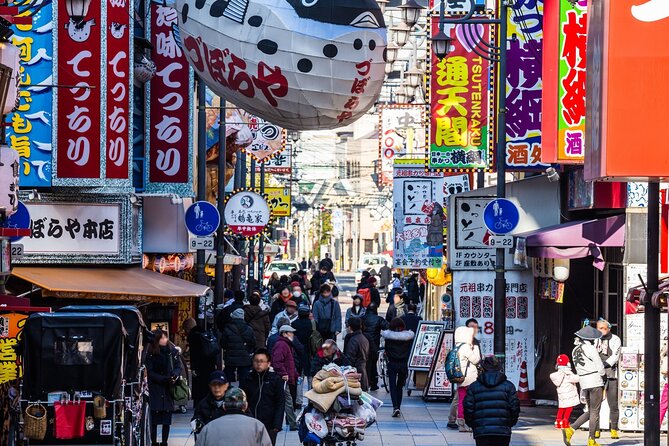
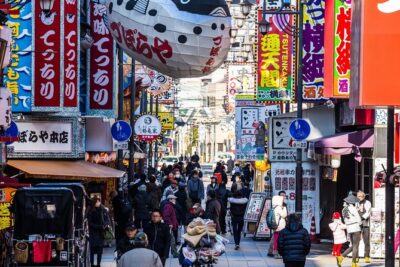
- Dotonbori District: Billboards, Street Food, and Osaka’s Main Stage
- Osaka Castle in One Hour: A Landmark That Needs Your Time
- Minami (Namba): Entertainment District With Easy Transit Access
- Sumiyoshi Taisha Shrine: Old Roots and Purely Japanese Architecture
- Shitennoji: A Temple With Layers (and a Note on What’s Paid)
- Shinsekai: Tsutenkaku, Nostalgia Streets, and a Short Stroll
- Umeda Sky Building: City Views That Cost Extra
- Kuromon Market: Snacks, Shopping, and 600 Meters of Choices
- National Museum of Art, Osaka: An Underground Reset From the Streets
- Price and Logistics: Is $206.81 Per Person Good Value?
- Who This Tour Fits Best (and Who Might Skip It)
- A Simple Game Plan for Your Day
- Should You Book This Tour?
- FAQ
- How long is the Osaka private tour?
- Is the pickup by car or do I meet the guide on foot?
- What is included in the tour price?
- Are entrance fees included for the main sights?
- Does the tour include transportation and lunch?
- Can I choose which stops I want?
- Can I get a full refund if I cancel?
Key things to know before you go
- Government-licensed, English-speaking guide: you get explanations, not just directions.
- Pick 3–4 spots from the day’s list (or ask for a recommended route).
- Food-first walking time in Dotonbori and Kuromon Market for real Osaka snacking.
- Paid admissions are optional at places like Osaka Castle, Shitennoji inner areas, Umeda Sky Building, and the museum.
- On-foot meeting in a designated area, with easy access from public transportation.
A guide to yourselves, more private days out

Why This Osaka 8-Hour Private Walk Feels Efficient
Osaka can be confusing on your own, especially when you’re trying to match neighborhoods to your interests. This tour is designed around the practical reality that you can’t see everything in one day—so you focus on the places that give you the strongest “Osaka feeling.”
The itinerary does a smart job of balancing different sides of the city. You get the high-energy street scene in Dotonbori, the landmark factor of Osaka Castle, the spiritual pause at older religious sites, and then the photo-and-people vibe of Shinsekai. Add in Kuromon Market for casual eating and shopping time, and you’ll understand why Osaka is known for food culture.
The private format matters too. With only your group, you can ask questions and adjust the pace. In one very positive note from a guide-led day, Nori (the guide name) was described as friendly, energetic, and strong on day-planning—exactly what you want when you’re trying to make a single day count.
The Custom 3–4 Stop Plan (and How to Choose Well)
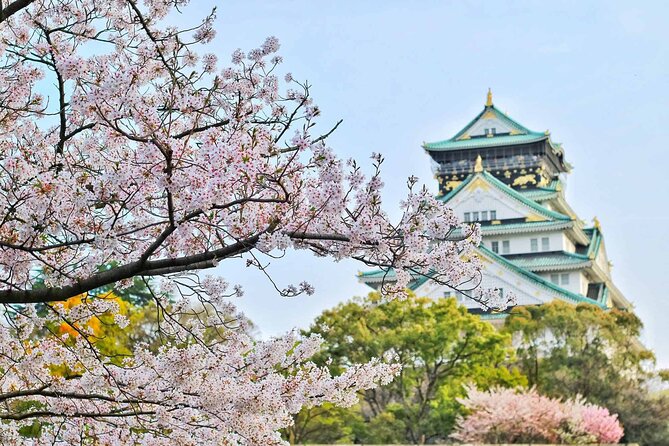
This is the core value: once you book, the guide contacts you to plan a personalized route. You choose 3 to 4 locations from the tour’s options. If you’re unsure, you can ask for a recommended itinerary based on your interests.
Here’s how I’d choose, using the stops on the list:
- If you’re here mainly for food: prioritize Dotonbori, Kuromon Market, and pick one “wow” sight (Osaka Castle or Shinsekai).
- If you like classic Japan: pick Sumiyoshi Taisha and Shitennoji (and decide how much paid garden/inner access you want).
- If you want a big view: add Umeda Sky Building and keep the rest lighter.
- If you want a culture stop without exhausting your feet: the National Museum of Art, Osaka is a shorter, indoor-friendly option.
Because it’s private, you’re not stuck with a fixed “checklist.” Your guide can steer timing so you aren’t late to a paid entry area—or stuck waiting while your group decides what matters most.
Dotonbori District: Billboards, Street Food, and Osaka’s Main Stage
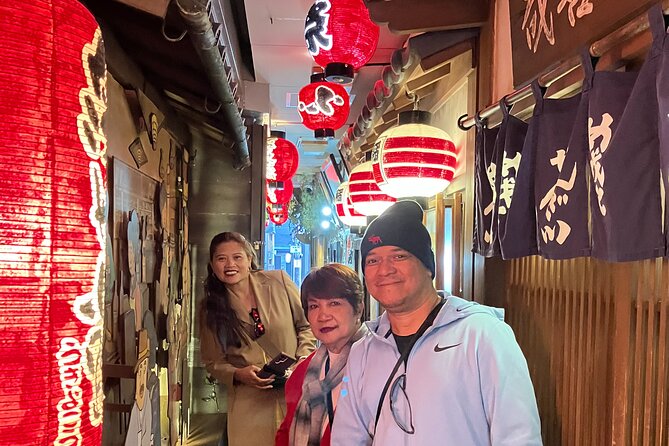
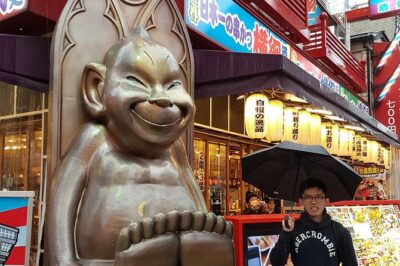
Dotonbori is the place that makes people say, That’s Osaka. The walk focuses on Dotonbori Street—huge signage, nonstop restaurant frontage, and food stalls that turn street-level wandering into a full activity.
You’ll have around 1 hour here, which is a good window for two things:
1) looking at the scene so you get your bearings, and
2) eating something iconic without turning the whole day into a food-only marathon.
Two practical tips for this stop:
- Keep your food plan loose. In Dotonbori, options are right there, so you can decide based on what looks best at that moment.
- If you hate long lines, you’ll want your guide’s timing help. A licensed guide can often steer you toward the easier rhythm of ordering and walking.
This is also a great “energy matcher.” Even if you’re not an ultra-food person, Dotonbori tells you how Osaka people live—bold, casual, and ready to eat.



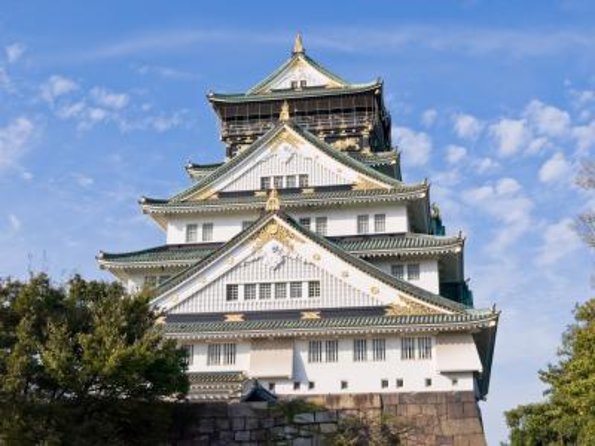
Osaka Castle in One Hour: A Landmark That Needs Your Time
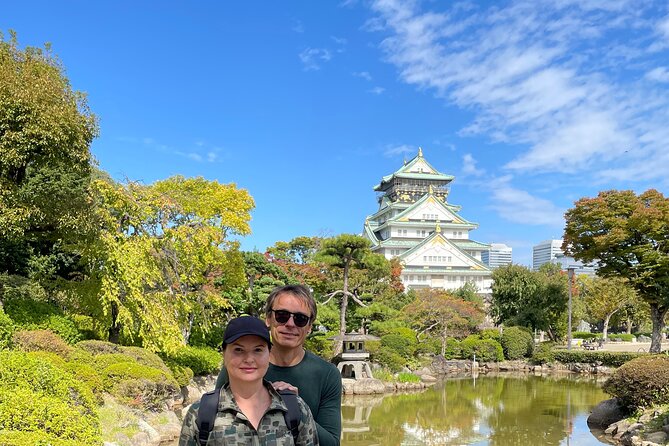
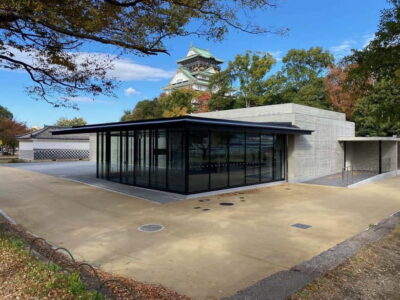
Osaka Castle is one of Japan’s famous castles for good reason. The tour’s stop is about 1 hour, and the big detail to know is that admission is not included for this stop.
So, you’ll want to decide what kind of visit you want:
- Quick landmark viewing and photos, plus a bit of history context from your guide.
- Or more time inside, if you’re paying for the experience and want to see the main areas.
Because the tour gives you about an hour, you’ll likely move through the castle with a plan rather than getting lost. That’s a win if you’re selecting just a few major sights for the day. The “450 years” style of historical framing can make your visit feel more anchored, even if you don’t read every sign.
Possible drawback: if you’re determined to linger for museum-like detail, one hour may feel short. In that case, choose castle only if it’s a top priority—then let it take the place of another optional stop.
Minami (Namba): Entertainment District With Easy Transit Access
Minami (around Namba Station) is Osaka’s famous entertainment zone. The tour includes about 1 hour here, and admission is free.
What you get is the practical advantage of location: Minami is easy to reach because it’s served by multiple train and subway lines plus bus access. In real terms, that means your guide can structure the overall day around fewer transport headaches.
This stop works well if you want:
- browsing and street-life energy,
- a chance to reset and move between areas,
- and a flexible space where you can shop or grab casual snacks on your own time.
If you’re not into nightlife or shopping, you might treat Minami as a “walk-through” stop—good for atmosphere, not necessarily a must-see museum-style destination.
Sumiyoshi Taisha Shrine: Old Roots and Purely Japanese Architecture
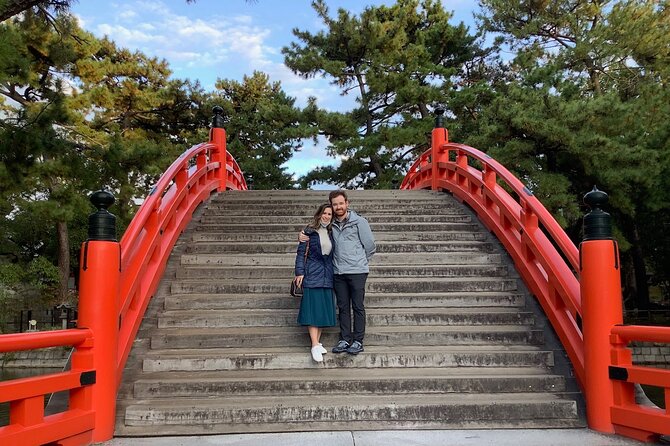
Sumiyoshi Taisha is one of Osaka’s oldest shrines, founded in the 3rd century before Buddhism arrived in Japan. The tour gives you about 1 hour, and admission is free.
What makes this stop interesting is the architectural style: Sumiyoshi-zukuri is described as not influenced by the Asian mainland. It’s presented as a distinctly Japanese shrine design category, alongside other classic styles you might see at places like the Ise Shrines and Izumo Taisha.
Why this matters for you: if your day already includes crowds and food streets, this shrine stop gives your brain a different pace. You get open space, older craftsmanship, and a sense of Osaka’s long continuity beyond street signage.
Because it’s free, it’s also a smart “value pick.” You’re not paying for the core experience here, which lets you save money for one of the paid highlights if you want.
Shitennoji: A Temple With Layers (and a Note on What’s Paid)
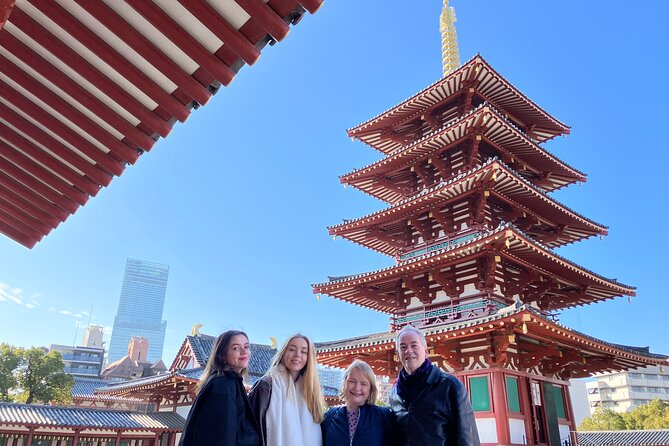
Shitennoji is an ancient temple and the first state-built temple in Japan. It was founded in 593 by Prince Shotoku, and even though buildings burned down over the centuries, they were reconstructed to reflect the original 6th-century design.
You get about 1 hour at this stop, and admission is not included for the inner precinct areas. The outer grounds are free, while the inner precinct includes paid access such as the Gokuraku-jodo Garden and the treasure house.
Practical way to choose here:
- If you’re budget-conscious or want a lighter day, focus on the free outer areas and skip paid interiors.
- If you’re there for depth, pay for the inner precinct so you can see more of the temple’s interior heritage pieces.
This is one of the best “balance stops” in the itinerary. After energetic neighborhoods, Shitennoji gives you something calm and meaningful without forcing a full day commitment.
Shinsekai: Tsutenkaku, Nostalgia Streets, and a Short Stroll
Shinsekai is described as a district developed before the war and later neglected for decades, then brought back into its current layout. At the center is Tsutenkaku Tower, the nostalgia symbol of the area.
The tour includes about 30 minutes here, admission free.
This short time matters. Shinsekai is more about feeling and photos than about museum-depth. You’ll get enough time to:
- see the iconic tower area,
- walk the streets and catch the retro Osaka vibe,
- and decide if you want to linger afterward on your own.
If you prefer slow wandering, Shinsekai can be a great place to ask your guide where to extend the walk (within the tour’s time structure). Just keep expectations realistic: 30 minutes is a taste, not a full neighborhood investigation.
Umeda Sky Building: City Views That Cost Extra
If you want height and a skyline perspective, the Umeda Sky Building is the paid add-on option on the list. The stop is about 30 minutes, and admission is not included.
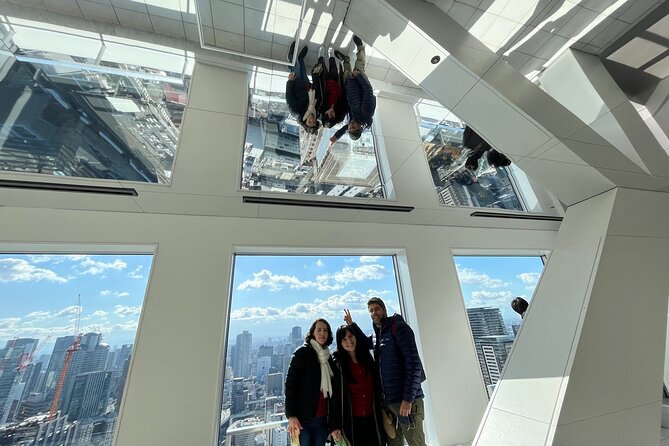
The building is 173 meters tall, with two towers connected by the Floating Garden Observatory on the 39th floor. You can view the city through windows and from an open-air deck. There’s also a basement restaurant floor modeled after the early Showa Period, and offices on most other floors.
This is a strong choice if:
- you want your day to end with a “big picture” moment,
- you’re coming from far away and want a modern Osaka perspective,
- or you’re traveling with someone who loves views.
Tradeoff: because it’s paid, it can raise the overall total. If your budget is tight, you can still keep the day focused on free stops like Dotonbori, Kuromon Market, and shrines, and skip Umeda.
Kuromon Market: Snacks, Shopping, and 600 Meters of Choices
Kuromon Market is a covered public market stretching about 600 meters, with around 150 shops. It’s mainly known for seafood, meat, and produce, plus some sweets and budget-friendly clothes and homeware.
The tour assigns about 30 minutes, admission free.
This stop is perfect for a quick “Osaka tasting” setup. Because it’s a market with many small vendors, you can sample without committing to a full meal. Your guide can help you navigate the flow—where to stand, what’s easy to order, and how to keep your time efficient.
Note: this tour doesn’t include lunch. Kuromon Market can still help you solve that problem because it’s naturally snackable. Just plan to pay for anything you buy.
National Museum of Art, Osaka: An Underground Reset From the Streets
If you want a break from street noise and want something indoors, the National Museum of Art, Osaka is on the list. It’s an underground museum on Nakanoshima island, and the stop is around 30 minutes with admission not included.
The museum is a good fit when you:
- want a cultural stop that isn’t huge,
- travel with someone who likes art,
- or need a weather-proof option in a single day.
This is also a nice swap if you’ve already seen enough castles and towers and want a different kind of Osaka story—one that’s quieter and more reflective.
Price and Logistics: Is $206.81 Per Person Good Value?
At $206.81 per person for an 8-hour private tour, the value comes from what you’re getting in one package: a government-licensed English-speaking guide plus a flexible routing system. It’s not just walking directions. It’s an organized day plan you can customize, with guidance on which sights to pick and how to spend your time.
What you’ll still pay separately:
- transportation fees (the tour doesn’t include transit costs),
- entrance fees for certain stops,
- and lunch and personal expenses.
So the real “cost” depends on which 3–4 stops you choose. If you pick mostly free sites like Dotonbori, Minami, Sumiyoshi Taisha, Shinsekai, and Kuromon Market, you’ll spend less on admissions. If you include Osaka Castle, Shitennoji paid areas, Umeda Sky Building, and the museum, you’re paying for more paid highlights.
My practical advice: decide your paid “anchor” stops first (one or two tends to be enough), then fill the rest with free options that support the theme of your day.
Also, on average, bookings happen about 117 days in advance, so don’t wait too long if you have fixed dates.
Who This Tour Fits Best (and Who Might Skip It)
This private day is a great fit if you:
- want a government-licensed guide who can handle logistics and context in English,
- prefer choosing your own mix of sights,
- and like walking-through neighborhoods where you learn the city by experience.
It’s also ideal if you don’t want to fight with planning alone. The guide builds the day around your interests, which is especially helpful in a city with so many food streets and shopping zones.
It might be less ideal if:
- you dislike walking,
- you need a lot of sitting time,
- or you want a tour that includes admissions, transportation, and lunch in one set price.
A Simple Game Plan for Your Day
If you book this tour, you’ll get the best results by doing one small prep step:
- Choose which one or two paid stops matter most to you.
- Tell the guide what you like: food focus, shrines/temples, city views, or an art break.
Then wear comfortable shoes and keep an eye on timing. A private guide can set pacing, but you’re still moving through multiple neighborhoods in one day.
And remember the tone of Osaka culture: friendly, direct, food-forward. With your guide, you’ll get Maido-style hospitality—without needing to translate everything yourself.
Should You Book This Tour?
Book it if you want an 8-hour Osaka day that mixes street energy with major landmarks, and you value having a guide who can plan the route around your interests. The private format plus the government-licensed English guide is what makes it feel more like a smart local day out than a checklist tour.
Consider skipping or modifying your stop choices if you’re trying to keep spending low on admissions, or if long walking stretches would drain you. In that case, lean heavily on free stops and choose only one paid “must-see.”
If you like the idea of customizing, getting food and culture in one sweep, and having Nori-level planning energy from a real licensed guide, this is a strong pick for your first or middle Osaka visit.
FAQ
How long is the Osaka private tour?
It’s about 8 hours.
Is the pickup by car or do I meet the guide on foot?
It’s a walking tour, and pick up is on foot. You meet the guide within a designated area of Osaka.
What is included in the tour price?
You get a licensed local English-speaking guide and a customizable route where you choose 3 to 4 sites. The meet-up is also included.
Are entrance fees included for the main sights?
Some are free and some are not. Admission is not included for Osaka Castle, Shitennoji inner precinct areas, Umeda Sky Building, and the National Museum of Art, Osaka.
Does the tour include transportation and lunch?
No. Transportation fees, entrance fees (where applicable), lunch, and other personal expenses are not included.
Can I choose which stops I want?
Yes. After booking, you can choose 3 to 4 sites from the list. If you prefer, you can ask the guide to send a recommended itinerary based on your interests.
Can I get a full refund if I cancel?
Yes. You can cancel up to 24 hours in advance for a full refund.
More Tour Reviews in Osaka
- Osaka Go Karting Tour with Funny Costume★ 5.0 · 2,658 reviews
- Osaka Castle: Museum and Tower Entry Ticket★ 4.5 · 2,380 reviews
- Osaka: Shinsekai Food Tour with 13-15 Dishes at 5 Eateries★ 4.8 · 2,204 reviews
- Osaka Food Tour: 13 Dishes at 5 Local Eateries★ 5.0 · 2,149 reviews
- Hungry Osaka Street Food Tour:15 Tastings & 3 Drinks with a Local★ 5.0 · 1,727 reviews
Your Osaka, at Your Pace
- Private Osaka Walking Tour: Highlights & Hidden Gems★ 5.0 · 569 reviews
- Osaka 4hr Private Tour with Government-Licensed Guide★ 5.0 · 314 reviews
- 3/4/5 Hours Private Tour in Osaka with Local Guide★ 5.0 · 189 reviews
- Osaka’s Best and Brightest: Private Full-Day Tour by Vehicle★ 5.0 · 147 reviews
- Kyoto & Nara Private customized tour with English speaking Guide★ 4.5 · 99 reviews
The Newest Osaka Write-Ups
- Private Photoshoot in Osaka with a Professional Photographer
★ 5.0 · 3 reviews - Osaka Early Morning Osaka Castle Tour Avoid Crowds
★ 5.0 · 3 reviews - Nara Private Tour with Pick and Drop and English Speaking Driver
★ 3.5 · 3 reviews - Osaka: Modern Vegetarian Sushi Cooking Class
★ 5.0 · 3 reviews - Nara Day Trip from Osaka with a Licensed Guide
★ 5.0 · 3 reviews
Osaka Private Tours, compared.
 ★ 5.0Private Osaka Walking Tour: Highlights & Hidden GemsFrom $81569 reviews
 ★ 5.0Osaka 4hr Private Tour with Government-Licensed GuideFrom $105314 reviews
 ★ 5.03/4/5 Hours Private Tour in Osaka with Local GuideFrom $95189 reviews
 ★ 5.0Osaka’s Best and Brightest: Private Full-Day Tour by VehicleFrom $600147 reviews
 ★ 5.0Full Day Tour of Kyoto with Private TransportationFrom $247130 reviews
 ★ 4.5Kyoto & Nara Private customized tour with English speaking GuideFrom $54999 reviews
 ★ 4.6Private Custom Walking Tour with a Local GuideFrom $6297 reviews
 ★ 4.93/4/5 Hours Private Tour With Local GuideFrom $11686 reviews
Browse the lists this tour appears in