
Reviewed · OSAKA PRIVATE TOURS
3 Days Private Osaka Kyoto and Nara Tour With English Driver
Three cities in three days can feel like a sprint. What makes this one work is the private setup with an English driver, so you spend less time figuring out trains and more time moving from site to site.
I especially like the balance: big-ticket icons like Todai-ji and Fushimi Inari sit next to very Japan-specific fun stops like the Cup Noodles Museum and an Osaka Bay Tower onsen. The route also gives you time to wander shop streets and historic districts instead of only doing photos.
One consideration: many major sites are not included in the price, and the schedule packs in a lot of stops. Budget for entrance fees and plan for days that run full—comfortable shoes help.
In This Review
- Key highlights worth noting
- Why a private Osaka–Kyoto–Nara plan makes sense
- Osaka Day: Osaka Castle, onsen time, and Instant Ramen history
- Nara Day: deer park mornings and big-temple essentials
- Kyoto Day: Arashiyama, torii gates, Kinkaku-ji, and Gion streets
- What the English driver adds (and what to plan for)
- Price and value for a group of up to 5
- Pacing, crowds, and how to avoid feeling rushed
- Should you book this Osaka Kyoto Nara private tour?
- FAQ
- How long is the Osaka, Kyoto, and Nara tour?
- Is this a private tour?
- What’s included in the price?
- Are entrance fees included?
- Are meals included?
- Is there pickup available?
- Does the tour use a mobile ticket?
- How far in advance do people usually book?
- What is the cancellation policy?
Key highlights worth noting
- English-speaking driver in a private vehicle for easier city-to-city movement
- Osaka + Nara + Kyoto in ~3 days, so you see more than just one city
- Icon sites plus curveball stops like Cup Noodles Museum and a bay-area onsen
- Nara Park and two UNESCO-level temple stops on the same day
- Kyoto’s highlights in one sweep, including Golden Pavilion and Gion
- Feedback spotlight on guide Vicky, praised for patience and helping with summer heat
A guide to yourselves, more private days out

Why a private Osaka–Kyoto–Nara plan makes sense
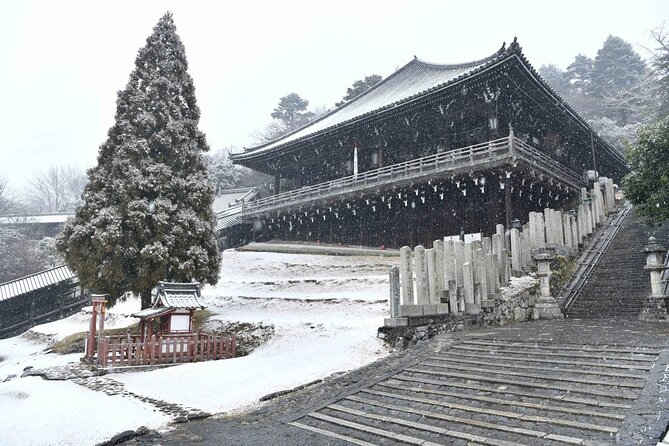
Getting Osaka, Kyoto, and Nara into one short trip is the hard part. The big payoff here is that you’re not doing it hop-by-hop with separate tickets and transfers all day. With pickup and drop-off, your driver handles the basics so you can focus on where you want to spend time.
This also helps if you’re traveling with family or a small group. The tour is priced per group (up to 5), and that matters because a private car can be cost-effective when you split it rather than booking multiple taxis or rides separately. You also have room for small adjustments, since the itinerary is described as fully customizable.
The other advantage is pacing. The visits are broken into timed stops—many around 40 to 60 minutes—so you get a structured flow. That’s useful in Japan, where lines and logistics can slow you down if you’re moving on your own.
That said, private doesn’t automatically mean stress-free. You’ll still want to plan your energy. Bring layers for temple days, and keep hydration handy—especially in warmer months.
Osaka Day: Osaka Castle, onsen time, and Instant Ramen history
Osaka starts with Osaka Castle—a classic choice for a reason. You get a real feel for the city’s historical “main stage,” and the castle grounds are a good place to slow down for a bit even if you only spend the allotted time.
Next, you head to shrines that feel more local than the usual tourist-only loop:
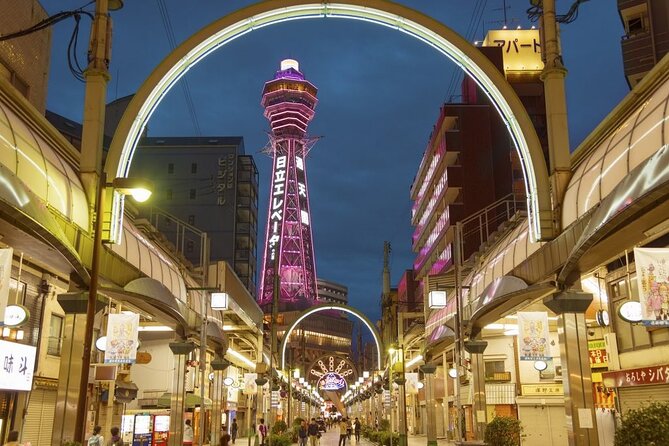
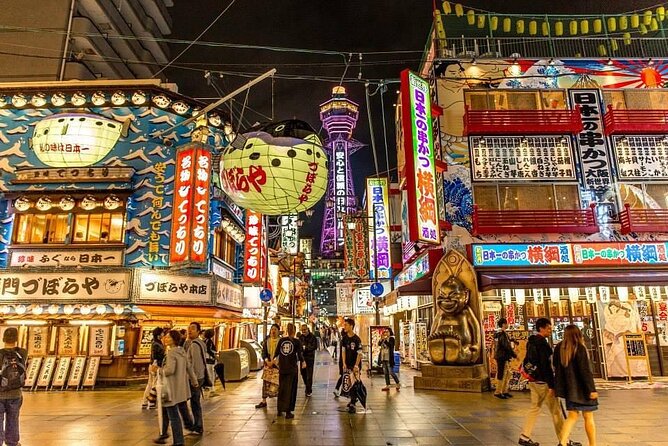
- Shinsekai Inari Shrine in Shinsekai, a small shrine stop that gives you a quieter moment before the city energy ramps back up.
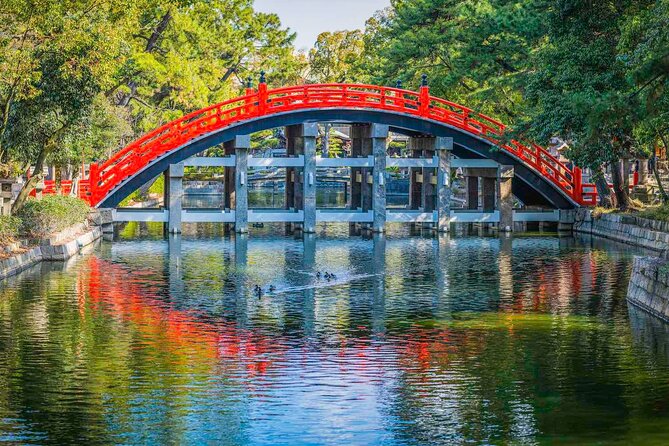
- Sumiyoshi Shrine, which is noted as free and dates back over 1,800 years. Even if you’re not a shrine-nerd, it’s a nice rhythm change from castle sightseeing.
Then the route climbs upward with the Sakai City Hall Observatory (free). This is one of those stops that pays off later: once you see Osaka from above, street-level navigation tends to feel easier. It also helps you understand how the city spreads out.
One stop I think most people will enjoy is the CUP NOODLES MUSEUM OSAKA IKEDA. Instant ramen might sound like a pop-culture detour, but it’s also a great window into modern Japanese everyday life. You’ll likely appreciate it more if you like hands-on experiences, since the museum is described as interactive and includes the history of instant ramen plus making your own cup.
After all that walking, you get a real reset: Solaniwa Onsen Osaka Bay Tower. The onsen idea is smart on this kind of trip. Long days in temples and shopping streets can wear you down, and an onsen break is an easy way to “reset your body” without adding another activity.
The evening part leans back into Osaka’s character:
- Shinsaibashi-suji Shopping Street gives you a long arcade-style street walk and a chance to snack and browse at your own pace.
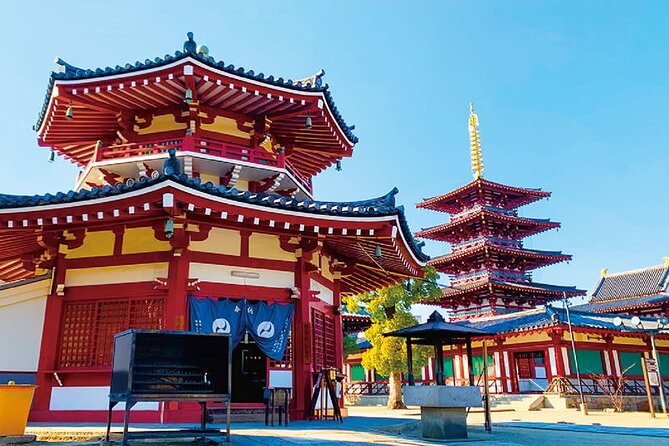
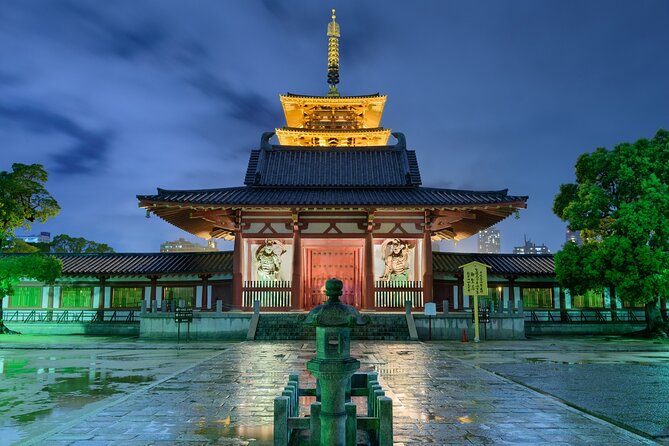
- Shitennoji is an older Buddhist temple stop (not included fee). It also rounds out Day 1 with a more traditional anchor after the more modern food-and-shopping stops.
Practical tip: Osaka entrance fees add up fast on this day. Osaka Castle and Shitennoji are both paid separately, and the onsen is one of the larger ticket items. If you want the onsen, keep that in your budget early so it doesn’t sneak up on you at the end.
Nara Day: deer park mornings and big-temple essentials
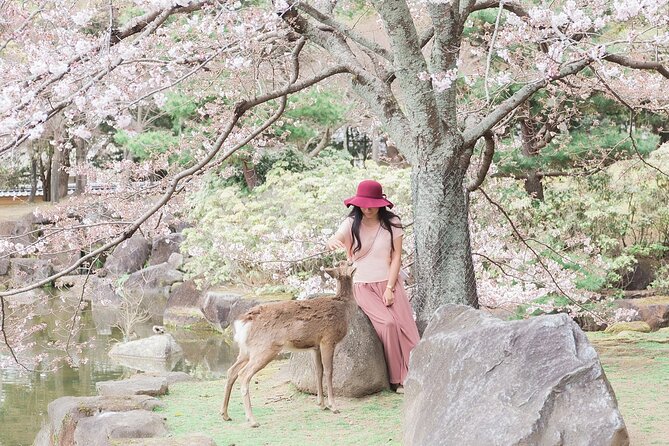
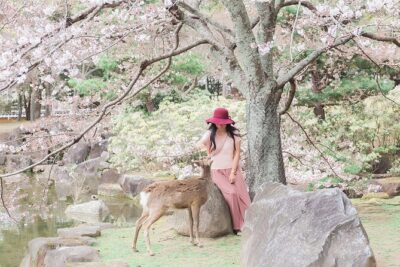
Nara is built for an easy morning and a strong finish. You start at Nara Park, where the biggest “sight” is the presence of deer roaming through the green space. This is one of those places where you don’t just look around—you react. It’s part cute, part chaotic, and part very Nara.
From there you go to Todai-ji, home to the Great Buddha. This is the kind of temple stop that helps you understand why Nara gets talked about so much. You’ll likely feel the scale the most in the Great Buddha Hall area, and the UNESCO-level significance is exactly what you’re paying time for on a short trip.
Next is a quieter add-on: Kasuga Taisha Museum at the Kasuga Taisha area. If you want more context than just the shrine visuals, this kind of museum stop is valuable. It helps connect the dots between what you see outdoors and how the site is cared for and understood.
Then the tour shifts into old-town mode with Naramachi—a historic district with traditional machiya-style streets. This is one of your best chances to slow down and shop lightly or just take in street life without feeling like you’re rushing from one “must-see” to another.
You also hit two major temples beyond Todai-ji:
- Kofuku-ji Temple (UNESCO-listed). This is another big historical anchor.
- Nara National Museum, which is timed in a way that makes sense after you’ve already seen the temple architecture. You can start to notice what matters to preserve and why.
The gardens are another thoughtful part of Nara. You have:
- Isuien Garden, described as a landscaped retreat with a historic feel.
- A separate garden stop described as Yoshikien Garden, with different styles including pond, moss, and a tea-ceremony garden setup.
Finally, you get Nara Palace Site Historical Park, which focuses on the remnants of the old Heijo Palace. Even if you don’t study archaeology, it’s a strong way to round out the day because it shifts you from religious sites to the broader imperial story.
One small caution: Nara includes many paid stops. Some are big (like Nara Park and Todai-ji), and some are smaller but still add up. If you’re trying to control costs, you can still enjoy Nara even if you skip just one or two of the museum/garden options—ask your driver what’s most important to you.
Kyoto sits thirty minutes away, more ways there


Kyoto Day: Arashiyama, torii gates, Kinkaku-ji, and Gion streets
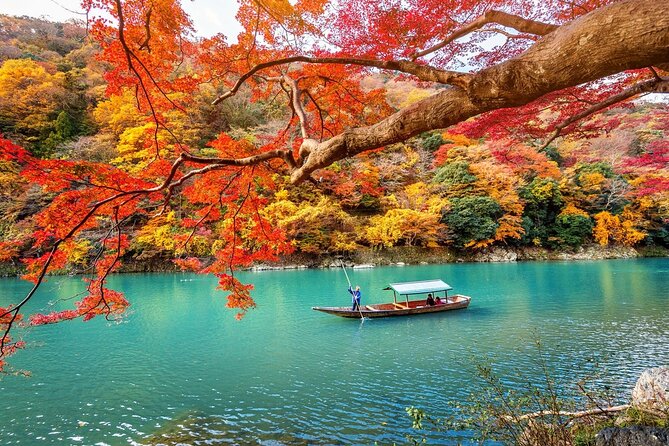
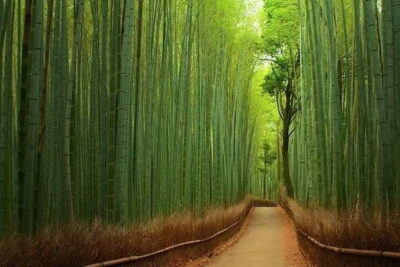
Kyoto on this tour is a classic highlights sweep, but the ordering matters. You start in Arashiyama, which is a scenic area with famous natural and traditional landmarks. This is a good warm-up before the more crowded, landmark-heavy stops.
Next comes Kinkaku-ji (Golden Pavilion). The timing here is short, so you’ll want to use it like a pro: arrive ready, look closely at the structure, then step back for photos and reflections in the water areas.
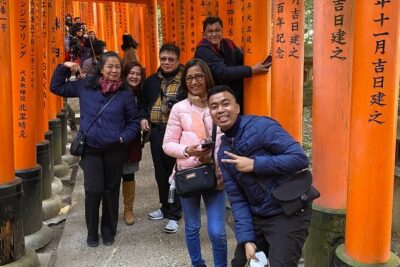
Then you head to Fushimi Inari-taisha Shrine—the torii gate complex that people talk about for a reason. The experience is part shrine, part walk, part photo mission. The key is to manage your energy. You can spend a lot of time moving upward and you can also enjoy the main gate areas with a shorter walk, depending on how you feel that day.
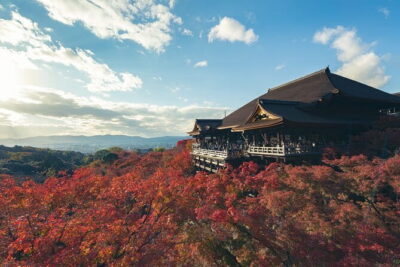
Kiyomizu-dera is next. It’s a UNESCO site with views from the temple area, and the stop is timed to help you see the main viewpoints without turning the day into a marathon.
After that, the tour goes into atmosphere mode with Gion. This is where you slow down and let the streets do the storytelling—traditional architecture, the sense of geisha district history, and plenty of photo corners. Note that the listed Gion entry fee is one of the larger costs on the schedule, so treat it as a deliberate choice if you want that specific experience.
You then move to a temple that works well when you want something different:
- Sanjusangendo Temple, famous for its collection of one thousand life-sized Kannon statues.
This stop is the kind that feels unique even if you’ve seen other major temples already.
Then you have Ginkaku-ji (Silver Pavilion), which provides a calmer contrast to the Golden Pavilion. It’s a Zen temple stop, and even with a shorter visit window, it gives you a different mood: more quiet, more details, less “wow in gold only.”
Food and browsing land back in your hands at Nishiki Market Shopping District. This is a practical pause in the middle of a temple-heavy day. You can snack, pick up small gifts, and reset without committing to a full restaurant stop.
To close the day, you visit Kyoto Imperial Palace. It’s a different kind of history—less about religious architecture, more about the imperial setting. It’s also a nice finish because it gives you a “big picture” feel to cap off the day’s variety.
If you want the cleanest experience, wear shoes you don’t mind getting tired in. Kyoto walking stacks up quickly when you’re hopping between Arashiyama, the shrine areas, and Gion.
What the English driver adds (and what to plan for)
An English-speaking driver is doing more than translating words. They help you get from place to place efficiently, and they can help you adjust your timing if something is taking longer than expected. The best value of this tour is that you’re not doing the hardest part—transport and scheduling—on your own.
Also, the feedback you provided is specific: one set of comments highlights Vicky, praised for patience during the summer heat. In that same feedback, Vicky helped keep things comfortable by bringing beverages for a couple. That kind of small practical care is what makes a private tour feel like it’s working for you, not just driving you around.
Still, don’t assume a driver automatically acts as a full museum guide for every interior space. The tour data lists guide not included, which usually means you should rely on the driver for route support and explanations, but you might still pay for or handle deeper interpretations case by case.
Here’s what I’d do before you go:
- Bring cash or be ready to pay entrance fees on-site (the tour lists many fees not included).
- Pack light snacks and water, especially on a day with torii gates and lots of walking.
- Keep a small flexible plan—if you want more time at Fushimi Inari, you might shorten another stop later.
Price and value for a group of up to 5
The price is $1,646.41 per group for up to 5 people. That’s the headline number, but value comes from what’s included.
What you get included:
- Private transportation
- English-speaking driver
- Pickup and drop-off
What’s not included:
- Accommodation and meals
- Entrance fees for many of the biggest stops, including Osaka Castle, Todai-ji, Kinkaku-ji, Kiyomizu-dera, and more
- Onsen admission and some garden/museum fees
- A separate guide
So the financial reality is simple: you’re paying for convenience and coordination, then paying a second layer for admissions. At the max group size (5 people), the tour portion works out to roughly $330 per person before entrance fees. If you’re fewer than five, that effective per-person cost goes up.
Is it worth it? For families and small groups, it often is—because you’re buying time and hassle reduction. For solo travelers or couples, you’d want to compare against your own comfort with local transit and your tolerance for navigating between Osaka, Nara, and Kyoto on a tight schedule.
Big budget note: some listed entrances are high, including the onsen and Gion. If you’re planning to do almost every site listed, plan for a serious total in yen on top of the tour price.
Pacing, crowds, and how to avoid feeling rushed
This tour is structured with many short-to-medium stops. Lots of entries are timed around 40 to 60 minutes, with one or two longer blocks like shopping street time. That usually works well if your travel style is “see a lot, don’t linger forever.”
But you can still keep it from feeling rushed. I like these tactics:
- Use the first stop of each day to “reset your bearings,” then let the rest of the day flow.
- Pick one anchor per city. For example: Todai-ji in Nara, Kinkaku-ji in Kyoto, and Osaka Castle in Osaka. Then treat everything else as flexible extras.
- If your energy dips, choose the option that still gives you value without extra walking. A market stop like Nishiki can be a great way to rest while still enjoying something.
Also, with a summer-oriented comment in the feedback, temperature planning matters. Bring breathable layers, plan shade breaks at shrines where possible, and expect you’ll walk more than you think when you’re swapping between streets and temple grounds.
Should you book this Osaka Kyoto Nara private tour?
I’d book it if you want a straightforward, high-coverage route with private transport and an English-speaking driver. It’s especially a good fit for a small group (up to 5) that wants to reduce logistics and focus on experiences across three cities.
I’d think twice if:
- You’re trying to keep entrance fees minimal, since many major stops are not included.
- You dislike fast-paced days with lots of moving parts. This schedule is packed by design.
Given the strong rating (5 out of 5 from 8 reviews) and the specific praise for Vicky’s patience and heat help, this looks like a good option when comfort, timing, and smooth logistics matter.
FAQ
How long is the Osaka, Kyoto, and Nara tour?
It runs for about 3 days.
Is this a private tour?
Yes. Only your group participates.
What’s included in the price?
Private transportation, an English-speaking driver, and pickup and drop-off are included.
Are entrance fees included?
No. Many entrance fees are listed as not included, such as Osaka Castle, Todai-ji, Kinkaku-ji, and Kiyomizu-dera.
Are meals included?
No. Meals are not included.
Is there pickup available?
Yes, pickup is offered and pickup and drop-off are included.
Does the tour use a mobile ticket?
Yes, a mobile ticket is mentioned.
How far in advance do people usually book?
On average, it’s booked about 51 days in advance.
What is the cancellation policy?
You can cancel for a full refund up to 24 hours before the experience start time.
Kyoto, Just Up the Line
- Full Day Tour of Kyoto with Private Transportation★ 5.0 · 130 reviews
- Kyoto private tour (Shore excursion available from Osaka or Kobe port)★ 5.0 · 39 reviews
- Private Transfer by Sedan from Itami Airport ITM to Kyoto City★ 4.5 · 31 reviews
- Kyoto Full Day Tour from Osaka with Licensed Guide and Vehicle★ 5.0 · 29 reviews
- Private arrival transfer from Osaka Itami International airport to Kyoto City★ 5.0 · 26 reviews
Your Osaka, at Your Pace
- Full Day Tour of Kyoto with Private Transportation★ 5.0 · 130 reviews
- Kyoto private tour (Shore excursion available from Osaka or Kobe port)★ 5.0 · 39 reviews
- Private arrival Transfer from Kansai airport to Osaka city★ 4.5 · 36 reviews
- Private Transfer by Sedan from Itami Airport ITM to Kyoto City★ 4.5 · 31 reviews
- Private arrival transfer from Osaka Itami International airport to Kyoto City★ 5.0 · 26 reviews
The Newest Osaka Write-Ups
- Private Day Tour in Osaka and Kyoto with charter car
★ 5.0 · 3 reviews - Shared Arrival Transfer: Osaka Itami Airport to Osaka City
★ 5.0 · 3 reviews - Osaka Sushi Cooking Class
★ 5.0 · 3 reviews - Private Transfer Between Kyoto and Kansai Airport KIX
★ 5.0 · 3 reviews - Osaka : Cycling Tour Private Seaside Ride Near Kansai Airport
★ 5.0 · 3 reviews
Osaka Private Tours, compared.
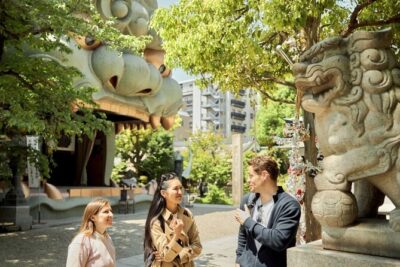 ★ 5.0Private Osaka Walking Tour: Highlights & Hidden GemsFrom $81569 reviews
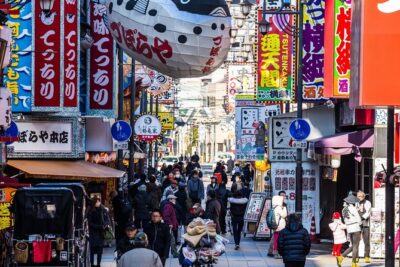 ★ 5.0Osaka 4hr Private Tour with Government-Licensed GuideFrom $105314 reviews
 ★ 5.03/4/5 Hours Private Tour in Osaka with Local GuideFrom $95189 reviews
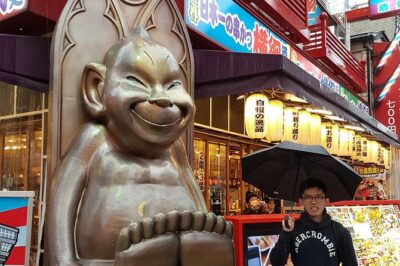 ★ 5.0Osaka’s Best and Brightest: Private Full-Day Tour by VehicleFrom $600147 reviews
 ★ 5.0Full Day Tour of Kyoto with Private TransportationFrom $247130 reviews
 ★ 4.5Kyoto & Nara Private customized tour with English speaking GuideFrom $54999 reviews
 ★ 4.6Private Custom Walking Tour with a Local GuideFrom $6297 reviews
 ★ 4.93/4/5 Hours Private Tour With Local GuideFrom $11686 reviews
Browse the lists this tour appears in