
Reviewed · OSAKA BIKE TOURS
Sakai – Highlights Bike Tour
Sakai rewards slow wheels. This small-group bike tour lets you see Sakai by bike with UNESCO-listed history you’d miss on a bus. I like that the pace is easy, so you’re not sprinting from stop to stop just to catch the highlights. I also like that the tour is built around specific local places, not generic photo spots.
One thing to plan around: it runs on good weather, and there’s an 8-person max, so if your timing is fixed, it’s worth booking with a little flexibility. It can also be a little tricky for solo travelers because the tour has a minimum number of people to operate.
In This Review
- Key highlights you’ll actually feel on the day
- Getting from Nankai Sakai Station to real local Sakai
- Stop 1: Daisen-ryo Kofun and the park ride that changes with the season
- Sakai City Museum: old armor, culture context, and a quick hands-on moment
- The Yamaguchi Residence: a preserved machiya house with family history
- Shimano Bicycle Museum: local identity through a global brand
- Lunch and pacing: why the 4–5 hours feels easier than you expect
- Knife shop souvenir time: buy if you want, skip if you don’t
- Price and value: what $85.81 buys you in real time
- Weather, skills, and who this tour suits best
- Should you book the Sakai Highlights Bike Tour?
- FAQ
- What is the duration of the Sakai Highlights Bike Tour?
- What time does the tour start?
- Where do I meet the guide?
- How large is the group?
- What’s included in the price?
- Is lunch included?
- Do I need to pay for museum or attraction tickets separately?
- Is there a mobile ticket?
- What if the weather is bad?
- Can I cancel for a full refund?
Key highlights you’ll actually feel on the day
- A bus-resistant route that gets you to places bikes can reach more easily
- Maximum 8 people, which keeps the guide’s attention on you
- UNESCO Emperor Nintoku tomb area, plus story-driven “weird facts”
- Museum time that’s practical, including hands-on moments like trying on old armor
- Shimano Bicycle Museum, where a global brand connects back to Sakai
- Lunch and water included, so you’re not budgeting every hour
Keep pedalling, more of Osaka by bike
Getting from Nankai Sakai Station to real local Sakai
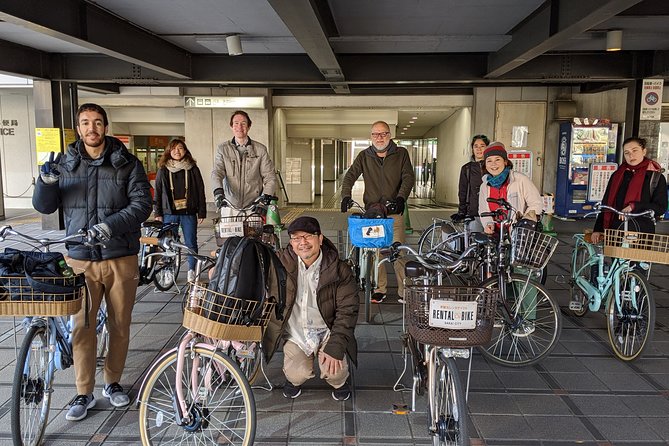
The tour starts at Nankai Sakai Station Post Office at 10:00 am, and it ends back at the same meeting point. That loop matters in Japan, where transit is great but getting from one neighborhood to the next can eat time. Having a set meeting point also makes the day feel calm—show up, get fitted, and roll.
You’ll get a mobile ticket, plus everything tied to the visit is handled for you: bicycle use, museum and attraction admissions, and lunch. You’ll also have bottled water for each person (one bottle). If you like tours where the day runs on rails, this one fits.
A practical note: the tour duration is about 4 to 5 hours. That’s long enough to feel like a proper outing, but short enough that you won’t be wiping out the rest of your Osaka prefecture day.
Stop 1: Daisen-ryo Kofun and the park ride that changes with the season
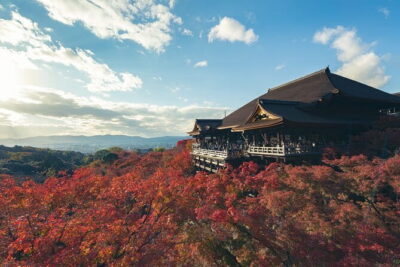
The first main stop is Daisen-ryo Kofun, the tomb of Emperor Nintoku. This is the UNESCO-listed mausoleum that became a World Heritage Site in late 2019, and you’ll spend about 15 minutes here. Short visit, big meaning. You get the overview of why it’s so important, plus the kind of odd little details guides like to share when the site has been studied for generations.
From there, the tour includes a bike ride through a park. This is one of those segments that makes the whole day feel less like a checklist. Depending on the season, you might see cherry blossoms or momiji (Japanese maple leaves)—and even if you’re not traveling in peak bloom, you still get a slower, greener stretch.
A “consider this” moment: the park segment is where the weather really shows up. If it’s hot, take it easy on the easy sections. If it’s rainy, the tour provider notes the experience depends on good weather, so expect planning around that.
Sakai City Museum: old armor, culture context, and a quick hands-on moment
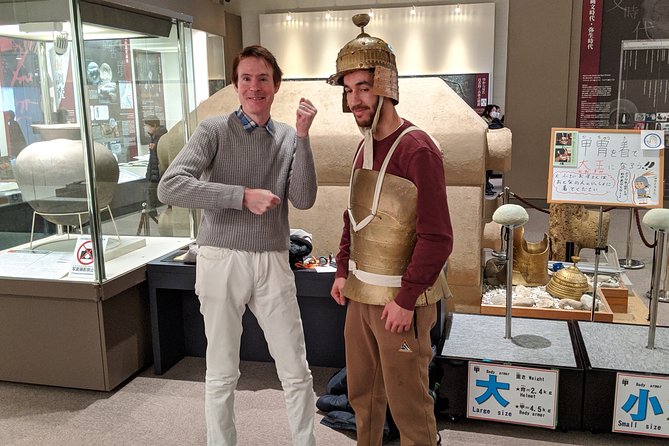
Next up is the Sakai City Museum, with about 40 minutes inside. Admission is included, so you won’t waste time at ticket counters or worrying about what’s open. This stop is valuable because it gives you context for what you’re seeing outside—Sakai isn’t just another point on a Japan itinerary.
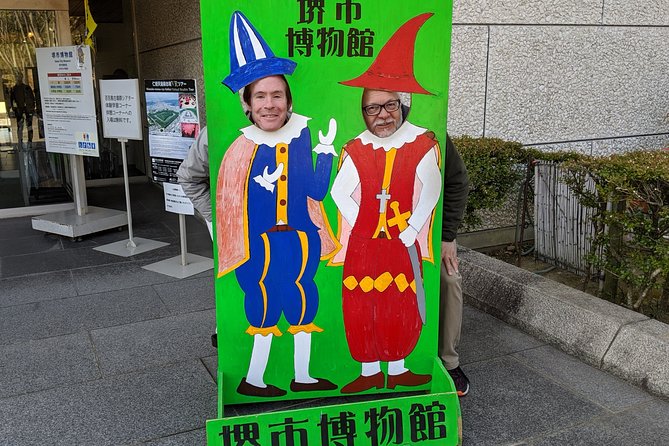
One of the more memorable details here is the chance to try on old armor for photos. That’s exactly the sort of low-effort, high-fun activity that makes a museum feel like something you actually did, not just something you watched. If you’re traveling with kids, it’s also the kind of distraction that keeps everyone interested while the grown-ups listen to the guide’s explanation.
The museum visit is also a reminder that Sakai has its own story. People often jump straight to the flashier names nearby, but here you get a more grounded sense of how the city developed.
The Yamaguchi Residence: a preserved machiya house with family history
After the museum, you’ll visit the Sakai Municipal Machiya Historical Museum Yamaguchi Residence. Plan for about 30 minutes, and again, admission is included. This is a historical Japanese house—specifically the home of the Yamaguchi family, described as a famous, business-successful family.
What I like about this kind of stop is that it slows the day down. Museums can be about facts and objects, but a preserved residence helps you understand everyday life: space, function, and how a family would have lived and worked. Even if your Japanese is limited, architecture is a language you can read with your eyes.
The drawback is simply timing. Thirty minutes goes by fast, so don’t expect a deep, hour-long study of every room. Think of it as a well-targeted sampler that makes the city feel lived-in.
Shimano Bicycle Museum: local identity through a global brand
The final major stop is the Shimano Bicycle Museum, where you’ll have about 1 hour. Admission is included, and this is a smart ending because it ties back to the idea that Sakai has skills and industries worth learning about.
You’ll walk through the history of Shimano, one of the best-known bicycle and cycling brands in the world. The museum focuses on innovations and inventions, including the surprising side of what cycling technology can change over time. It also highlights a less-obvious angle: how a city can shape a global brand, not just manufacture it.
If you’re a cycling person, this is the portion you’ll probably enjoy most. If you’re not, the design of the museum still helps you understand. It’s not only for gear nerds; it’s about ideas—how tools get refined, and how that progress shows up in everyday rides.
Also worth noting: at least one past rider found the bikes themselves electric-assist, and said they were easy to use. Electric bikes can make a big difference when you want to see more without feeling worn out.
Lunch and pacing: why the 4–5 hours feels easier than you expect
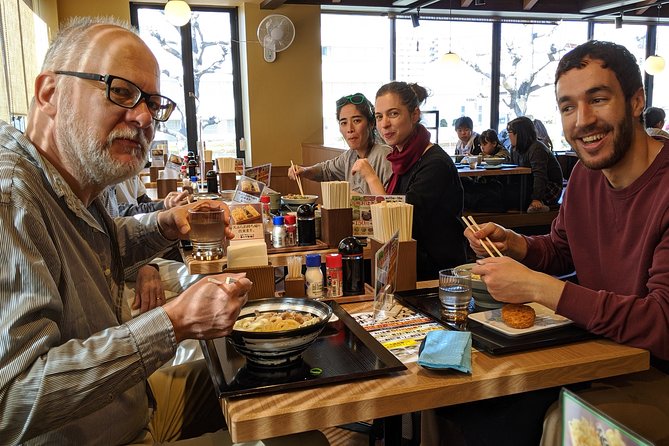
This tour includes lunch within a reasonable budget, plus one bottled water per guest. That’s a big deal on a half-day outing. In Japan, food planning can quietly become the hardest part of a day—so having lunch handled means your energy stays where it should be: on seeing.
The ride pace is described as leisurely. That matters because you’re covering multiple stops in a few hours, and you don’t want the fatigue of constant stopping and starting. A small group helps here too. With a maximum of eight people, it’s easier to keep everyone together and still get explanations that don’t feel rushed.
Small-group tours also reduce the awkward “who’s next?” gaps. Instead of waiting at the edges, you’ll typically be able to hear the guide and move as a unit.
Knife shop souvenir time: buy if you want, skip if you don’t
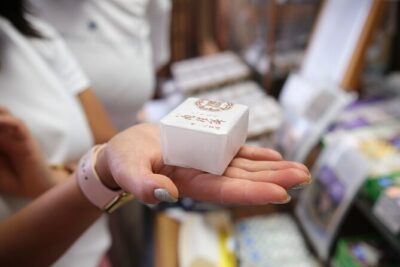
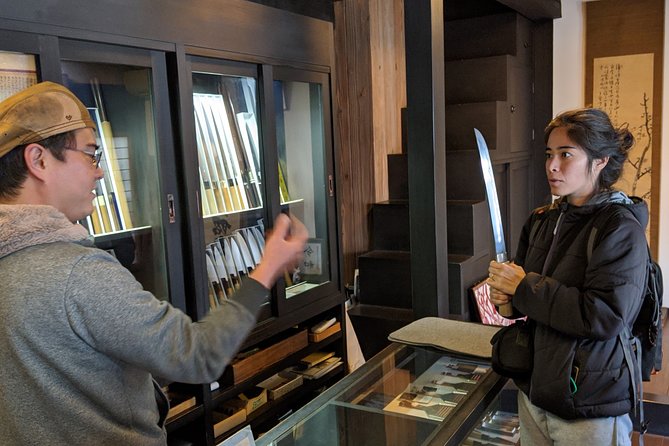
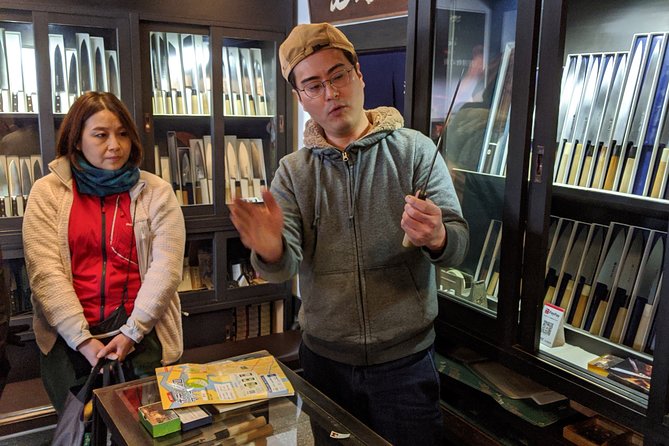
One highlight of the day is a knife shop where you can buy an authentic souvenir. This is the kind of stop that makes sense in Sakai because it’s known for traditional craftsmanship and local specialties.
I’d treat this as optional: go in, look around, and if something fits your budget and suitcase space, great. If not, you can still enjoy the explanation and craftsmanship without feeling pressured to buy.
Remember: extra shopping and souvenirs aren’t included, and the tour info also says extra food and drinks are on you if you want more than the included lunch.
Price and value: what $85.81 buys you in real time
At about $85.81 per person, this is priced like a true guided experience rather than a DIY rental-with-random-museums. You’re paying for:
- the bike and guided route
- admissions at multiple stops
- lunch
- water
If you added up museum tickets, an organized itinerary, and lunch on your own, you’d likely end up close to the same total once you factor in time saved. Also, the guide’s role is more than directions. The tour’s value is the story layer—why these places matter and how Sakai fits into Japan’s broader history.
The practical trade-off is that you’re committing to a fixed schedule. If you like spontaneity more than structure, you might prefer free time after you see the first few highlights. But if you want a clean, guided half-day, this price feels fair for what’s included.
Weather, skills, and who this tour suits best
This experience requires good weather. That’s standard for bike tours, but it matters more here because you’ll be outside for multiple segments, including the park ride. If rain is on the forecast, build in a backup day in Osaka or be ready to reschedule if the operator cancels.
In terms of ability, the info says most travelers can participate. The route is described as a leisurely pedaling pace, which is a good sign if you’re not trying to prove anything to your legs. If you’re comfortable riding a bike at normal city speed, you’ll likely be fine.
Who it’s best for:
- People who want a guided city highlight tour without big crowds
- First-time visitors to Sakai who want the city’s own identity
- Families who like hands-on museum moments (like the armor photo bit)
- Cycling fans, thanks to the Shimano stop
Who might struggle:
- Anyone with a very inflexible schedule if weather affects operations
- Solo travelers, because there’s a minimum of two guests to run the tour. If that minimum isn’t met, the session may be cancelled, with options like rescheduling or a refund.
Should you book the Sakai Highlights Bike Tour?
I think this is a strong choice if you want an easy, story-led Sakai day that feels local. The big winning combo is bike access plus multiple focused stops: the UNESCO Nintoku tomb area, culture at the city museum, the preserved Yamaguchi residence, and the Shimano museum that connects global cycling to this city.
Book it if you like:
- a small group and a guide who can slow down for questions
- museums and historic sites that come with clear explanations
- a built-in meal, so you don’t spend half your day hunting food
Skip it (or at least consider alternatives) if you’re only interested in one or two major attractions and hate fixed timing. Also, if you’re a solo traveler, check you’ll be comfortable with the possibility of cancellation if the minimum isn’t met.
FAQ
What is the duration of the Sakai Highlights Bike Tour?
It runs about 4 to 5 hours.
What time does the tour start?
The start time is 10:00 am.
Where do I meet the guide?
The meeting point is at the Nankai Sakai Station Post Office, 3-chōme-22-1 Ebisujimachō, Sakai Ward, Sakai, Osaka 590-0985, Japan.
How large is the group?
The tour has a maximum of 8 travelers.
What’s included in the price?
Included are bicycle use, lunch, bottled water (one bottle per guest), and all fees and taxes.
Is lunch included?
Yes, lunch is included (within a reasonable budget).
Do I need to pay for museum or attraction tickets separately?
No. Admission tickets for the stops listed are included.
Is there a mobile ticket?
Yes, the tour uses a mobile ticket.
What if the weather is bad?
The experience requires good weather. If it’s cancelled due to poor weather, you’ll be offered a different date or a full refund.
Can I cancel for a full refund?
Yes. You can cancel up to 24 hours in advance for a full refund.
Two Wheels, More of Osaka
- Osaka Half-day E-bike Adventure: Minoh Falls & Katsuoji Temple★ 5.0 · 25 reviews
- Osaka : Cycling Tour Private Seaside Ride Near Kansai Airport★ 5.0 · 3 reviews
More Tour Reviews in Osaka Prefecture
- Full Day Tour of Kyoto with Private Transportation★ 5.0 · 130 reviews
- Sakai – Knife Factory and Craft Walking Tour★ 5.0 · 44 reviews
- Kyoto private tour (Shore excursion available from Osaka or Kobe port)★ 5.0 · 39 reviews
- Private arrival Transfer from Kansai airport to Osaka city★ 4.5 · 36 reviews
- Private Transfer by Sedan from Itami Airport ITM to Kyoto City★ 4.5 · 31 reviews
Osaka From the Saddle
- Osaka Half-day E-bike Adventure: Minoh Falls & Katsuoji Temple★ 5.0 · 25 reviews
- Osaka : Cycling Tour Private Seaside Ride Near Kansai Airport★ 5.0 · 3 reviews
The Newest Osaka Write-Ups
- Private Day Tour in Osaka and Kyoto with charter car
★ 5.0 · 3 reviews - Shared Arrival Transfer: Osaka Itami Airport to Osaka City
★ 5.0 · 3 reviews - Osaka Sushi Cooking Class
★ 5.0 · 3 reviews - Private Transfer Between Kyoto and Kansai Airport KIX
★ 5.0 · 3 reviews - Osaka : Cycling Tour Private Seaside Ride Near Kansai Airport
★ 5.0 · 3 reviews
Osaka Bike Tours, compared.
 ★ 5.05-Hour Osaka Bike Tour to the Neighborhood of Osaka CastleFrom $87319 reviews
 ★ 5.0One-Day Osaka Bike Adventure: 5–6 HoursFrom $106246 reviews
 ★ 5.0Eat, Drink & Cycle: Osaka Foodie Bike TourFrom $99224 reviews
 ★ 5.0Osaka E-Bike Tour with a Local GuideFrom $59219 reviews
 ★ 4.85-Hour Osaka Highlights Bike Tour with LunchFrom $85146 reviews
 ★ 5.0Osaka in a Nutshell: Three hour bike tourFrom $72121 reviews
★ 4.7Osaka E-Bike Tour With A Local GuideFrom $5775 reviews
★ 5.0Osaka in a Nutshell: Three hour bike tourFrom $72121 reviews
★ 4.7Osaka E-Bike Tour With A Local GuideFrom $5775 reviews
 ★ 5.0Urban Canvas: Osaka Street Art Bike TourFrom $8947 reviews
Browse the lists this tour appears in