
Osaka looks best from up high. This short ride is made for getting your bearings fast, with big panorama views and an audio guide in multiple languages that helps you connect the landmarks to the city. The package also includes onboard WiFi, a raincoat when needed, and even cooling gel sheets in summer, so the comfort game is handled better than most quick city tours.
What I like most is the simple payoff: in about 45 minutes to 1 hour, you’re seeing the Osaka Castle area, the Umeda skyline (including the Umeda Sky Building), the Namba streets, and the neon zone around Dotonbori—all from one vehicle. You’ll also get practical help from the audio, including language support that goes beyond basic playback for people who aren’t fully fluent in Japanese. One thing to consider: you cannot hop off to explore each spot, and in rain the setup can change, which affects both comfort and photo results.
In This Review
- Key things that make this bus tour worth your time
- A quick Osaka overview from Osaka Station, not the usual start
- The “open-top” promise—and the real-world weather checklist
- Getting your value: what you actually see in the Osaka loop
- Osaka Castle area views
- Umeda Sky Building and the modern city skyline
- Namba streets
- Dotonbori neon districts
- Audio guide quality: more helpful than you’d expect for a short ride
- Comfort and convenience details that matter more than you think
- Where you can leave the bus: the Abeno Harukas exception
- The meeting point reality: stress happens before the wheels move
- Who this tour fits best (and who should skip it)
- Price and value: $24.98 for a one-shot Osaka map
- Small-group feel with a big reality check: you’re seeing from inside a vehicle
- Should you book the Osaka Sky Vista Double-Decker Bus Tour?
- FAQ
- How long is the Osaka Sky Vista Double-Decker Open-Top Bus Tour?
- Where is the meeting point?
- Does the tour end at the meeting point?
- How much does it cost?
- Is there WiFi on the bus?
- What languages are available on the audio guide?
- Can I get off the bus to visit the sights?
- Are restrooms available on the bus?
- What happens if it rains?
- How many people are on the tour?
- What is the cancellation policy?
Key things that make this bus tour worth your time
- 360-degree views on a double-decker, open-top style (when conditions allow)
- Multilingual audio in English, Mandarin, Cantonese, and Korean to guide you scene by scene
- Onboard WiFi for maps, messages, and quick lookups between stops
- Weather-ready extras: raincoat provided when rain is forecast, cooling gel sheets in summer
- Small-group feel with a maximum of 20 travelers, so it doesn’t feel like cattle herding
- One place you can leave briefly: the parking area near Abeno Harukas is the main exception
Not sold yet? See how this one holds up next to these Osaka picks.


A quick Osaka overview from Osaka Station, not the usual start
If you’re landing in Osaka for a few days, it’s easy to waste time zigzagging across town before you really understand the layout. This tour’s meeting point is Osaka Station’s JR Express Bus terminal (Terminal 3, Umeda). That’s a smart starting location because Umeda is one of the easiest hubs in the city for train access, and it saves you from the early-stress guesswork.
The schedule is also flexible in the sense that you choose your desired route and departure time, then the tour runs for about 55 minutes to around an hour. That means you can often fit it between meals, after arriving, or as a first-day orientation.
Also worth noting: seating is assigned automatically. If you book multiple people, you might not sit next to each other. For couples and families, that’s the kind of detail that can change the mood of a short ride—especially when you want to share photos.
The “open-top” promise—and the real-world weather checklist
The main idea is easy: you get breezy sightlines and a higher viewing angle than a street-level walk. That’s ideal for Osaka’s contrast—big landmark silhouettes, then quick changes to street energy. On clear days, it’s one of the best ways to collect photos without burning daylight.
But here’s the practical part. This experience is weather-sensitive. If poor weather cancels the tour, you’ll be offered a different date or a full refund. If rain is forecast and service is still running, you’re given a raincoat (umbrellas aren’t allowed, and parasols are prohibited for safety).
One review experience also pointed out a common consequence: if the roof is closed due to rain, you lose the open-air comfort and can feel the difference more than you’d expect. Since cooling gel sheets are only included in summer, the comfort strategy is seasonal, not universal. Translation: pick your time of day with the weather in mind, and don’t plan this as a guaranteed sightseeing miracle on a stormy afternoon.
Getting your value: what you actually see in the Osaka loop
This isn’t a hop-on, hop-off tour. You’re mainly in a “look out the window” mode, with views of the sights as the bus passes through them. That can feel limiting if you want to linger. Still, it’s perfect for travelers who want the highlights in one shot—especially first-timers.
Here’s what the route is designed to connect:



Osaka Castle area views
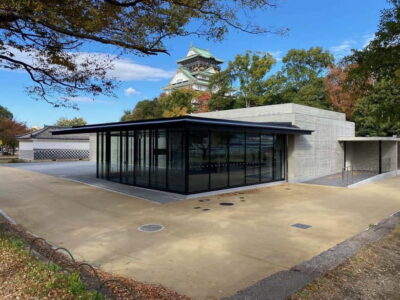
Osaka Castle is the big “you’re really in Osaka” landmark. From an elevated seat on a double-decker, you get a sweeping sense of the area without having to navigate parking lots, crowds, or complex walking routes. The big win here is pacing. You’re not spending the whole day climbing in and out of trains and buses—you’re collecting a key reference point and moving on.
Umeda Sky Building and the modern city skyline
Osaka isn’t only castles and old streets. The tour also aims at the modern side, including the Umeda Sky Building. From above, the skyline reads differently than it does from street level. You’ll have an easier time placing neighborhoods in your mental map later.
This is also one of those moments where the audio guide helps. Seeing a landmark is nice; understanding where it fits in the city is better. You get that extra layer as you pass.
Namba streets
Namba is where Osaka gets louder—food energy, shop streets, and a vibe that feels more everyday than “attraction-only.” The bus route gives you a quick, wide-angle sense of what Namba feels like, even though you aren’t stopping to walk in.
If you’re someone who thrives on exploring on foot, you’ll use this part differently: treat it like a preview. After the ride, you can decide which streets you actually want to walk later.
Dotonbori neon districts
Dotonbori is the photo magnet. Even as a passing view, it delivers that recognizable Osaka feeling—especially at dusk when lights start to stand out. If your schedule allows, timing matters. A bus at the right light can make the neon look dramatic instead of flat.
Two practical notes for photos:
- If the windows aren’t crystal clear, shooting through them can be harder than you’d think.
- On a moving vehicle, even “short” photos can come out slightly soft if you rush the moment.
Audio guide quality: more helpful than you’d expect for a short ride
This tour includes an audio guide in English, Mandarin, Cantonese, and Korean. That’s already a plus for international travelers. But the stronger selling point is how the audio support seems designed for people who aren’t fully fluent in Japanese yet.
One top review called out mini audio translators, which is a big deal in real life. It means you’re not stuck with a long block of narration you can’t use. You get help in a way that keeps you engaged instead of glazing over.
If you’re traveling with kids, this also helps. Many families get restless when the sightseeing lacks a clear narrative. Here, the audio gives you the story as the landmarks roll by.
Still, there’s a caution. Some feedback mentioned limited commentary, which likely means you may not get deep, detailed explanations for every single stretch you pass through. For a 55-minute overview, that’s not shocking. Just keep your expectations aimed at orientation, not a walking-lecture.
Comfort and convenience details that matter more than you think
This is where the small inclusions can genuinely improve your experience.
- Onboard WiFi: useful for maps, finding the next train, and quick translations while you’re still in the city center.
- Raincoat included when rain is forecast: you’re not scrambling for a last-minute convenience store purchase.
- Cooling gel sheets in summer: when it’s hot, the ride can be less draining than it would be otherwise.
On the downside, there are no restrooms on the bus. For a ride under an hour, that might be okay. But if you’re sensitive to timing—especially with kids—it’s worth planning your bathroom stop before you board.
Where you can leave the bus: the Abeno Harukas exception
Most of the tour is view-only from the bus. The big exception is at the parking area of Abeno Harukas, where you can leave the tour if you wish. That matters because it gives you one realistic chance to stretch your legs and get a closer look—without turning the whole experience into a long walking day.
If you want to get the most out of that option, decide in advance what you’d do there. Since the tour ends back at the meeting point, you’ll likely be using that break to grab photos, check nearby viewpoints, or reset before rejoining your onward plans.
The meeting point reality: stress happens before the wheels move
The tour starts at Osaka Station’s JR Express Bus Terminal area in Umeda. In general, that’s convenient. But one critical review flagged that getting to the meeting point can be stressful.
So here’s my practical advice: don’t treat the start location like a casual stroll. Give yourself extra time to find the correct terminal and stop. Osaka Station is huge, and “near public transportation” can still mean you need a few minutes of walking inside a complex.
Also remember: service can be suspended in some cases, and you’ll be notified using the contact number you provided when booking. If you hate uncertainty, this is one reason to keep your phone charged and reachable the day of the tour.
Who this tour fits best (and who should skip it)
This works best for:
- First-time visitors who want a highlight sweep without committing to a full day of transit and walking
- Travelers who prefer photos and big-picture views over stepping out every few minutes
- Families who want predictable timing and audio support
- People staying near Umeda or Osaka Station who want an easy, low-planning overview
You might want to skip or downgrade your expectations if:
- You’ve already spent multiple days in Osaka and you want deeper, neighborhood-level exploration instead of a view-only loop
- You’re photo-obsessed and need top-tier window clarity and zero glare (some feedback flagged dirty windows affecting photos)
- You strongly dislike weather-linked changes, since rain can shift the open-top comfort and overall feel
Price and value: $24.98 for a one-shot Osaka map
At $24.98 per person, this isn’t a “cheap and cheerful” thing, and it’s not a luxury sightseeing package either. It’s a value-priced orientation tool.
Here’s how I judge it for you:
- If you use it on Day 1, it can save hours later by helping you understand where Osaka Castle, Umeda, Namba, and Dotonbori sit relative to each other.
- If you’ve already done those areas on foot, the bus can feel like a repetition, especially if you hoped you’d hop out and explore.
So think of it less as a full attraction and more as your fastest route to a mental map plus a set of key photos.
Also, note the booking demand: it’s often booked around 20 days in advance. That’s a hint to book earlier if you care about specific departure times.
Small-group feel with a big reality check: you’re seeing from inside a vehicle
The tour maxes at 20 travelers, which is one reason it can feel calmer than large city buses. But with assigned seating and limited stopping, it still has a clear format: you’re passively touring from a high seat.
If that format matches your travel style, you’ll probably enjoy it. If you want freedom—walking, stopping for snacks, and lingering—then this won’t fully deliver.
And for anyone expecting open-top all the way through: keep your weather plan in place. Bring the mindset that the goal is views and orientation, not perfect conditions.
Should you book the Osaka Sky Vista Double-Decker Bus Tour?
Book it if you want an efficient Osaka sampler. You’ll likely love the panoramic views, the multilingual audio support, and the fact that you can get a lot of the city’s “big names” in under an hour without building a complex itinerary. The raincoat and WiFi add practical comfort, not just marketing.
Skip it or be cautious if you’re already deep into Osaka and you’re hunting for neighborhood immersion. The view-only format, lack of restrooms, and the chance of window and weather issues can turn a short ride into a frustrating checklist.
If you’re on the fence, choose the timing wisely. Plan around clearer weather and aim for a time when the light will make places like Dotonbori look their best.
FAQ
How long is the Osaka Sky Vista Double-Decker Open-Top Bus Tour?
The tour lasts about 45 minutes to 1 hour (around 55 minutes for the ride).
Where is the meeting point?
The tour starts at Osaka Station JR Express Bus Terminal 3 (Chome-1, Umeda, Kita Ward, Osaka 530-0001, Japan).
Does the tour end at the meeting point?
Yes. The activity ends back at the meeting point.
How much does it cost?
It costs $24.98 per person.
Is there WiFi on the bus?
Yes. WiFi is provided onboard.
What languages are available on the audio guide?
The audio guide is available in English, Mandarin, Cantonese, and Korean.
Can I get off the bus to visit the sights?
You cannot get off during the route for sightseeing from the bus window. The main exception is at the parking area of Abeno Harukas, where you may leave the tour if you wish.
Are restrooms available on the bus?
No. There are no restrooms on the bus.
What happens if it rains?
If rain is forecast, a free raincoat is provided. Umbrellas are not allowed, and parasol is prohibited for safety. If service is canceled due to poor weather, you’ll be offered a different date or a full refund.
How many people are on the tour?
The tour has a maximum of 20 travelers.
What is the cancellation policy?
The experience is non-refundable and cannot be changed. If canceled due to poor weather, you’ll be offered a different date or a full refund.
More Tour Reviews in Osaka
- Osaka Go Karting Tour with Funny Costume★ 5.0 · 2,658 reviews
- Osaka Castle: Museum and Tower Entry Ticket★ 4.5 · 2,380 reviews
- Osaka: Shinsekai Food Tour with 13-15 Dishes at 5 Eateries★ 4.8 · 2,204 reviews
- Osaka Food Tour: 13 Dishes at 5 Local Eateries★ 5.0 · 2,149 reviews
- Hungry Osaka Street Food Tour:15 Tastings & 3 Drinks with a Local★ 5.0 · 1,727 reviews
The Newest Osaka Write-Ups
- Private Photoshoot in Osaka with a Professional Photographer
★ 5.0 · 3 reviews - Osaka Early Morning Osaka Castle Tour Avoid Crowds
★ 5.0 · 3 reviews - Nara Private Tour with Pick and Drop and English Speaking Driver
★ 3.5 · 3 reviews - Osaka: Modern Vegetarian Sushi Cooking Class
★ 5.0 · 3 reviews - Nara Day Trip from Osaka with a Licensed Guide
★ 5.0 · 3 reviews