
Reviewed · OSAKA
Osaka: LGBTQ+ Life Past and Present
Two Osaka neighborhoods tell two stories of gay life. This tour pairs Shinsekai and Doyamacho, showing how LGBTQ+ life in Osaka has shifted from coded, private spaces to out-and-open nightlife. You also get a guided walk that explains what you’re seeing as you go.
I like two things right away: the English-speaking guide from the LGBTQ+ community, and the fact that the evening isn’t just sightseeing. You’ll also get a light dinner and two included drinks, which turns the whole plan into a no-stress night out.
One possible drawback: this experience is for age 20+, and Japan’s legal drinking age is also 20. If you’re under that age, you’ll need to sit this one out, since the inclusions are built around alcohol options.
In This Review
- Key highlights worth your attention
- Why Shinsekai and Doyamacho work so well together
- Getting started at Dobutsuen-Mae for a smooth 6:30 pm launch
- Shinsekai: beyond the neon into the coded-gay past
- Doyamacho: modern LGBTQ+ nightlife with a walk-and-drink flow
- Dinner plus two drinks: how the inclusions add up to real value
- The guide makes or breaks it: Kevin’s people-first approach
- What to expect from the pacing and group setup
- Where it ends: planning your next steps in Doyama
- Who this tour suits best (and who might want a different style)
- Practical tips for a smoother night in Osaka
- Should you book Osaka: LGBTQ+ Life Past and Present?
- FAQ
- FAQ
- How long is the tour?
- Where does the tour start and what time does it begin?
- Where does the tour end?
- What’s included in the price?
- Is the tour private?
- What is the minimum age, and can you drink on the tour?
- Does the tour run in any weather?
Key highlights worth your attention
- Past and present in one night: Shinsekai first, then Doyama for a totally different vibe.
- A guide who knows the scene: your host is English-speaking and connected to the LGBTQ+ community.
- Included food and drinks: light dinner plus two drinks, with transit between neighborhoods.
- Local context you can actually use: you’ll learn what the neighborhoods mean, not just where to go.
- A friendly, low-pressure feel: reviews describe it as more like friends walking together than a stiff tour.
Put this one next to a few other Osaka options first:
Why Shinsekai and Doyamacho work so well together
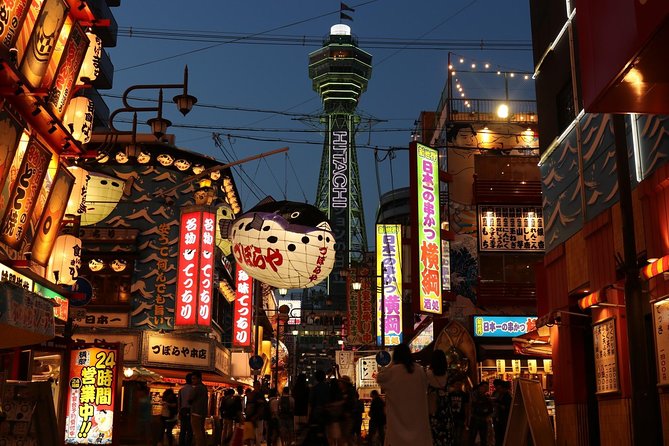
Osaka has two very different pulls after dark, and this tour uses that contrast on purpose. You start in Shinsekai, an area many people associate with Osaka-style food and loud neon, but you’ll get the story behind the scenes. Then you move to Doyama, where modern LGBTQ+ life feels more visible and social from the start.
The real value here is that you’re not getting a single-theme evening. You’re watching how LGBTQ+ culture changes when you go from one neighborhood to another, and when public life versus private life matters. That makes the night feel purposeful, not random.
Getting started at Dobutsuen-Mae for a smooth 6:30 pm launch
The tour starts at 6:30 pm and meets near Dobutsuen-Mae Station. It’s designed to be easy to reach using public transit, and the meeting area is set up for people who want to get moving without complicated directions.
Because it’s about a 3-hour experience, timing matters. Starting in the early evening also helps you cover two neighborhoods without the night getting too late too fast, especially if you want to keep exploring afterward on your own.
Shinsekai: beyond the neon into the coded-gay past
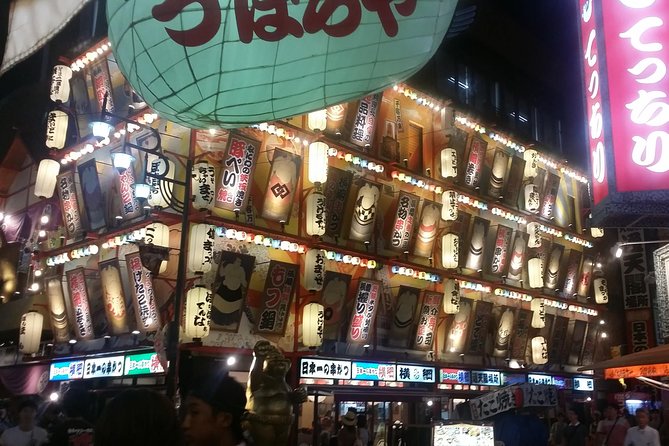
Your first stop is Shinsekai, where the streets can look like pure food-and-fun tourist Osaka at first glance. But the tour framing changes everything. You’ll learn how, not that long ago, many gay men in Japan were often married to women and lived double lives, with gay life happening in coded, membership-style spaces like bars and saunas.
What I like about this part is that it’s not presented as vague history. You’re walking through a real neighborhood and getting a sense of what kinds of spaces existed and why they mattered. Even if you’ve read about Japan’s gay history before, this kind of neighborhood context helps it click.
And importantly, this stop connects past to present. The tour sets up the idea that some people still live with at least one foot outside the closet, which makes the topic feel grounded rather than frozen in time.

Doyamacho: modern LGBTQ+ nightlife with a walk-and-drink flow
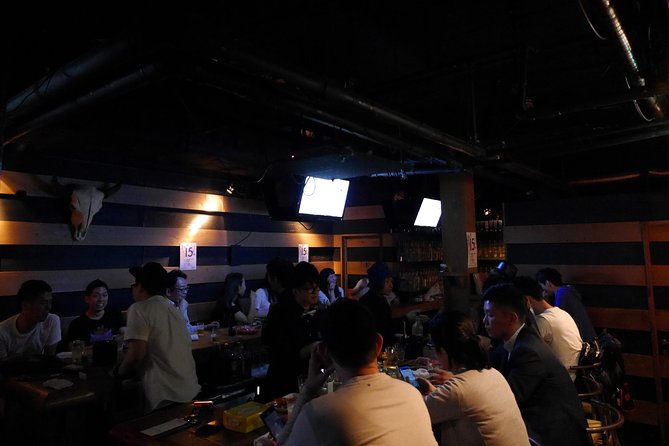
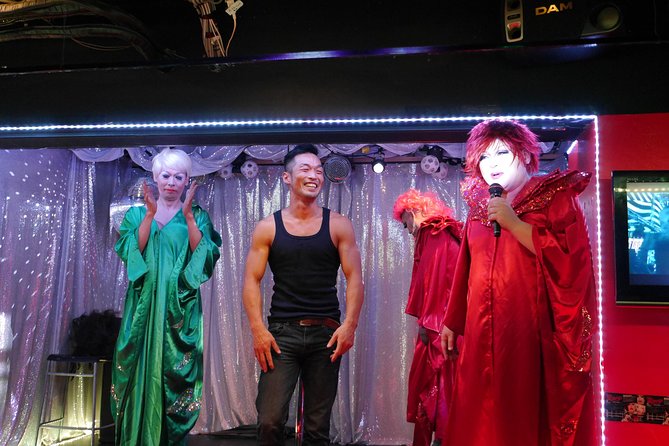
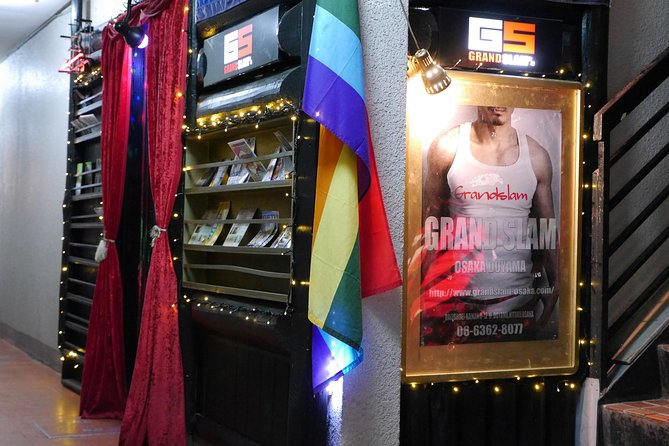
A short train ride brings you to Doyamacho, and the tone shifts right away. This is the more modern side of gay life in Osaka, where you can see youth, admirers, and people with a younger spirit out having fun. The vibe here is less coded and more social, with lots of places to choose from.
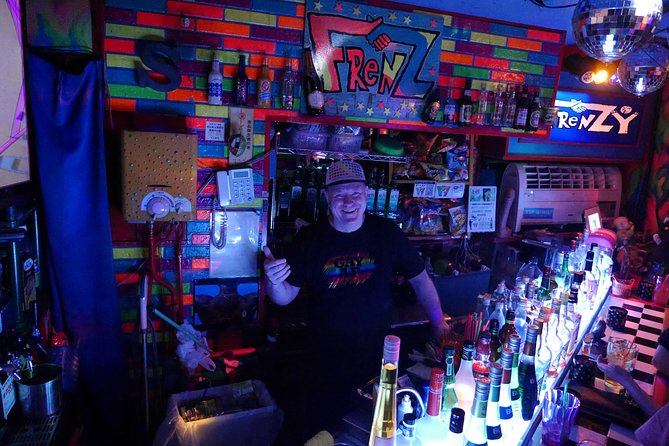
The tour keeps things practical: you’ll do a walkaround to get your bearings, then stop at a bar for a drink that’s included. The bar and the drink are part of the structure, so you’re not left wondering what to do next.
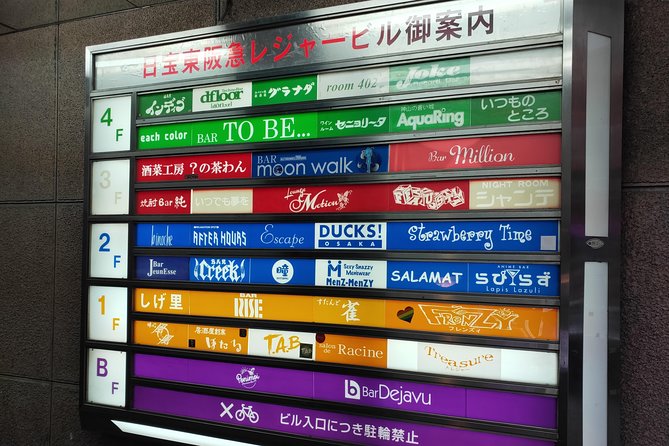
Also, Doyama is big on options—there can be many bars and venues in the area, ranging from tiny spots to places with bigger nightlife energy. And because you’re accompanied by a Japanese speaker, the evening stays more accessible than trying to figure everything out solo in a maze of exits and lanes.
Dinner plus two drinks: how the inclusions add up to real value
This is not a pure walking tour where you pay for context and then buy everything else. The price includes a light dinner and one drink at a local restaurant, plus another drink at an LGBT-oriented bar. Transit between Shinsekai and Doyama is also included, so you avoid wasting part of your evening on planning the route.
At $96.79 per person, you’re paying for three things at once:
- a real guided explanation of two neighborhoods,
- a guided step into nightlife spaces,
- and basic evening costs that can balloon fast when you’re out on your own.
In my mind, the “value” part is the convenience. In Osaka, trains and neighborhoods are easy, but a nightlife plan still takes time and confidence. This tour gives you that structure from the start.
The guide makes or breaks it: Kevin’s people-first approach
The best praise in the feedback centers on the guide’s style, and one name shows up again and again: Kevin. People describe him as impassioned, fun, and easy to get along with—more like a friend showing you around than a formal lecturer.
One helpful detail from the experience of others: Kevin will find you if you miss the meeting point or if you’re turned around. That matters in Osaka, where stations have many exits and it’s easy to lose time even when you’re close.
You’ll also appreciate the way Kevin handles questions. Instead of rushing you along, the pacing seems designed to keep the night relaxed. There’s even mention of a karaoke moment as part of the fun tone—so if you like a playful ending, this is the kind of group vibe to expect.
What to expect from the pacing and group setup
This is a private tour/activity, meaning it’s only your group. That changes the feeling fast: you’re not blending into a crowd, and you’re more likely to ask questions without the pressure of being watched by strangers.
The tour is also short enough to feel doable: about 3 hours total. That’s long enough for two neighborhood stops and a drink, but short enough to keep your evening flexible afterward.
And you’re not locked into a strict script. The experience is described as non-judgmental, and the guide can point you in directions you might want to go once the tour ends.
Where it ends: planning your next steps in Doyama
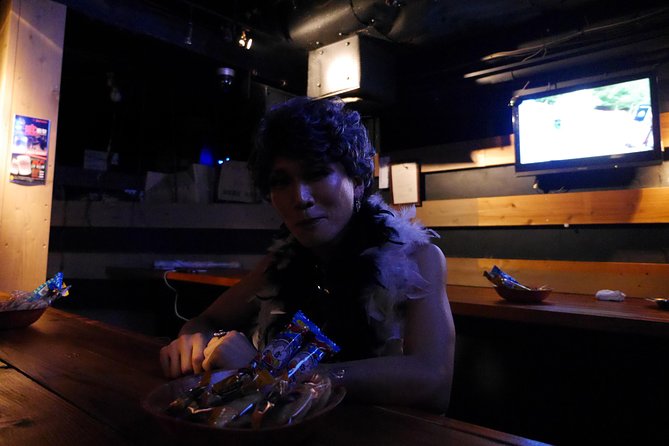
The tour ends in Doyamacho, in Kita Ward. If you want to keep going, you’ll already be in the right general area to continue with bars or nightlife options.
If you’re ready to head home, it’s still a manageable location for transit, but the best move is to plan your route before you get too deep into the nightlife. By the time you’re done with the included drink, it can be easy to lose track of which station you came from.
Who this tour suits best (and who might want a different style)
This works especially well if you want:
- an LGBTQ+ oriented introduction to Osaka beyond the Tokyo-only story,
- a guided explanation of both coded past life and modern visible life,
- and a structured evening that includes dinner and drinks.
It may be less ideal if you prefer quiet daytime attractions or want a strictly museum-style history walk. This is designed for an evening out, with bar culture and social spaces playing a major role.
And if you’re not able to participate at age 20+, this isn’t a fit, since the tour includes alcohol options and follows Japan’s legal drinking age.
Practical tips for a smoother night in Osaka
A few practical things will make the experience feel effortless:
- Arrive a bit early at Dobutsuen-Mae Station so you’re not rushing at start time.
- Wear shoes you can walk in, because both neighborhoods require actual strolling to get the feel of each area.
- Come with questions. The guide’s strength is answering what you’re seeing and helping you understand the difference between neighborhoods.
- If you’re sensitive to weather, note that the experience requires good weather and could be rescheduled or refunded if canceled due to poor conditions.
Finally, bring the mindset of a friendly neighborhood walk. This isn’t set up like a checklist. It’s set up for conversation, context, and moving through Osaka with someone who can translate the scene for you.
Should you book Osaka: LGBTQ+ Life Past and Present?
Book it if you want a guided LGBTQ+ night in Osaka that covers both history and nightlife in just a few hours, with dinner, two drinks, and transit handled. The strongest reason to choose it is the human factor—Kevin’s people-first, fun approach turns it into an easygoing group night where you can ask questions and still feel relaxed.
Skip it if you’re under 20, or if you’d rather have a daytime, quiet sightseeing experience without bar stops. Also consider your tolerance for an evening plan that starts at 6:30 pm and moves through nightlife zones.
FAQ
FAQ
How long is the tour?
The tour is about 3 hours.
Where does the tour start and what time does it begin?
It starts at Dobutsuen-Mae Station, and the start time is 6:30 pm.
Where does the tour end?
The tour ends in Doyamacho (Kita Ward, Osaka).
What’s included in the price?
The tour includes a light dinner and one drink at a local restaurant, one more drink at an LGBT-oriented bar, and transit between Shinsekai and Doyamacho.
Is the tour private?
Yes. It’s a private tour/activity, with only your group participating.
What is the minimum age, and can you drink on the tour?
The minimum age is 20, and the legal drinking age in Japan is 20.
Does the tour run in any weather?
The experience requires good weather. If it’s canceled due to poor weather, you’ll be offered a different date or a full refund.
More LGBTQ-Friendly in Osaka
- Osaka: LGBTQ+ Tour with Dinner and Drinks★ 5.0 · 8 reviews
More Tour Reviews in Osaka
- Osaka Go Karting Tour with Funny Costume★ 5.0 · 2,658 reviews
- Osaka Castle: Museum and Tower Entry Ticket★ 4.5 · 2,380 reviews
- Osaka: Shinsekai Food Tour with 13-15 Dishes at 5 Eateries★ 4.8 · 2,204 reviews
- Osaka Food Tour: 13 Dishes at 5 Local Eateries★ 5.0 · 2,149 reviews
- Hungry Osaka Street Food Tour:15 Tastings & 3 Drinks with a Local★ 5.0 · 1,727 reviews
The Newest Osaka Write-Ups
- Private Photoshoot in Osaka with a Professional Photographer
★ 5.0 · 3 reviews - Osaka Early Morning Osaka Castle Tour Avoid Crowds
★ 5.0 · 3 reviews - Nara Private Tour with Pick and Drop and English Speaking Driver
★ 3.5 · 3 reviews - Osaka: Modern Vegetarian Sushi Cooking Class
★ 5.0 · 3 reviews - Nara Day Trip from Osaka with a Licensed Guide
★ 5.0 · 3 reviews