
Reviewed · OSAKA FOOD & TASTING TOURS
Osaka: Daytime Hanami (Cherry Blossom) and Food Tour
Osaka’s cherry season can feel like a sprint. This daytime Hanami + food tour slows things down with a small-group walk through older backstreets and seasonal tastings, guided by people who know where the spring flavors show up. I especially like the chance to sample seasonal snacks and drinks while you’re actually moving through the neighborhood, and I love that the finale includes time to sit, snack, and take in the blossoms instead of rushing onward. The one thing to plan around is that sakura timing varies, so if the bloom isn’t at peak, you’ll want to lean into the food and the guide’s plan B.
You’ll start in Matsuyamachi, head into Karahori’s maze of wooden houses and artisan shops, and gradually trade neon views for quiet streets. If you’ve been to Osaka before, you’ll recognize how much difference a good neighborhood choice makes. If you haven’t, you’ll leave with a stronger sense of how locals actually do springtime, not just how it looks in photos.
One more practical note: you’ll be walking for the full 3 hours. Comfortable shoes matter, because this is an active stroll, not a sit-and-sip bus tour.
In This Review
- Key things to know before you go
- Karahori is the point of this Osaka Hanami day
- Starting at Matsuyamachi: the route begins right where locals move
- What you actually eat and drink during the 3-hour stroll
- The Hanami part: blossoms, shrines, and time to actually enjoy it
- Small group energy: why a max of 10 changes the day
- Price and value: what $161 buys in Osaka spring
- Who should book this Osaka daytime Hanami food tour
- Quick planning tips for your best day in Karahori
- Should you book it?
- FAQ
- How long is the Osaka Daytime Hanami and Food Tour?
- Where does the tour start?
- How do I get there by train?
- What’s included in the price?
- What is not included?
- What should I bring?
- Is the tour wheelchair accessible?
- Can I cancel and get a refund?
Key things to know before you go

- Karahori backstreets at daytime pace: old Osaka lanes and shopfronts, not just viewpoint stops
- Seasonal street-food sampling: multiple bites at different stops, plus tea and local drinks
- A Hanami stroll with time built in: you don’t just see blossoms, you linger
- English-speaking guide leadership: small-group format helps the route feel personal
- Blossom timing can shift: the guide will work with what’s in bloom around you
Come hungry: more eating your way through Osaka


Karahori is the point of this Osaka Hanami day
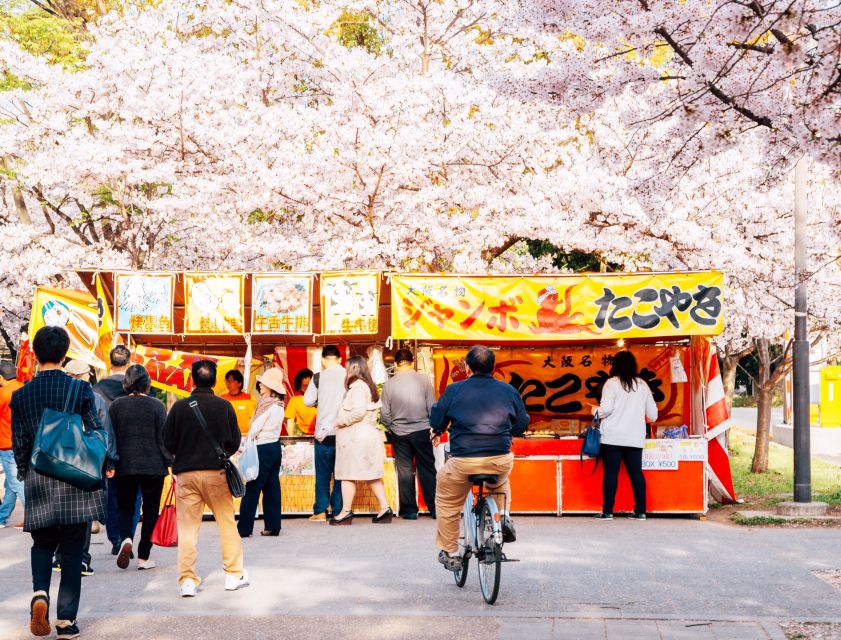
If your only Osaka cherry experience is a famous park, you’ll miss what makes Hanami special: the wandering. This tour is built for that wandering feeling, using Karahori as the base. It’s an area where the older feel of Osaka shows up in the street layout, the wooden houses, and the kind of small shops you’re not likely to find by accident.
I like that the tour doesn’t treat blossoms as a background prop. Instead, the walk is tied to spring itself: the seasonal snacks, the drinks, and the final spot where shrines and cherry trees are part of the same scene. That matters, because Hanami is about the whole moment, not a single photo angle.
The best part is the tone. You’re not herded through a crowd. You’re given time to slow down, eat, and notice. In one review example, guide Miki made the best of rain and bloom uncertainty by finding sakura and ume blossoms where they were actually cooperating. That’s the kind of practical flexibility you want during cherry season, when weather can steal the show.
Starting at Matsuyamachi: the route begins right where locals move
The tour meets at Masumuraningyoten Sueyoshibashiten, right outside Matsuyamachi Station. The address is 2-8 Matsuyamachi, Chuo Ward, Osaka, 542-0067 (you can paste the full Japanese address into Google Maps if you prefer).
Getting there is straightforward on the Osaka Metro: take the Nagahori Tsurumi Ryokuchi Line to Matsuyamachi Station, then use exit 2. This is the kind of meeting point that makes your day easier, because you’re not dependent on a complicated city pickup.
The tour ends back at the meeting point, so you don’t have to replan your afternoon transportation. That sounds minor, but after a walking-heavy experience, it helps keep the day stress-free.
Once you’re grouped up, you’ll head into the neighborhood around Karahori. You’ll notice the street rhythm shift fast: narrower lanes, shopfronts, and the sense that you’re walking through everyday Osaka rather than a staged attraction.
What you actually eat and drink during the 3-hour stroll
This is not a “one snack and a tea” situation. You’ll get local snacks from seasonal street food stalls and a variety of dishes across multiple food stops. The tour includes tea, sake, beer, or other beverages, depending on what’s available at the time and what the guide offers.
Here’s how to think about the included food value:
- You’re paying for access to the right places, not just the items themselves. The tour is built around where locals go for seasonal flavor.
- You’re sampling enough variety that you can build a real impression of Osaka spring cuisine, not just taste one bite and move on.
- You’re getting guidance on what you’re eating, which helps you order and choose better later.
From review examples, I’ve seen stops that include a traditional bar/restaurant meal and even a tea ceremony moment that people remember because it felt more like hospitality than entertainment. There’s also mention of a seaweed shop visit. Even if every stop isn’t identical from day to day, the pattern is clear: you’ll be guided toward places that feel local and seasonal, not just convenient.
One thing to keep in mind: the tour says additional drinks or food are not included, though you may be able to buy more at your expense. That’s good news if you’re hungry, and also a hint to pace yourself so you don’t go into the final blossom stop too full.

The Hanami part: blossoms, shrines, and time to actually enjoy it
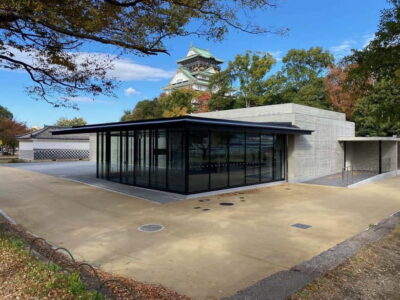
The whole point of a Hanami tour is the strolling. This one is designed so you’ll spend real time at a Hanami spot and end in a secluded spot where shrines and cherry trees are intertwined.
That finale setup is smart for two reasons. First, it naturally slows you down: you’ll snack, sit, and take in the view instead of standing around in a crowd for ten minutes. Second, it gives you a more complete sense of spring, because you’re seeing blossoms in a spiritual everyday context rather than only in a landscaped setting.
Weather matters. In at least one example, the tour dealt with rain and bloom uncertainty, and the guide still found cherry blossoms and ume blossoms when sakura trees weren’t cooperating. So you should arrive with flexible expectations. If the cherry season is late, early, or disrupted, this tour can still be enjoyable because the guide’s job is to help you find what’s working that day.
Practical tip: bring a small level of patience for the bloom clock. You’re touring in peak season conditions, but nature controls timing. The upside is that you’re with a guide who understands how to pivot.
Small group energy: why a max of 10 changes the day
This is a small-group tour limited to 10 participants. That size is ideal for a walking food experience because it keeps the group manageable and makes it easier for the guide to adjust pacing. You’re also less likely to feel like you’re being rushed through a checklist.
The guide experience is a big part of why the reviews are so strong. Names that showed up in review examples include Miki and Sanae. People praised guides for being accommodating, helpful with the route, and able to customize the experience when weather didn’t cooperate.
For you, that translates to something simple: you’re more likely to get answers to questions. You’ll also get a smoother flow between snack stops and the blossom viewing, because the guide can keep an eye on the group’s comfort level.
And because it’s an English-speaking guide, you’re not left guessing what something is or why it matters. That can be the difference between eating out and learning what makes Osaka spring taste like Osaka spring.
Price and value: what $161 buys in Osaka spring
At $161 per person, this tour sits in the mid-to-higher range for a city walking experience. The value comes from what’s included, not just the guide presence.
You’re getting:
- A 3-hour guided stroll through a specific older neighborhood area
- Multiple food stops with a variety of seasonal dishes
- Included beverages like tea plus local options such as sake or beer
- A final Hanami snack-and-sit moment by shrines and cherry trees
- An English-speaking expert guide
For many people, the biggest expense in Japan food tours is the “unknown cost” factor: you spend time trying to pick places yourself, but you don’t always land on the best seasonal targets. Here, you’re paying to remove that guesswork and to connect you to seasonal places in Karahori, at the time of day when things feel right.
Also, this is a daytime schedule. That tends to be easier on your energy and on your budget compared to evening tours, because you can pair it with other daytime sightseeing.
If you’re the type who likes food, likes walking, and wants a more local spring vibe than the biggest crowded parks, this price starts making sense fast.
Who should book this Osaka daytime Hanami food tour
This tour fits you best if:
- you want a daytime Hanami experience that includes eating, not just looking
- you enjoy older neighborhoods and side streets
- you want seasonal flavors tied to spring, including tea and local drinks
- you like small groups and a clear guide-led route
It may be less ideal if:
- you don’t want to walk for 3 hours
- you’re looking for an event-style party atmosphere
- you need wheelchair accessibility, since it’s noted as not suitable for wheelchair users
Quick planning tips for your best day in Karahori
- Wear comfortable shoes. You’ll be walking.
- If you’re sensitive to rain, check the weather. The tour can adjust, but it’s still outdoors for a good chunk of the experience.
- Don’t overbook the day right after your tour. You’ll likely want time to recover your appetite and energy.
- Keep an eye on the bloom. If blossoms are light that day, it’s still a food-and-spring tour, and the guide’s job is to help you find what’s available.
Should you book it?
I’d book this tour if you want Osaka cherry season with less crowd pressure and more flavor detail. The combination of Karahori backstreets, multiple seasonal food stops, and a final Hanami moment where you actually sit and snack makes it feel like a genuine spring outing rather than a rushed sampling session.
Skip it if walking is a dealbreaker for you, or if you only care about the biggest and most famous cherry views. For everyone else, this is a smart way to experience spring in a part of Osaka that feels more lived-in than staged.
FAQ
How long is the Osaka Daytime Hanami and Food Tour?
The tour lasts 3 hours.
Where does the tour start?
It starts in front of the doll shop Masumuraningyoten Sueyoshibashiten, right outside Matsuyamachi Station, at 2-8 Matsuyamachi, Chuo Ward, Osaka, 542-0067.
How do I get there by train?
Take the Osaka Metro Nagahori Tsurumi Ryokuchi Line to Matsuyamachi Station and use exit 2.
What’s included in the price?
Tea, sake, beer, or other beverages, local snacks from seasonal street food stalls, and a variety of dishes at multiple food stops. An expert English-speaking guide is also included.
What is not included?
Hotel pickup, gratuity, transportation costs, and any additional drinks or food beyond what’s included (you may be able to purchase extra at your expense).
What should I bring?
Wear comfortable shoes, since there will be walking.
Is the tour wheelchair accessible?
No, it is not suitable for wheelchair users.
Can I cancel and get a refund?
Yes. Free cancellation is available up to 24 hours in advance for a full refund.
More Tour Reviews in Osaka
- Osaka Go Karting Tour with Funny Costume★ 5.0 · 2,658 reviews
- Osaka Castle: Museum and Tower Entry Ticket★ 4.5 · 2,380 reviews
- Osaka: Shinsekai Food Tour with 13-15 Dishes at 5 Eateries★ 4.8 · 2,204 reviews
- Osaka Food Tour: 13 Dishes at 5 Local Eateries★ 5.0 · 2,149 reviews
- Hungry Osaka Street Food Tour:15 Tastings & 3 Drinks with a Local★ 5.0 · 1,727 reviews
The Kuidaore List: Eat More of Osaka
- Osaka: Shinsekai Food Tour with 13-15 Dishes at 5 Eateries★ 4.8 · 2,204 reviews
- Osaka Food Tour: 13 Dishes at 5 Local Eateries★ 5.0 · 2,149 reviews
- Hungry Osaka Street Food Tour:15 Tastings & 3 Drinks with a Local★ 5.0 · 1,727 reviews
- Deep Backstreet Osaka Tours (Option to add Dinner)★ 5.0 · 1,290 reviews
- Osaka Local Foodie Walking Tour in Dotonbori and Shinsekai★ 5.0 · 985 reviews
The Newest Osaka Write-Ups
- Private Photoshoot in Osaka with a Professional Photographer
★ 5.0 · 3 reviews - Osaka Early Morning Osaka Castle Tour Avoid Crowds
★ 5.0 · 3 reviews - Nara Private Tour with Pick and Drop and English Speaking Driver
★ 3.5 · 3 reviews - Osaka: Modern Vegetarian Sushi Cooking Class
★ 5.0 · 3 reviews - Nara Day Trip from Osaka with a Licensed Guide
★ 5.0 · 3 reviews
Osaka Food & Tasting Tours, compared.
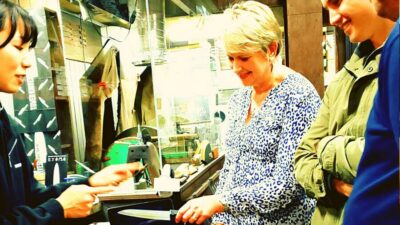 ★ 4.8Shinsekai Food Tour with 13-15 Dishes at 5 EateriesFrom $532,204 reviews
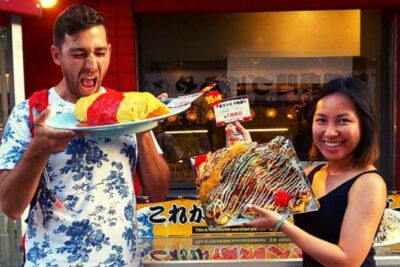 ★ 5.0Osaka Food Tour: 13 Dishes at 5 Local EateriesFrom $732,149 reviews
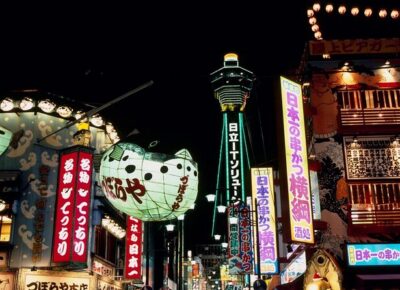 ★ 5.0Hungry Osaka Street Food Tour:15 Tastings & 3 Drinks with a LocalFrom $731,727 reviews
 ★ 5.0Deep Backstreet Osaka Tours (Option to add Dinner)From $531,290 reviews
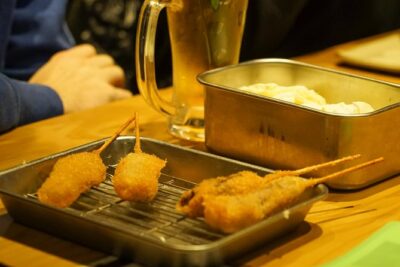 ★ 5.0Osaka Local Foodie Walking Tour in Dotonbori and ShinsekaiFrom $111985 reviews
 ★ 4.9Deep Backstreets Walking Tour with Dinner OptionFrom $40902 reviews
 ★ 4.9Hungry Osaka Street Food Tour: 15 Dishes & 3 DrinksFrom $79694 reviews
 ★ 5.0Kuromon Market Food Walking Tour in Osaka (6 stops, 6 tastes)From $50550 reviews
Browse the lists this tour appears in