
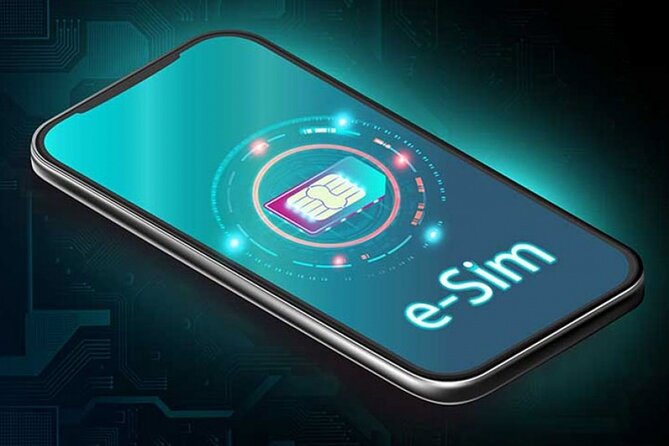
Reviewed · OSAKA
Japan eSIM (3 to 30 days, up to 60GB)
Staying connected in Japan is easy. This Japan eSIM sends to your email, activates by QR code, and gets you online in minutes so you can navigate Osaka without hunting for a SIM counter.
I like the practical promise of 4G/5G data where available and the fact the plan covers all Japanese provinces, not just one city. I also like the simple, wait-at-home setup: order, get the profile, scan, and go.
One thing to consider: your phone must support eSIM, and if you’re unsure, you’ll need to check in advance.
In This Review
- Key points to know
- QR-to-Connection: How the eSIM setup actually works
- A small but real setup consideration
- Osaka navigation with 4G/5G: what you get on the street
- The 4G/5G promise is helpful, not magical
- Japan-wide coverage: going beyond Osaka without swapping plans
- The data cap: what changes after high-speed use
- A helpful real-world rule of thumb
- Compatibility check: save yourself a day-one headache
- What to do if activation doesn’t cooperate
- Price and value: why $5 starts making sense
- Who should pay for this (and who shouldn’t)
- Duration options: choosing 3–30 days without overbuying
- Provider experience: Xplori and what matters
- Who this Osaka-friendly eSIM is for
- Should you book this Japan eSIM?
- FAQ
- Is this eSIM a physical SIM card or a digital product?
- How do I activate the Japan eSIM?
- Which iPhones and Android phones support eSIM for this plan?
- How long is the eSIM valid?
- Does the eSIM work outside Osaka?
- Do I get 4G or 5G data?
- What happens when I use up the high-speed data?
- How much does it cost?
- Can I cancel for a full refund?
Key points to know

- Email delivery + QR activation: you start using it right after you arrive.
- 4G/5G where available: you get fast data for maps, messaging, and planning.
- Covers all Japanese provinces: great if you go beyond Osaka.
- High-speed data is capped: after your allowance, it switches to 3G.
- Purely digital: no pickup, no meetup, just your phone and a QR code.
- Value starts at $5 per person: cheaper than airport SIMs for many trips.
Not sold yet? See how this one holds up next to these Osaka picks.



QR-to-Connection: How the eSIM setup actually works
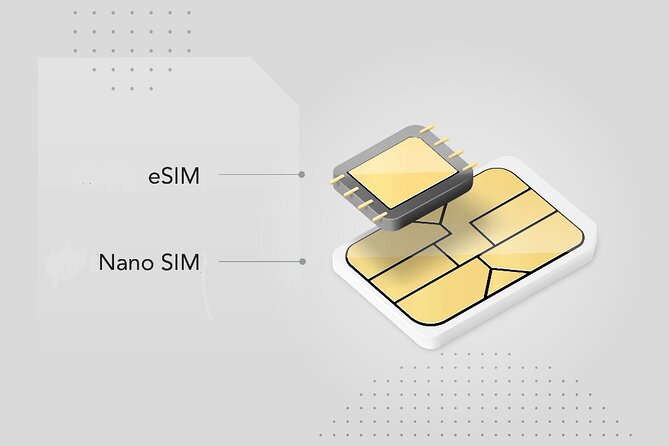
This is a straightforward product: it’s digital, provided by email, and activated by scanning a QR code. There’s no pickup point in Osaka, no “meet at the lobby” chaos, and no language barrier at a counter when you’re already tired from travel.
The flow is simple:
- You order before your trip.
- The provider sends your eSIM info to your email.
- You scan the QR code to activate the eSIM profile.
- You should be connected within minutes.
For me, the best part is the mindset shift. Instead of thinking about SIMs as a “day-one problem,” you treat it as a pre-trip checklist item. That matters in Japan, because once you can map your way, you spend more time walking toward things you actually want to see.
A small but real setup consideration
You do need an eSIM-capable phone. The product explicitly lists examples like iPhone XS and later, Pixel 3 and later, and Samsung S20/S21/Fold. If your phone is older, or you’re using a model you’re not 100% sure about, check early. When people get stuck, it’s usually compatibility or activation timing—not the signal itself.
Osaka navigation with 4G/5G: what you get on the street
Since the base location is Osaka, this is a smart match for anyone who wants maps, transit info, and quick translations without slowing down. The eSIM is designed to provide 4G/5G data where available, so you can keep your phone working like a pocket navigator.
That translates into real travel benefits:
- You can confirm train routes and station exits on the fly.
- You can look up opening hours and last entry times the moment you need them.
- You can share your location with friends or family without relying on Wi-Fi.
- You can keep researching dinner spots instead of wandering blindly.
Osaka also has plenty of moments when you’re moving fast—between neighborhoods, markets, and late-night food stops. Having data reduces the number of times you need to stop, guess, and re-check. It’s not glamorous, but it’s how you save time.




The 4G/5G promise is helpful, not magical
The listing says 4G/5G where available. That’s a normal caveat in Japan, where coverage can vary by area and sometimes by building layout. Still, the point is solid: for most daily use in Osaka and common sightseeing zones, you should have the kind of speed that feels “regular internet,” not emergency-only connectivity.
Japan-wide coverage: going beyond Osaka without swapping plans
One of the biggest selling points here is that the data plan covers all Japanese provinces. That’s exactly what you want if your trip is more than just Osaka.
So if your plan includes day trips or multi-city stops—like heading to nearby regions by train—you’re not stuck doing a second activation or buying another SIM.
Why this matters for value:
- You avoid extra purchases.
- You avoid time spent arranging connectivity again.
- You keep one consistent setup from day one through the last day.
In practical terms, it means your phone can be your single source of navigation and communication across Japan, not just in the city where you first landed.
The data cap: what changes after high-speed use
The plan offers plenty of high-speed data for trip planning, but it’s not unlimited. The product notes that high-speed data usage is capped at the mentioned amount. After that, your speed switches to 3G.
This is the part people often underestimate. 3G can still be usable for basic tasks, like messaging or lightweight browsing, but maps and video-heavy usage may feel slow. If you plan to:
- stream a lot,
- upload lots of photos immediately,
- rely on video calls,
…then it’s smart to manage expectations about the high-speed portion and how much time you spend in “speed-sensitive” apps.
A helpful real-world rule of thumb
A longer plan option for 30 days has an advertised daily allowance figure (1.5GB per day in one described experience). I like how that gives you a budget mindset. If your usage is mainly navigation, messaging, and searching restaurant hours, that kind of daily allotment usually feels comfortable.
If your travel style is more data-hungry—posting video, heavy social feeds, or frequent map reroutes—you’ll want to be more conservative with high-speed time.
Compatibility check: save yourself a day-one headache
Before you buy, do one minute of phone checking. The product is clear about eSIM compatibility, listing:
- iPhone XS and later
- Pixel 3 and later
- Samsung S20/ S21/ Fold
If you fall outside those examples, you might still have eSIM support, but you’ll need to verify. This is the easiest way to avoid a stressful moment when you’re standing in your Osaka neighborhood trying to get connected.
Also, since this is an emailed eSIM and activated by QR code, you’ll want your email accessible on travel day. Put the confirmation email somewhere you can find quickly.
What to do if activation doesn’t cooperate
In at least one described situation, activation took an extra step on day one, followed by direct help from the provider. The takeaway is simple: if the QR scan doesn’t connect right away, reach out promptly. Fast answers beat guesswork.
Price and value: why $5 starts making sense
The price shown is $5.00 per person. That’s the headline number, but value is more than the sticker.
Here’s why this tends to be a good deal:
- You’re likely saving time versus airport SIM lines and counters.
- You’re avoiding language friction when you just want data.
- You can activate at your pace, using the QR code after you arrive.
- You’re paying up front, so your first day doesn’t turn into a logistics day.
Airport SIMs can be convenient, but they’re often more expensive and less predictable. With an eSIM, you’re planning ahead. For many trips, that’s where the value is hiding.
Who should pay for this (and who shouldn’t)
This is best for:
- short-to-medium trips where you want reliable navigation immediately
- people who don’t want to manage a physical SIM in their luggage
- travelers who expect to use maps constantly and rely on messaging back home
It may not be the best fit if:
- you only need data occasionally (you might be fine with Wi-Fi and an occasional check)
- you’re traveling with a phone that definitely doesn’t support eSIM
- you plan to stream heavily and want truly unlimited high-speed connectivity (the plan is capped)
Duration options: choosing 3–30 days without overbuying
The plan is offered in multiple durations, from 3 to 30 days. Even though the product summary you’re looking at mentions trip lengths around 3 to 15 days, the key idea is you can match the plan to your actual time in Japan.
Here’s how I’d choose:
- If you’re doing a quick stop in Osaka, pick the shorter window.
- If you might add extra travel days or side trips, a longer plan can protect you from underestimating how much data you use.
- If you’re someone who likes to post and share as you go, err toward more days rather than squeezing into a tight cap.
The right duration is the one that gives you calm. The cheapest option isn’t always the best choice if it forces you into a speed drop mid-trip.
Provider experience: Xplori and what matters
The provider is listed as Xplori. From the setup concept, what matters most to you is responsiveness if something goes wrong during activation.
The product description suggests that activation should be fast and self-guided. And when activation needs a nudge, the described support experience has been prompt. That’s reassuring because with eSIMs, the main risk isn’t the network—it’s setup friction.
Who this Osaka-friendly eSIM is for
I’d point you toward this eSIM if you want:
- fast setup without local SIM shopping
- solid data for planning and getting around Osaka
- the option to keep using the same plan across Japan provinces
It’s also a good choice for anyone traveling with friends or family who want to coordinate plans in real time. With shared location and quick message updates, group travel gets easier.
Should you book this Japan eSIM?
If you want an easy connectivity plan for Osaka and beyond, I think this is a strong yes—especially at a starting price of $5 per person. The combination of email delivery, QR activation, and Japan-wide provincial coverage is exactly what most people need for a smooth trip.
But I’d pause before buying if:
- your phone’s eSIM support is uncertain,
- you expect heavy high-speed video streaming for long stretches, or
- you want truly unlimited data (the plan switches to 3G after the cap).
If your phone is compatible and your data needs are mostly navigation and messaging, this is the kind of practical upgrade that quietly makes your trip feel easier from the first evening onward.
FAQ
Is this eSIM a physical SIM card or a digital product?
It’s a purely digital product. There’s no pickup or meetup. After you order, you receive the eSIM details by email.
How do I activate the Japan eSIM?
You scan the QR code from the email to activate the eSIM profile. The connection is supposed to start within minutes.
Which iPhones and Android phones support eSIM for this plan?
The listing gives examples of compatible devices, including iPhone XS and later, Pixel 3 and later, and Samsung S20/ S21/ Fold.
How long is the eSIM valid?
You can choose options from 3 to 30 days, depending on your trip length.
Does the eSIM work outside Osaka?
Yes. The data plan covers all Japanese provinces, so it works across Japan, not just in Osaka.
Do I get 4G or 5G data?
You get 4G/5G data where available.
What happens when I use up the high-speed data?
High-speed data is capped at the stated amount. After that, the speed switches to 3G.
How much does it cost?
The price is listed as $5.00 per person.
Can I cancel for a full refund?
Yes. You can cancel up to 24 hours in advance of the experience start time for a full refund.
More Tour Reviews in Osaka
- Osaka Go Karting Tour with Funny Costume★ 5.0 · 2,658 reviews
- Osaka Castle: Museum and Tower Entry Ticket★ 4.5 · 2,380 reviews
- Osaka: Shinsekai Food Tour with 13-15 Dishes at 5 Eateries★ 4.8 · 2,204 reviews
- Osaka Food Tour: 13 Dishes at 5 Local Eateries★ 5.0 · 2,149 reviews
- Hungry Osaka Street Food Tour:15 Tastings & 3 Drinks with a Local★ 5.0 · 1,727 reviews
The Newest Osaka Write-Ups
- Private Photoshoot in Osaka with a Professional Photographer
★ 5.0 · 3 reviews - Osaka Early Morning Osaka Castle Tour Avoid Crowds
★ 5.0 · 3 reviews - Nara Private Tour with Pick and Drop and English Speaking Driver
★ 3.5 · 3 reviews - Osaka: Modern Vegetarian Sushi Cooking Class
★ 5.0 · 3 reviews - Nara Day Trip from Osaka with a Licensed Guide
★ 5.0 · 3 reviews