
Reviewed · OSAKA FOOD & TASTING TOURS
Hidden Osaka – Yukaku Red Light Tour & Culinary Adventure
Osaka has a night side few see. This 3.5-hour walk is built around Tobita Shinchi and Shinsekai’s old-fairground vibe, then swaps daylight sightseeing for the real rules and food culture behind Yukaku, Japan’s last of its kind. I especially love how guides like Rui, Haruki, and Leo explain local protocol and the legality side in plain language, and I like the payoff dinner feel without needing a reservation circus. The main drawback is pacing: if your group expects lots of slow, uninterrupted time parked inside the red-light streets, you may feel it moves along a bit fast.
You’ll be in a max 8-person group, meeting at Causerie (Nishinari Ward) at 6:00 pm. It’s a mobile-ticket tour and it runs only when weather cooperates, so bring a cover-up mindset for an evening stroll.
In This Review
- Key Highlights Worth Your Attention
- Why This Osaka Night Walk Exists (and Who It’s For)
- Meeting Point, Timing, and the Pace You Should Expect
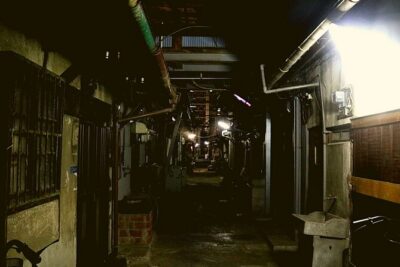
- Tobita Shinchi: The Retro Streets and the Demon Slayer Model
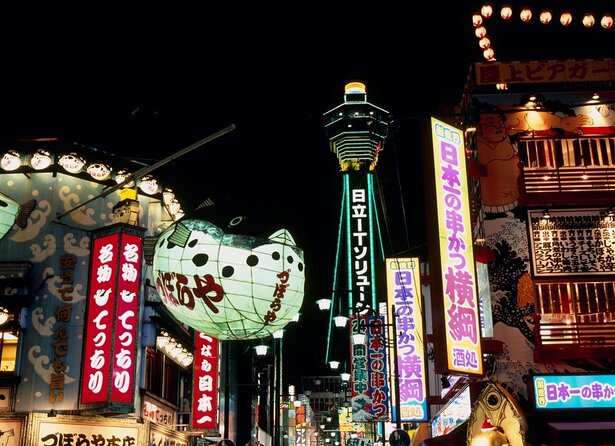
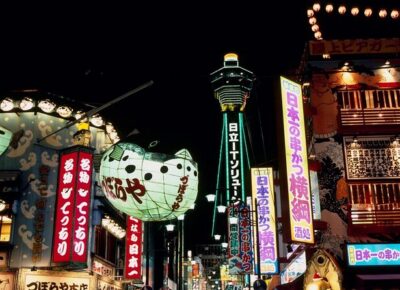
- Shinsekai and Tsutenkaku: Walking, Snack Stops, and Old-Fairground Echoes
- The Etiquette and Legality Talk: How to Observe Without Being Disrespectful
- What You Eat: Bold Osaka Dishes, Drink Pairing, and Budget Reality
- Price and Value: What $79 Buys You in Real Osaka Terms
- Best Time to Go and Weather Reality
- Who Should Book This Tour (and Who Should Skip It)
- Should You Book Hidden Osaka: Yukaku Red Light Tour & Culinary Adventure?
- FAQ
- How long is the Hidden Osaka Yukaku Red Light Tour?
- What time does the tour start?
- How many people are in the group?
- Where do I meet for the tour?
- What areas does the tour cover?
- Is the tour food included?
- Are allergy needs handled by the provider?
- What happens if the weather is poor?
- Is there a Spanish or French option?
Key Highlights Worth Your Attention
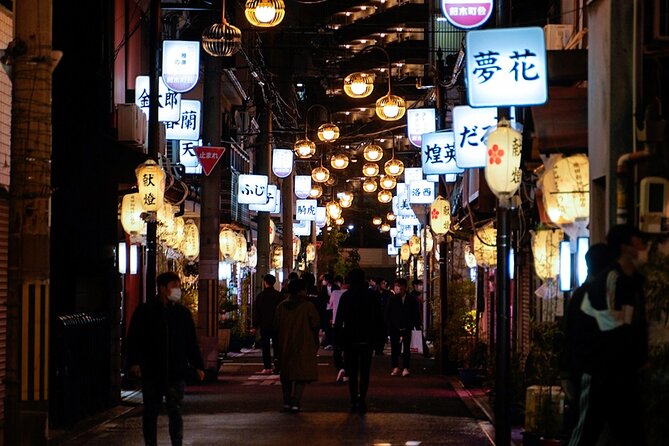
- Tobita Shinchi’s near-100-year retro street with a Demon Slayer link you can point at as you walk
- Yukaku context that focuses on rules and respect, not shock value
- Shinsekai’s history tied to the old Luna Park era and snack stops you eat while moving
- Bold Osaka flavors like kushikatsu and doteyaki, paired with the right drink vibe
- Small group format that keeps questions possible and the night feeling personal
Come hungry: more eating your way through Osaka


Why This Osaka Night Walk Exists (and Who It’s For)
This tour isn’t trying to be a cute postcard. It’s designed for adults who want to understand Yukaku culture in Osaka with context, not stereotypes. The description is blunt about it: it’s for mature audiences only, and it asks you to treat the area and its people with care.
What makes it interesting is the focus. You’re not just walking through side streets and hoping for good photos. You learn why Tobita is described as the last of its kind across Japan, and you get guidance on how to observe respectfully. That matters because this isn’t a theme park. It’s a living neighborhood with rules, boundaries, and consequences if you act like a tourist version of yourself.
You’ll also get a second half that shifts gears. After Tobita, you spend time around Shinsekai and Tsutenkaku, an area locals treat like a hangout. You’ll see how the night can be playful and everyday at the same time.
And yes, food is part of the mission. The tour is explicitly for the bold and adventurous, so if you’re the type who only orders the safest menu items, set expectations. The best experiences tend to be the ones where you say yes to a dish you’ve never ordered before, even if you don’t know the name.
Meeting Point, Timing, and the Pace You Should Expect
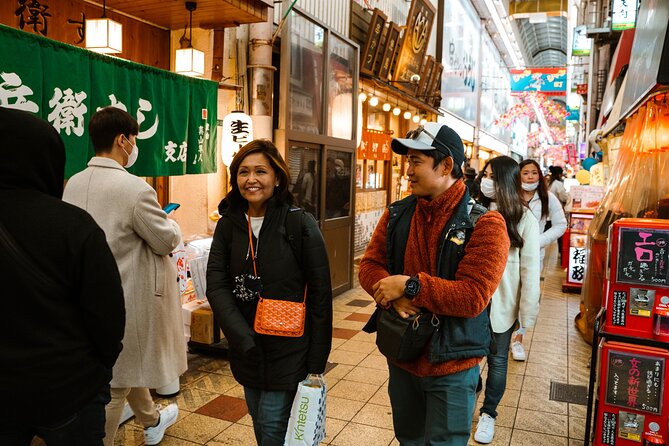
The tour starts at 6:00 pm and runs about 3 hours 30 minutes. You meet at Causerie, in Nishinari Ward (Osaka), and the tour ends back at the same meeting point.
Two practical things help you enjoy the night:
- Group size is capped at 8. That keeps the walk moving, but it also means you’re less likely to get lost in the shuffle.
- The plan includes walking plus multiple food moments, so hunger management helps. If you show up starving, you might feel rushed during the snack rhythm.
On the downside, some people flag that timing and spacing can feel a bit tight. The pattern you should assume is walk → explanation → eat → walk → explanation → eat. That’s usually fun and energetic, but if you want long hangs in one spot, this format may not match your style.
Also note the weather requirement. It’s an evening walking tour, so if conditions are poor, the experience can be adjusted. Bring an umbrella if you own one. One guide reportedly helps travelers when rain pops up, but you’ll sleep better if you’re already prepared.
Tobita Shinchi: The Retro Streets and the Demon Slayer Model
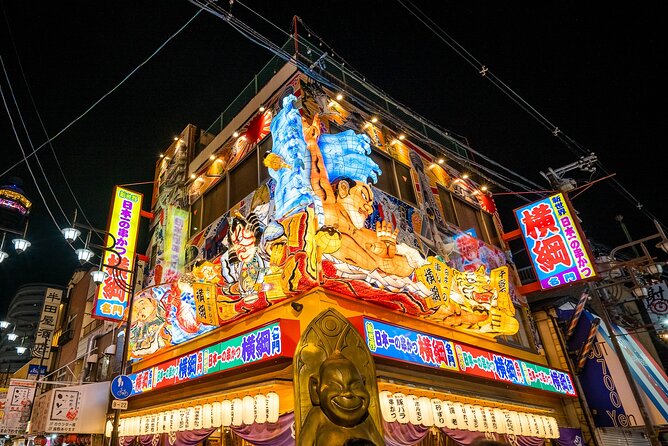
Your first stop is Tobita Shinchi, Osaka’s retro nightlife street scene. This is where the tour leans into “place-based storytelling.” You’re walking a street that’s been around for nearly 100 years, and you’ll see historical sights along the way.
One fun, very specific detail: you’ll also visit a building connected to the Demon Slayer red-light district edition. You’re not just hearing vague references to pop culture. You can actually point at the link as you walk.
What I like about starting here is the tone-setting. You get context early. Instead of treating the red-light area like a spooky free-for-all, you hear why it exists, how it developed, and what makes it distinct in Osaka. That first hour is about setting mental ground rules.
Potential drawback? If you’re arriving with a “just show me the street” mindset, you may want more walking time within the red-light district itself later. The tour does include that, but the first stop is also explanation-heavy.

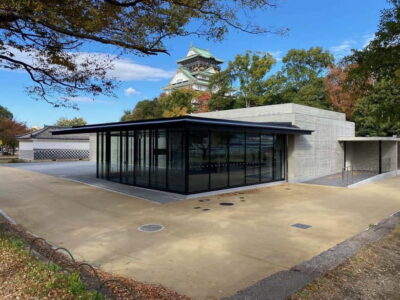
Shinsekai and Tsutenkaku: Walking, Snack Stops, and Old-Fairground Echoes
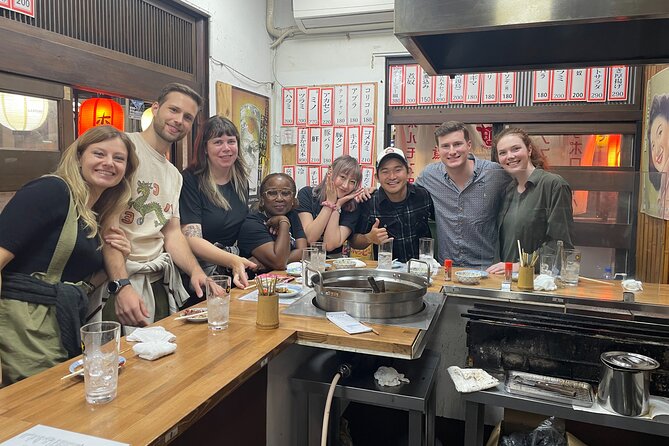
After Tobita, the vibe shifts toward Shinsekai and Tsutenkaku. This is where Osaka feels less like history class and more like a local night out.
The tour connects Shinsekai to its past as the site of the old Luna Park. You also learn about the founder of Tsutenkaku, then you head into an eating-while-walking rhythm around Shinsekai.
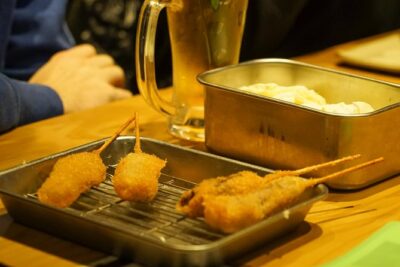
Food is front-and-center here. Expect Osaka classics such as:
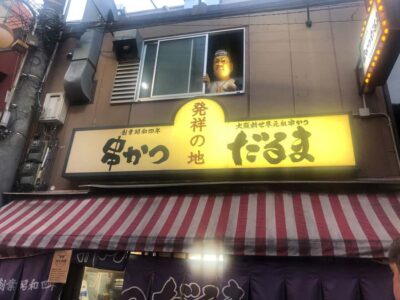
- Kushikatsu (fried skewers)
- Doteyaki (stewed beef tripe)
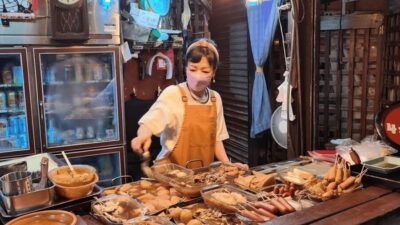
If you’re not a super adventurous eater, this is where you decide if you’re playing the full game. The tour’s own framing is clear: the food lineup is for people who are open to trying something new. The upside is that Shinsekai has a strong street-food culture, so the tastes land more naturally than they do in a touristy “food court” setting.
You’ll also notice that the tour’s energy often depends on the guide’s style. Guides like Rui and Haruki are described as friendly, funny, and focused on cultural nuance, which can turn this part into a guided night out rather than a checkpoint list. Leo, in particular, gets praise for combining humor with history and comfort-building for the group.
The Etiquette and Legality Talk: How to Observe Without Being Disrespectful
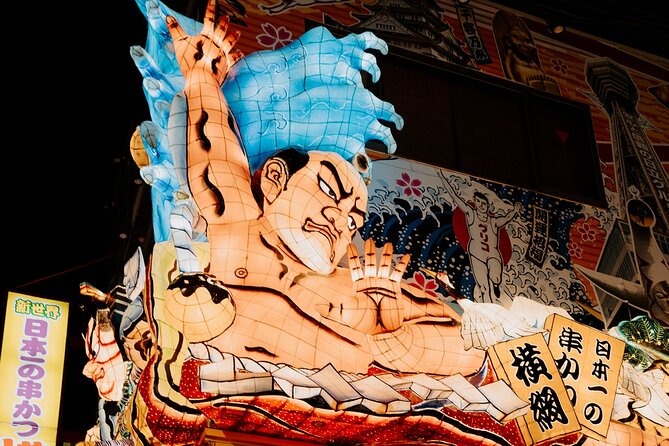
This is the part that makes the tour feel more responsible than most “dark history” experiences.
You’ll get clear instructions on:
- how to enter and move through the district areas
- what to observe (and what not to do)
- how to handle legality issues that many visitors misunderstand
The best sessions also cover protocol in a human way. One guide is noted for clarifying cultural and legal points and then teaching respectful observation rather than pushing people into shock or gawking.
That matters because the Yukaku districts aren’t a free museum set. When you understand rules and boundaries ahead of time, you can relax. You’ll still be seeing something unusual, but you won’t feel like you’re breaking the rules of polite society in the process.
Practical takeaway: go with a calm, respectful attitude. If you’re the kind of person who thinks rules are optional, skip this. If you can behave like an adult guest in a neighborhood, you’ll enjoy it much more.
What You Eat: Bold Osaka Dishes, Drink Pairing, and Budget Reality
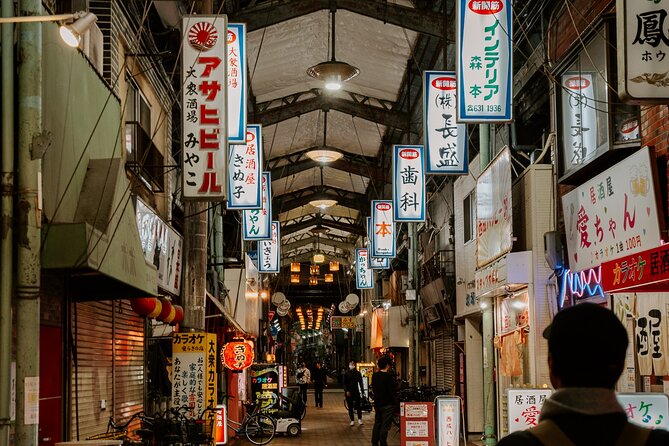
Food is a big part of the value, but it’s also the place where expectations can clash.
The tour description says you’ll savor a hand-picked selection of dishes paired with the right drink. The key words are hand-picked and paired, so you’re not left guessing where to go or what to order.
Across the experience, you’ll likely encounter spots that feel very “Osaka evening,” including small bars and izakaya-style stops. One described highlight includes a stand-up style bar stop (meaning you’re eating in a lively setting where people are actively enjoying the night), followed by a kushikatsu spot.
Two practical notes for your stomach and wallet:
1) Bring hunger, but not extreme hunger.
One reviewer suggestion was to arrive with a light snack first because you walk for about an hour before the izakaya food portions. If you’re already absolutely starving, the pace can feel intense.
2) Know the extra spending math.
The tour sets an average izakaya spend expectation of around ¥4000. That’s not a promise, but it’s a helpful budgeting number. And one review points out that paying food costs upfront can be less annoying than settling later. If you want clean budgeting, check how your options handle food payment before you go.
Also keep the safety/comfort line in mind: the provider notes they are not responsible for allergies or accidental ingestion. If you have dietary restrictions, plan carefully and ask questions during the booking process. Don’t assume anything is allergy-proof.
Price and Value: What $79 Buys You in Real Osaka Terms
At $79, you’re paying for more than walking time and snack stops. You’re paying for:
- a small group format
- local interpretation of a sensitive neighborhood
- food guidance in places you might not navigate confidently on your own
- a structured night that strings Tobita + Shinsekai + food together in the right order
Here’s the value logic I’d use if I were deciding:
- If you try to DIY this, you’ll spend time figuring out what’s appropriate, where to go for food, and how to order without sticking out.
- With this tour, the “how” is handled for you. You get the explanation and the eating plan.
That said, value depends on your tolerance for pace. If you’re expecting a slow, deep hangout with lots of free roaming time inside the red-light streets, the packaged timing might disappoint. But if you’re happy with a guided route where you learn while you go, the price-to-experience ratio can feel fair fast.
One extra value tip: reviews suggest that paying attention to options matters. A base tour can be cheaper than versions that include food costs, so if you want to manage your spending tightly, you may prefer the base structure and then plan your own additional orders inside the neighborhood.
Best Time to Go and Weather Reality
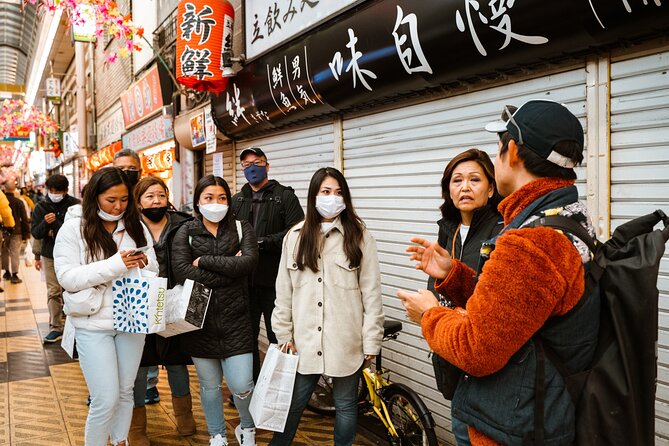
This tour starts at 6:00 pm, which is ideal for seeing Osaka shift into evening mode. You get street atmosphere without the late-night collapse. It’s also a good time to keep your eyes open for the small details guides point out.
Weather is a real factor because it’s a walking tour. The experience requires good weather, and you’ll want to plan for rain. Bring an umbrella or at least something that can handle sudden drizzle. One guide reportedly grabbed extra umbrellas for guests, but relying on that isn’t a travel strategy.
If it’s cold, dress for walking. You’re moving through multiple areas, and waiting for explanations outside adds up.
Who Should Book This Tour (and Who Should Skip It)
This is one of those experiences where the right match makes it great and the wrong match makes it frustrating.
You’ll likely love it if you:
- want a different side of Osaka beyond the usual temples and shopping streets
- enjoy street-level food and don’t need every dish to be familiar
- like guided context that explains etiquette, not just history dates
- appreciate humor and conversation from guides like Rui, Haruki, or Leo
You might want to skip it if you:
- can’t handle the idea of learning about adult nightlife areas with mature-audience framing
- hate tight schedules and would rather spend hours wandering freely
- have significant allergy needs and aren’t comfortable with the provider’s stated limits
Should You Book Hidden Osaka: Yukaku Red Light Tour & Culinary Adventure?
If you want a guided night that connects two Osaka neighborhoods with food and real-world cultural context, I think this is a strong pick. The most praised parts are the respectful, protocol-forward explanations and the fun energy from guides such as Rui, Haruki, and Leo, plus the chance to try dishes like kushikatsu and doteyaki with drinks instead of guessing your way around.
My decision rule is simple:
- Book it if you’ll behave respectfully, try at least a couple of bold foods, and enjoy a guided route.
- Skip it if you want a long, slow, free-roaming experience or if the mature-audience focus makes you uncomfortable.
If you do book, show up ready to walk, bring a rain plan, and go in with curiosity. Osaka’s night stories aren’t written for everyone, but for the right traveler, this one can be a memorable evening you won’t get from a standard sightseeing loop.
FAQ
How long is the Hidden Osaka Yukaku Red Light Tour?
It lasts about 3 hours 30 minutes.
What time does the tour start?
The start time is 6:00 pm.
How many people are in the group?
The group size is capped at a maximum of 8 travelers.
Where do I meet for the tour?
You meet at Causerie 1-chōme-2-28 Taishi, Nishinari Ward, Osaka, 557-0002, Japan.
What areas does the tour cover?
You visit Tobita Shinchi and Shinsekai around Tsutenkaku, with stops that focus on local nightlife history and street food culture.
Is the tour food included?
The tour description includes a hand-picked selection of dishes paired with a drink. The experience also lists an average izakaya spending amount of about ¥4000, so budget for that possibility.
Are allergy needs handled by the provider?
The provider states they will not be responsible for allergies or accidental ingestion. If you have allergies, you’ll want to plan carefully.
What happens if the weather is poor?
The experience requires good weather. If it’s canceled due to poor weather, you’ll be offered a different date or a full refund.
Is there a Spanish or French option?
Spanish and French options are available if you send a message in advance.
More Tour Reviews in Osaka
- Osaka Go Karting Tour with Funny Costume★ 5.0 · 2,658 reviews
- Osaka Castle: Museum and Tower Entry Ticket★ 4.5 · 2,380 reviews
- Osaka: Shinsekai Food Tour with 13-15 Dishes at 5 Eateries★ 4.8 · 2,204 reviews
- Osaka Food Tour: 13 Dishes at 5 Local Eateries★ 5.0 · 2,149 reviews
- Hungry Osaka Street Food Tour:15 Tastings & 3 Drinks with a Local★ 5.0 · 1,727 reviews
The Kuidaore List: Eat More of Osaka
- Osaka: Shinsekai Food Tour with 13-15 Dishes at 5 Eateries★ 4.8 · 2,204 reviews
- Osaka Food Tour: 13 Dishes at 5 Local Eateries★ 5.0 · 2,149 reviews
- Hungry Osaka Street Food Tour:15 Tastings & 3 Drinks with a Local★ 5.0 · 1,727 reviews
- Deep Backstreet Osaka Tours (Option to add Dinner)★ 5.0 · 1,290 reviews
- Osaka Local Foodie Walking Tour in Dotonbori and Shinsekai★ 5.0 · 985 reviews
The Newest Osaka Write-Ups
- Private Photoshoot in Osaka with a Professional Photographer
★ 5.0 · 3 reviews - Osaka Early Morning Osaka Castle Tour Avoid Crowds
★ 5.0 · 3 reviews - Nara Private Tour with Pick and Drop and English Speaking Driver
★ 3.5 · 3 reviews - Osaka: Modern Vegetarian Sushi Cooking Class
★ 5.0 · 3 reviews - Nara Day Trip from Osaka with a Licensed Guide
★ 5.0 · 3 reviews
Osaka Food & Tasting Tours, compared.
 ★ 4.8Shinsekai Food Tour with 13-15 Dishes at 5 EateriesFrom $532,204 reviews
 ★ 5.0Osaka Food Tour: 13 Dishes at 5 Local EateriesFrom $732,149 reviews
 ★ 5.0Hungry Osaka Street Food Tour:15 Tastings & 3 Drinks with a LocalFrom $731,727 reviews
 ★ 5.0Deep Backstreet Osaka Tours (Option to add Dinner)From $531,290 reviews
 ★ 5.0Osaka Local Foodie Walking Tour in Dotonbori and ShinsekaiFrom $111985 reviews
 ★ 4.9Deep Backstreets Walking Tour with Dinner OptionFrom $40902 reviews
 ★ 4.9Hungry Osaka Street Food Tour: 15 Dishes & 3 DrinksFrom $79694 reviews
 ★ 5.0Kuromon Market Food Walking Tour in Osaka (6 stops, 6 tastes)From $50550 reviews
Browse the lists this tour appears in