
Reviewed · OSAKA FOOD & TASTING TOURS
Eat Like a Japanese with a Local Guide
Neon lights and snacks, the Osaka way. This Dotonbori walking food tour keeps you moving through one of the city’s most famous street-food zones, with a small-group route and a guide calling the shots. I like the mix of savory classics (takoyaki, okonomiyaki, karaage) and sweet stops (purin, matcha tart, Japanese cheesecake). I’m also a fan of how the pacing works for photos and food, and a guide named Esteban is specifically highlighted for giving a good evening flow. One drawback to plan for: popular counters can have lines, so you may trade instant gratification for the real local buzz.
At $89.47 per person, the value is in what’s covered, not just the ingredients you eat. You get an English or Spanish guide plus gratuities included, and that matters on a food tour where small add-ons add up fast.
One more thing before you book: there are no vegetarian or vegan options listed, so this is not the best match if plant-based eating is non-negotiable. On the plus side, you’re using a mobile ticket, and the tour runs in a format that’s meant to be easy to join with minimal hassle.
In This Review
- Key highlights you’ll actually feel on the walk
- Why Dotonbori works so well for a food-focused tour
- Price and value: what the $89.47 is really buying
- Where you start: Kani Doraku Dotonbori and the easiest way to meet up
- Stop 1 at Takohachi Dotonbori: takoyaki with the classic gooey center
- Stop 2: Mattari-Purin and Osaka’s caramel-custard comfort
- Stop 3 at 551 Horai: nikuman for a warm, savory hit
- Stop 4: Honke Ootako okonomiyaki, where the griddle does the talking
- Stop 5 at DEARBROS: karaage for crunchy joy
- Stop 6: Lord Stow’s matcha tart and why bitterness is a feature
- Stop 7 and 8: yakisoba then Japanese cheesecake (cotton-cheesecake style)
- Stop 9: the Glico Running Man sign photo break, why it matters
- Guide quality and pacing: what to watch for
- Who this tour suits best, and who should skip it
- Should you book Eat Like a Japanese with a Local Guide?
- FAQ
- How long is the tour?
- What does the tour cost?
- What’s included in the price?
- Where do we meet, and where does the tour end?
- How large is the group?
- Is the guide available in English or Spanish?
- Are there vegetarian or vegan options?
- Can I cancel for a refund?
Key highlights you’ll actually feel on the walk
- Small group (max 10): Easier to move, easier for the guide to adjust pacing.
- Real Osaka picks in Dotonbori: Takoyaki, purin, nikuman, okonomiyaki, karaage, yakisoba, plus sweets.
- Savory-to-sweet rhythm: You’ll switch textures and flavors instead of eating one heavy dish after another.
- Landmark photo stop: The Glico Running Man sign is built into the route, not tacked on.
- English/Spanish support: Helpful for ordering and understanding what you’re eating.
- No vegetarian/vegan options: This is centered on Japanese comfort food that often includes meat or seafood.
Come hungry: more eating your way through Osaka

Why Dotonbori works so well for a food-focused tour
If you want Osaka without the guesswork, Dotonbori is the smart starting point. It’s a district where street food is treated like part of daily life: you see people buying something hot, eating it right there, and moving on. That makes it ideal for a guided tour because the guide isn’t just pointing at menus. They’re helping you choose the right place, at the right time, for the right bite.
This tour is built for short stops, with snacks that come in waves. You’re not stuck in one restaurant for an hour waiting for one dish. Instead, you get a sequence that lets you taste a lot of Osaka’s food identity in about 2 hours 30 minutes.
That time window is also practical. If you’re only in Osaka for a day or two, you’ll likely use the rest of your evening for sights or shopping. Eating your way through Dotonbori early or mid-afternoon can save you from the classic problem: being hungry later and then settling for whatever is easiest.
The only caution I’d give upfront is the line reality. Some of these shops are busy for a reason. If your goal is zero waiting, a night-food district will usually challenge that.
Price and value: what the $89.47 is really buying
The headline price is $89.47 per person, and it’s scheduled for around 2.5 hours. What makes it feel worth it is what’s included: lunch, snacks, a guide (English/Spanish), and gratuities.
On your own, you can absolutely eat cheaply in Osaka. But DIY can cost you time and confusion. You may not know which counter is best for takoyaki versus which place does the version that matches what you’re craving. You also spend more effort translating and figuring out ordering flow, especially at small shops where the “line order” matters.
Here, the structure does the work. You’ll walk from stop to stop and try a set of specific dishes that collectively cover a broad range of Osaka comfort food. That’s the real value: you’re paying for a plan that turns a chaotic food district into a guided tasting route.
One pricing note: there’s no mention of restrictions that would make you pay extra for basic items included in the tour. But extra orders are not included, so if you add drinks or additional food beyond what the tour covers, you should expect to pay for that separately.
Where you start: Kani Doraku Dotonbori and the easiest way to meet up

You meet at Kani Doraku Dotonbori Main Branch, at 1-chōme-6-18 Dōtonbori, Chuo Ward, Osaka 542-0071, Japan. It also ends back at the meeting point, so you’re not planning an odd pickup-and-drop route.
This start location is convenient for two reasons. First, it’s right in the Dotonbori zone, so you avoid long “arrival walking” before the first taste. Second, the tour notes you’ll be near public transportation, which matters in Osaka where trains and walking routes shape how long a day feels.
If you hate rushing, show up a bit early. Food tours move fast in a good way, but you don’t want your time eaten by last-minute finding the group.

Stop 1 at Takohachi Dotonbori: takoyaki with the classic gooey center
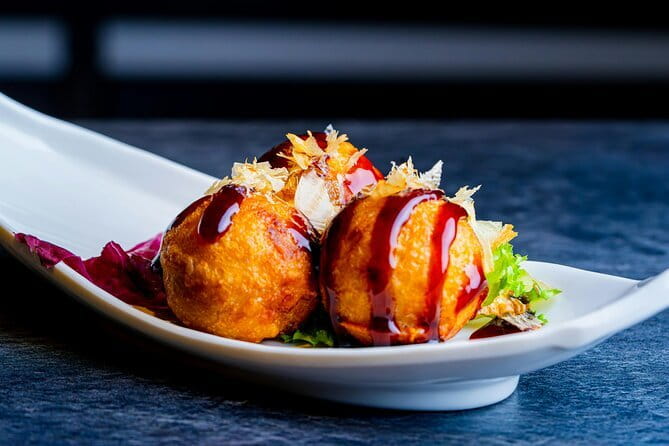
Takoyaki is the signature dish for a reason: it’s portable, snack-sized, and designed for quick bites. At Takohachi Dotonbori Main Store, you’ll get the classic structure—crispy outside, soft inside—made with batter and filled with diced octopus.
What makes this bite feel “Osaka” is the finishing layer. Your takoyaki typically arrives drizzled with takoyaki sauce (sweet-tangy, similar to Worcestershire), topped with Japanese mayonnaise, bonito flakes, and dried seaweed. Even if you’ve had takoyaki before, seeing the toppings done in the local style helps you understand how the flavors stack: savory from the octopus, umami and slight sweetness from the sauce, and that smoky lift from bonito flakes.
The tricky part with takoyaki, anywhere, is timing. They’re best hot. So once you get your portion, don’t let it cool while you take a thousand photos. Snap what you want, then eat.
This stop is about 15 minutes, so you’ll likely get a taste plus a short moment to get oriented before moving on.
Stop 2: Mattari-Purin and Osaka’s caramel-custard comfort
Purin is Japan’s answer to the idea of dessert that feels like home. It’s close to caramel flan or crème caramel in spirit: smooth custard made from eggs, milk, sugar, and vanilla, traditionally cooked gently in a water bath for that silky texture.
At Mattari-Purin Dotombori, the key is the contrast: the caramel syrup on top brings amber sweetness with a hint of bitterness. That balance is what keeps purin from feeling too heavy. It’s also nostalgic in a way that fits Osaka’s street-food culture. This isn’t an afterthought dessert. It’s a planned palate reset.
Because purin is about texture and temperature, I’d treat this stop like a sit-and-savour moment. Take your first spoonful, then mix the custard with a bit of caramel. You get a better flavor arc instead of just separate tastes.
Another practical upside: this dessert tends to travel well, and 15 minutes is enough time to finish without losing your spot in the group.
Stop 3 at 551 Horai: nikuman for a warm, savory hit

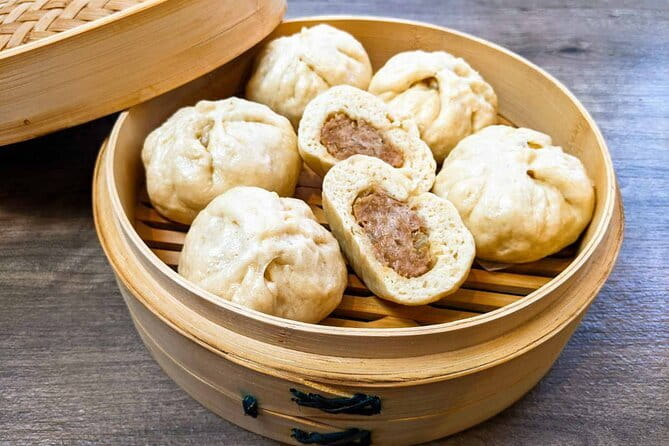
Nikuman is a steamed bun with a savory pork filling. The dough is soft and slightly sweet, which is a nice pairing against the juicy meat interior. The filling is usually seasoned with soy sauce, ginger, garlic, and sometimes a little sugar, and that mix gives you a comforting, well-rounded flavor.
At 551 Horai Ebisubashi honten, you’re tasting one of Osaka’s most recognizable comfort foods. It also explains why the district works so well for food tours: you can go from crispy, saucy takoyaki to soft steamed bun without your stomach feeling like it’s stuck on one theme.
This stop is also about 15 minutes, so you’re not lingering. It’s more like the tour uses nikuman as a warm “anchor” before heading into heavier, griddled and fried dishes later.
If you’re sensitive to pork-forward foods, this is the point where you’ll feel it most. But for many people, that savory bun is one of the best “street meal” moments of the night.
Stop 4: Honke Ootako okonomiyaki, where the griddle does the talking

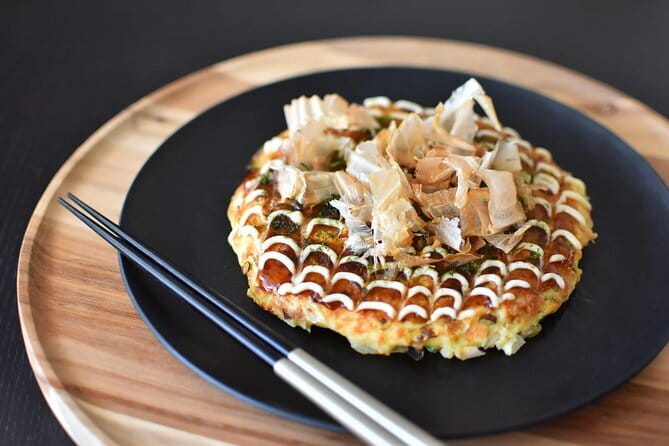
Okonomiyaki is the dish that turns a meal into an event. It’s made from a batter base of flour, eggs, and shredded cabbage, then cooked until golden and crispy at the edges while staying tender inside. You’ll often see choices like pork, shrimp, or squid mixed into the batter, and the name literally reflects the idea of cooking it your way.
At Honke Ootako Dotonbori Honten, your okonomiyaki will likely come with the signature toppings: okonomiyaki sauce, mayonnaise, dried bonito flakes that flutter with heat, and seaweed flakes.
This stop is great if you like food that arrives with smell. Okonomiyaki has a strong, satisfying aroma as it cooks, and the toppings make it taste like more than just cabbage and batter. The sweetness from the sauce and the savory umami from bonito create a layered flavor that feels both casual and complete.
The only caution: okonomiyaki can be filling. Plan to eat at a steady pace here, then save room for the next savory dish and the sweets.
This stop runs about 20 minutes, which gives you time to get your portion, taste, and still keep the overall tour flow on track.
Stop 5 at DEARBROS: karaage for crunchy joy
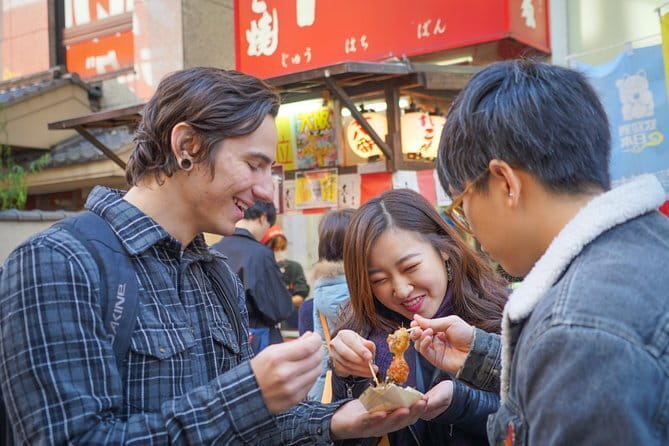
Karaage is Japan’s love letter to fried chicken. It’s typically bite-sized pieces marinated with flavors like soy sauce, garlic, ginger, and sometimes sake, then coated and deep-fried until golden. The result is juicy meat inside with a crisp exterior, often served with lemon for brightness and sometimes shredded cabbage or rice alongside.
At DEARBROS.ディアブロ道頓堀千日前店, karaage is a classic stop because it hits a different texture level than what you had before. After griddle food, fried food becomes a satisfying crunch moment.
One reason I think this stop works on a guided tour is that lemon and seasoning can be confusing if you’re guessing. The guide helps you understand how to combine it so the flavor stays lively instead of just salty.
This stop is about 20 minutes, and it’s a good place to slow down slightly. You’ll get the best experience by letting the first bite crackle, then pairing it with a squeeze of lemon right away.
Stop 6: Lord Stow’s matcha tart and why bitterness is a feature
Matcha tarts are a smart “dessert for adults” move. The matcha brings earthy, slightly bitter flavor, and that bitterness is balanced by a creamy filling—often with white chocolate or cream cheese ideas—inside a crisp tart shell.
At Lord Stow’s Bakery, the matcha tart is one of those desserts that feels polished compared to pure street snacking. Still, it fits the tour because it teaches you a different side of Japanese flavor: bitterness isn’t a flaw here. It’s part of what makes the sweetness taste clean instead of cloying.
If you love tea, this stop is a standout. If you’re new to matcha, take one bite without doing anything extra. You want to taste the balance first, then decide if you’d like to savor it more slowly.
This stop is about 15 minutes, which is enough time to eat the tart and reset your palate before one more sweet-heavy finish.
Stop 7 and 8: yakisoba then Japanese cheesecake (cotton-cheesecake style)
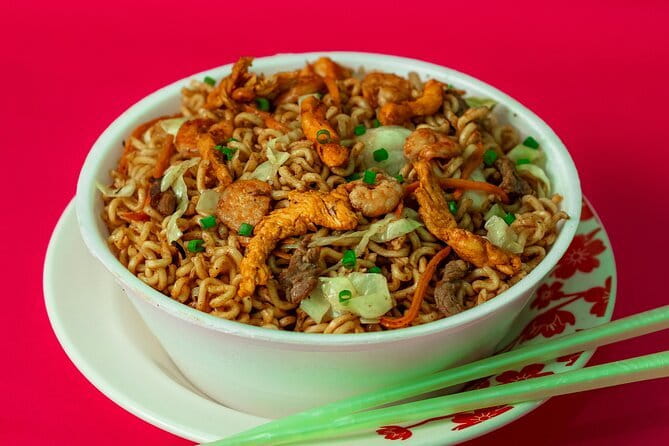
Yakisoba is stir-fried noodles, usually made with thin wheat noodles tossed with cabbage and other vegetables, then coated in a sauce that can include Worcestershire, soy sauce, and ketchup. It’s often topped with pickled ginger, sesame seeds, and sometimes bonito flakes.
At Takoyaki Dotonbori Kukuru Dotonbori Minami, yakisoba is a great “street food meal” that doesn’t overpower you like some noodle dishes can. It’s savory, slightly sweet, and designed for quick eating with big flavor.
Then comes dessert again: Japanese cheesecake, sometimes called cotton cheesecake, made lighter than many Western styles. The texture is airy because of how it’s baked with a blend of cream cheese, eggs, sugar, and a bit of flour, usually creating a tender, spongy interior and a golden top.
At Rikuro’s Namba Main Branch, the cheesecake is a soft landing after savory food. It’s also less sweet than a lot of American desserts, which helps you feel like you finished the meal instead of ending stuffed.
These two stops take 20 minutes for yakisoba and 15 minutes for cheesecake. That’s a lot of taste in a short window, so take your time with each bite. If you rush, the last dessert can feel like sugar overload instead of a balanced finish.
Stop 9: the Glico Running Man sign photo break, why it matters
The Glico Running Man sign is one of Osaka’s most famous neon landmarks. It sits near the Ebisubashi Bridge area, and it’s been installed since 1935 as part of the Glico advertising campaign. In practice, it’s a perfect spot to pause and take in the district’s energy.
But here’s the real value: the photo stop isn’t just for selfies. It helps you remember where you are as the tour winds through a dense grid of food counters. When you come back later on your own, you’ll have a mental anchor for navigation.
This part is about 15 minutes, so think of it as a short reset before you head back to your starting point.
Guide quality and pacing: what to watch for
This kind of food tour lives or dies on pacing. In one disappointing experience, the issue was long waits at stops and a sense that the guide didn’t feel local enough. In a separate positive experience, the guide Esteban was credited with a smooth evening and a good mix of food booths.
What you can do with that information is simple:
- Go in knowing some lines happen. Popular counters are popular for a reason.
- Eat in the order offered. The sequence is meant to keep your palate moving.
- If you see the group getting stuck, keep an eye on the guide. A good guide adjusts when one place runs slow.
Also, because the group is limited to 10 travelers, you should be able to get help quickly if something feels off.
Who this tour suits best, and who should skip it
This tour is a strong fit if you want:
- A guided Osaka street-food crawl in Dotonbori without menu guessing
- A savory and sweet mix packed into about 2.5 hours
- English or Spanish support while you eat at small food counters
It’s not a great fit if:
- You need vegetarian or vegan options (none are listed)
- You hate waiting in lines at popular stalls
- You prefer a slow sit-down dinner style (this is built for moving and tasting)
If you’re traveling with kids, you’ll likely manage it, but keep expectations realistic about pacing and noise. For solo travelers, the small group format is usually friendly because you’re walking together and sharing the same stops.
Should you book Eat Like a Japanese with a Local Guide?
I’d book it if you want Osaka food without planning every stop yourself. The covered guide, lunch/snacks, and gratuities make the price feel like a bundled tasting plan instead of just buying individual meals. And the dish lineup covers the core Osaka comfort-food range: takoyaki, purin, nikuman, okonomiyaki, karaage, yakisoba, matcha tart, and Japanese cheesecake.
I’d hesitate if your top priority is zero waiting. If you show up at peak times, lines can slow things down, and the tour speed depends on how quickly each stop serves. Also, if you’re vegetarian or vegan, pass this one and look for a route that explicitly matches your diet.
If you do book, pick a time when you’re ready for a food-forward walk, not a rushed sprint. Arrive a little early at Kani Doraku, wear shoes you can stand in, and treat each stop like a bite-sized lesson in how Osaka eats.
FAQ
How long is the tour?
It runs for about 2 hours 30 minutes.
What does the tour cost?
The price is $89.47 per person.
What’s included in the price?
You get lunch, snacks, an English/Spanish guide, and gratuities. Extra orders are not included.
Where do we meet, and where does the tour end?
You start at Kani Doraku Dotonbori Main Branch in Dotonbori, Osaka, and the activity ends back at the meeting point.
How large is the group?
The tour has a maximum of 10 travelers.
Is the guide available in English or Spanish?
Yes, the guide is listed as English / Spanish.
Are there vegetarian or vegan options?
No vegetarian/vegan options are listed.
Can I cancel for a refund?
Free cancellation is available. To get a full refund, you must cancel at least 24 hours before the experience starts.
More Tour Reviews in Osaka
- Osaka Go Karting Tour with Funny Costume★ 5.0 · 2,658 reviews
- Osaka Castle: Museum and Tower Entry Ticket★ 4.5 · 2,380 reviews
- Osaka: Shinsekai Food Tour with 13-15 Dishes at 5 Eateries★ 4.8 · 2,204 reviews
- Osaka Food Tour: 13 Dishes at 5 Local Eateries★ 5.0 · 2,149 reviews
- Hungry Osaka Street Food Tour:15 Tastings & 3 Drinks with a Local★ 5.0 · 1,727 reviews
The Kuidaore List: Eat More of Osaka
- Osaka: Shinsekai Food Tour with 13-15 Dishes at 5 Eateries★ 4.8 · 2,204 reviews
- Osaka Food Tour: 13 Dishes at 5 Local Eateries★ 5.0 · 2,149 reviews
- Hungry Osaka Street Food Tour:15 Tastings & 3 Drinks with a Local★ 5.0 · 1,727 reviews
- Deep Backstreet Osaka Tours (Option to add Dinner)★ 5.0 · 1,290 reviews
- Osaka Local Foodie Walking Tour in Dotonbori and Shinsekai★ 5.0 · 985 reviews
The Newest Osaka Write-Ups
- Private Photoshoot in Osaka with a Professional Photographer
★ 5.0 · 3 reviews - Osaka Early Morning Osaka Castle Tour Avoid Crowds
★ 5.0 · 3 reviews - Nara Private Tour with Pick and Drop and English Speaking Driver
★ 3.5 · 3 reviews - Osaka: Modern Vegetarian Sushi Cooking Class
★ 5.0 · 3 reviews - Nara Day Trip from Osaka with a Licensed Guide
★ 5.0 · 3 reviews
Osaka Food & Tasting Tours, compared.
 ★ 4.8Shinsekai Food Tour with 13-15 Dishes at 5 EateriesFrom $532,204 reviews
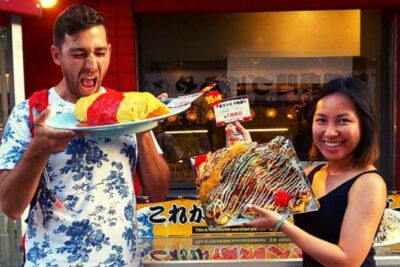 ★ 5.0Osaka Food Tour: 13 Dishes at 5 Local EateriesFrom $732,149 reviews
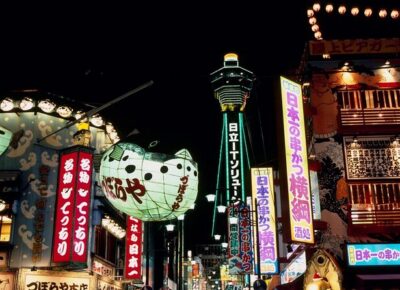 ★ 5.0Hungry Osaka Street Food Tour:15 Tastings & 3 Drinks with a LocalFrom $731,727 reviews
 ★ 5.0Deep Backstreet Osaka Tours (Option to add Dinner)From $531,290 reviews
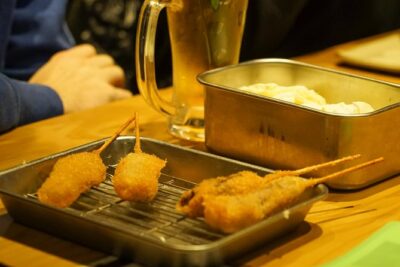 ★ 5.0Osaka Local Foodie Walking Tour in Dotonbori and ShinsekaiFrom $111985 reviews
 ★ 4.9Deep Backstreets Walking Tour with Dinner OptionFrom $40902 reviews
 ★ 4.9Hungry Osaka Street Food Tour: 15 Dishes & 3 DrinksFrom $79694 reviews
 ★ 5.0Kuromon Market Food Walking Tour in Osaka (6 stops, 6 tastes)From $50550 reviews
Browse the lists this tour appears in