
Reviewed · OSAKA FOOD & TASTING TOURS
Deep Dive: Osaka Food Markets from Local to Luxurious!
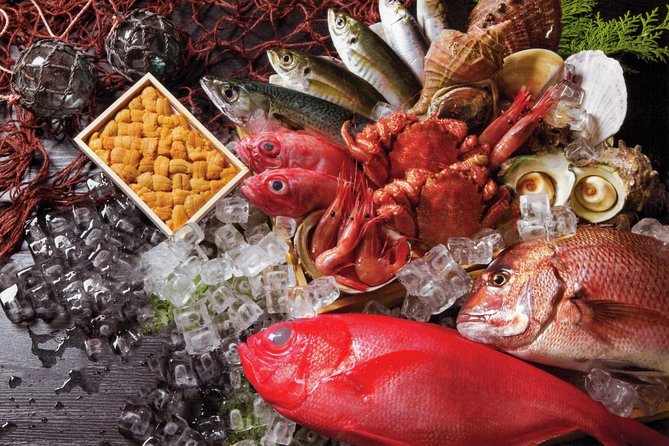
Osaka feeds you with confidence. This guided crawl strings together some of the city’s best food-shopping zones, so you learn what to buy, where to go, and how to act like you belong in markets like a local. You’ll move from department-store polish to wet-market reality, with stops that show how Osaka thinks about food.
Food markets in Osaka make a lot more sense after you’ve walked them with a guide.
I especially love the range of market types: a luxurious depachika floor, a local wet market, and then the big-name Kuromon Ichiba scene. I also like that the tour is built to help you order and shop independently afterward, not just look around. That practical confidence is what turns markets from stressful to fun.
One thing to consider: this isn’t a prepaid, full “eat-every-stop” tasting experience. Samples and snacks are not included, so the value depends on how much you want to buy and eat along the way.
In This Review
- Key highlights you’ll feel on this tour
- Why Osaka food markets click faster than you expect
- Getting started: pickup, pace, and how the tour works
- Takashimaya Osaka depachika: luxury food shopping with real gift power
- Pulala Tenma wet market: see ingredients come together
- Tenjinbashi-suji: the longest arcade and an Osaka supermarket lesson
- Osaka Tsuruhashi Ichiba and Korea Town: more than food stops
- Kuromon Ichiba Market: top sights, higher prices, strong quality
- Doguyasuji and the knife-and-ceramics moment in Sennichimae
- The Namba/Dotonbori finish: your guided landing spot
- Price and what you’ll likely spend on-site
- Guides that turn a market walk into real confidence
- When this tour is the right fit
- Should you book this Osaka food market tour?
- FAQ
- How long is the Osaka food markets tour?
- What does the tour cost?
- Is pickup available, and where do we meet?
- Is this tour private?
- Are food samples or snacks included?
- Do I need to pay for admission at the stops?
- Is transportation included?
- What areas will we visit during the tour?
Key highlights you’ll feel on this tour
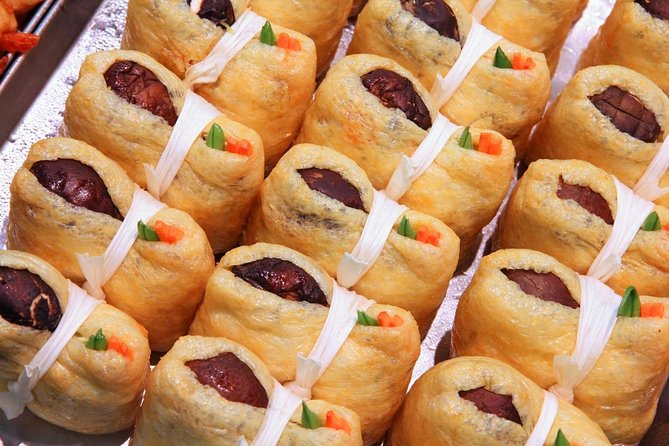
- Depachika comfort at Takashimaya Osaka: a top-tier underground food hall where gifts, ingredients, and treats look curated
- Pulala Tenma wet market without tourist crowds: a closer look at seafood, meats, vegetables, and how stalls work
- Tenjinbashi-suji arcade and local shopping habits: a long covered street plus time to learn the Osaka “supermarket rhythm”
- Korea Town energy at Osaka Tsuruhashi Ichiba: not just food, but shopping culture that reflects cross-border influence
- Kuromon Ichiba Market with reality checks: great sights and quality, but prices can be higher
- Doguyasuji kitchen street: knives, ceramics, and kitchen gear you’ll actually use at home
Come hungry: more eating your way through Osaka

Why Osaka food markets click faster than you expect
Osaka’s food culture isn’t only about restaurants. It’s about the stuff you pick up before dinner: ingredients, packaged snacks, seasonal specialties, and gifts that look like they belong in a tasting room. When you see the city through depachika basements and market aisles, you start understanding why Osaka loves shopping with purpose.
This tour connects those dots for you. You’re not bouncing randomly between famous names—you’re moving through different market “modes,” from everyday local commerce to big-ticket spectacle. The guide context helps you read what’s on display and what each place is best for.
Getting started: pickup, pace, and how the tour works
The experience runs about 4 hours, and you can choose a morning or afternoon option. It’s private, meaning it’s just your group with a guide, not a mixed crowd.
Pickup is offered, but your meeting point is clearly set at McDonald’s in front of Temma Station (Temma area). The tour ends near Ebisu Bridge by Dotonbori, so you’re finishing right where Osaka nights really start.
Plan for moderate walking and bring stamina. This isn’t a “sit down and snack” plan. One group experience described it as requiring a bit of endurance, and Osaka heat can make that feel bigger than it sounds on paper.
Takashimaya Osaka depachika: luxury food shopping with real gift power
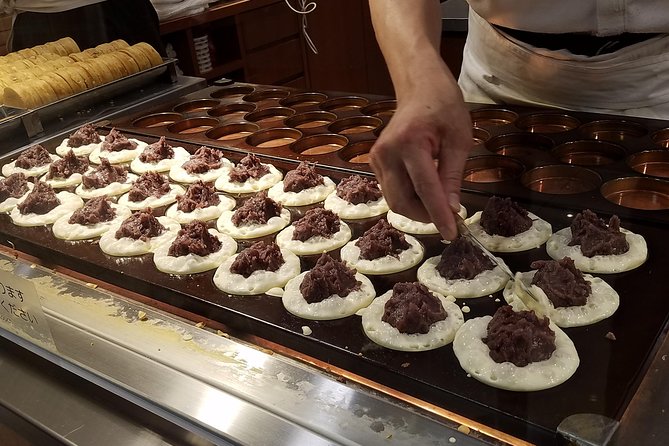
Your first stop is Takashimaya Osaka Store, specifically its depachika underground food hall. If you’ve never been in a Japanese depachika, think of it as an ingredient-and-snack showroom—organized, clean, and often designed for gifting. You’ll see everything from raw ingredients to prepared items in Japanese and Western styles.
This stop matters because it trains your eye. You’ll start spotting differences between:
- items meant for immediate eating vs. take-home gifts
- how ingredients are displayed and packaged
- how “value” changes when something is premium but also beautiful
What I like here is the contrast. After a place like this, the wet market later feels even more honest—and you’ll appreciate why both have their own role in Osaka food culture.

Pulala Tenma wet market: see ingredients come together
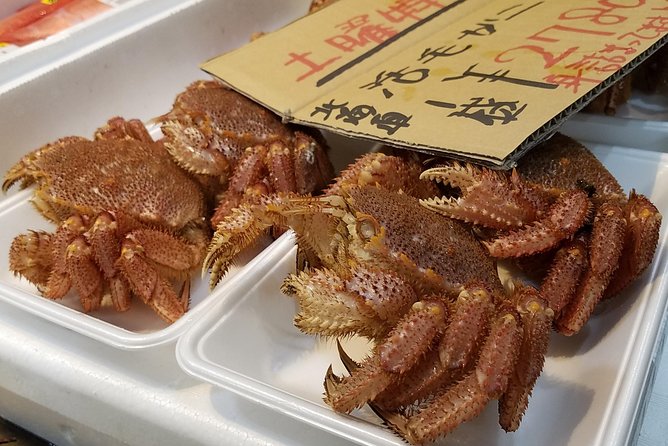
Next is Pulala Tenma, described as a local wet market up close and without tourist crowds. This is where the tour’s ingredient education really starts to feel real. You’ll find local seafood, meats, vegetables, and the surrounding rhythm of how stalls work.
This is a great stop if you’ve ever wondered why Japanese cooking tastes so focused. Markets like this are where you learn that flavor begins with selection. The guide’s explanations help you connect what you’re seeing—cuts, freshness, and ingredient types—to the kinds of dishes Osaka people build from them.
It’s also the stop that tends to stick in your memory later. You’ll start thinking differently in grocery stores after you’ve seen where choices come from.
Tenjinbashi-suji: the longest arcade and an Osaka supermarket lesson
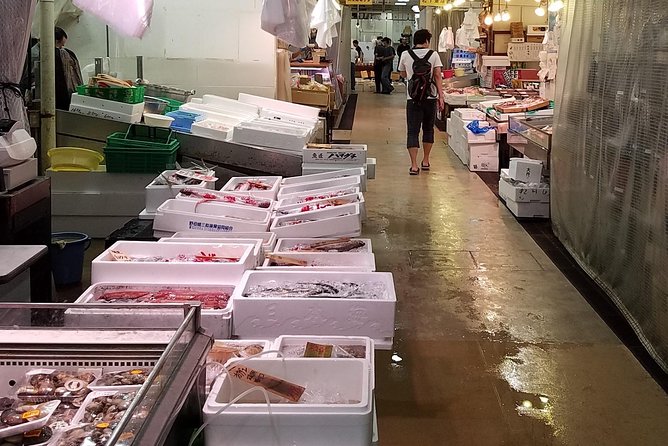
Then you’ll head to Tenjinbashi-suji Shopping Street, known as the longest covered shopping street in Japan. That matters because covered streets shape how people shop: you get a consistent flow, protection from weather, and a street that functions like a neighborhood shopping corridor.
From there, the tour includes a pop into a very Osaka supermarket, with time for guidance on local shopping habits. This is the kind of practical knowledge that makes a trip feel less like sightseeing and more like learning. You’ll get a better sense of what locals buy for everyday meals and how they approach packaging, brands, and staples.
This is also a good mental checkpoint. By now, you’ve seen luxury presentation, wet-market selection, and street-level shopping. The supermarket stop stitches it together.
Osaka Tsuruhashi Ichiba and Korea Town: more than food stops
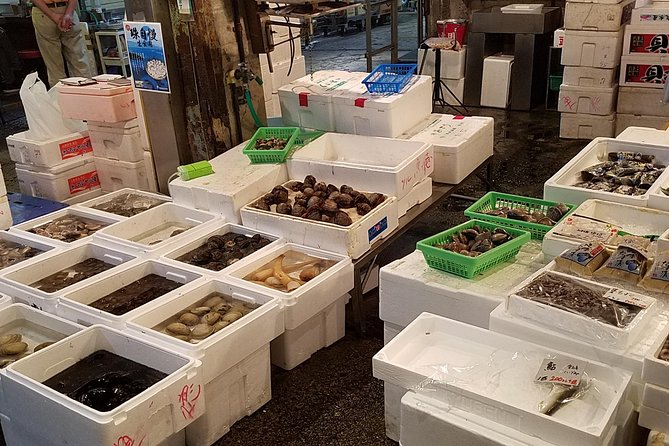
At Osaka Tsuruhashi Ichiba, you’re in Korea Town territory. This stop is valuable because it expands your idea of “Osaka food culture.” It’s not only Japanese flavors—it’s also how Osaka connects with neighboring influences.
You’ll see that the area isn’t just food stalls. Clothing and other goods show up alongside snacks, giving you a more complete picture of what people do in this neighborhood beyond eating. One group experience highlighted that this felt like a part of Osaka you likely wouldn’t find on your own.
If you like taking home a mix—something edible plus something culturally interesting—this is a strong place to browse. You’ll likely find snack-sized purchases that make sense for travel days too.
Kuromon Ichiba Market: top sights, higher prices, strong quality
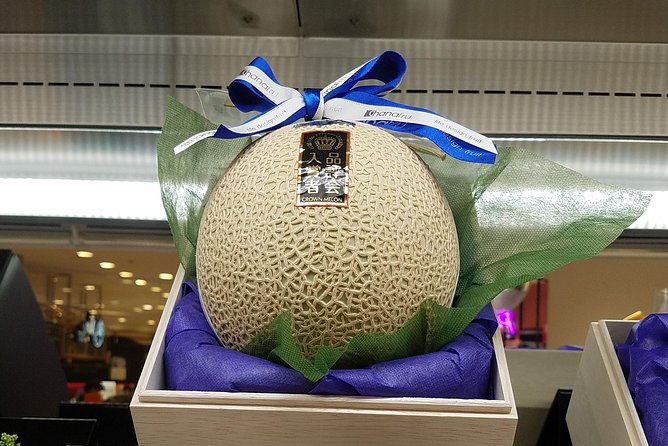
No Osaka food market route feels complete without Kuromon Market. It’s an open-air market that’s become a darling of the visitor scene, and that comes with tradeoffs.
Here’s the reality: prices can be higher than you’ll see in more local-style markets. But the sights are impressive, and quality is described as strong. This stop is where you go to be wowed—and to learn what “market-famous” really looks like.
I recommend treating Kuromon as both:
- a quality benchmark (how good can seafood and produce look when it’s at its best?)
- a shopping experience (if you want a sure bet, this is a reasonable place)
Doguyasuji and the knife-and-ceramics moment in Sennichimae
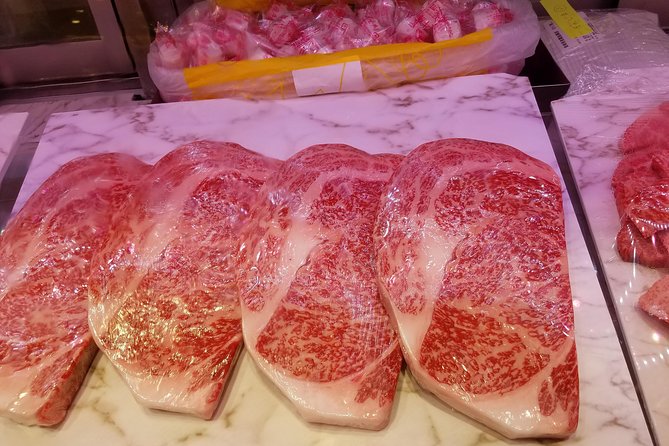
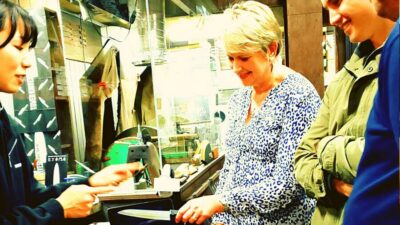
After markets and food streets, you switch gears to Sennichimae Doguyasuji Shopping Street, where kitchenware takes center stage. If you’re the type who likes useful souvenirs, this is where the tour pays off.
Expect kitchenware galore: Japanese cooking knives, Japanese ceramics, serving dishes, and even wax sushi models that show up in shop displays. You may also spot items like tea cups and lacquer chopsticks—small, giftable pieces that are easy to justify because they’re actually functional.
This is a clever ending stop for food lovers. It turns “I ate well” into “I brought a tool home that will help me cook well.”
Some tours also find a natural finish with a time for a drink in a modern, air-conditioned setting, which is a nice reset when the day’s walking and heat stack up.
The Namba/Dotonbori finish: your guided landing spot
You’ll end with Minami (Namba) exploration if there’s time, including top sights around Dotonbori. Since the tour concludes near Ebisu Bridge, it’s an easy springboard into dinner plans—especially if you want to keep the Osaka energy going on your own.
Think of this as a landing zone. The tour helps you understand where food culture lives; now you can use that knowledge when you pick what to eat next.
Price and what you’ll likely spend on-site
The tour costs $91 per person for about 4 hours. That price includes a native or close-to-your-language guide and admission ticket access for stops listed as free. It does not include transportation while on tour (listed as 330 yen per adult, and some guidance suggests planning for around 400 yen for the entire tour), and you can sometimes cover transport with a JR Pass.
Most importantly, the tour’s “not included” list matters for expectations:
- Samples/food items/refreshments/souvenirs aren’t included
- All snacks are your responsibility to purchase
This is where the value question comes in. If you want a pre-arranged tasting menu with food handed to you, this may feel pricey. But if you enjoy market shopping and want guidance on what to buy (and how to order confidently), the structure makes sense. You’re paying for the route, the context, and the ability to shop like you know the game.
Tip: set a budget for snacks even if you’re not planning heavy eating. Market hunger hits fast, and it’s easy to grab the right thing once you understand what you’re looking at.
Guides that turn a market walk into real confidence
The biggest strength here isn’t just where you go—it’s how the guide frames what you see. Multiple named guides in the experience style are praised for being engaging, answering questions, and mixing practical shopping help with cultural explanations.
For example, guides like Ferdinand, Kevin, Thomas, Damian, Lito, Alejandro, and Oshi are described as giving detailed explanations and helpful recommendations, with some also tailoring the pace or interests for kids. That matters because markets can be overwhelming. A good guide helps you decide what to try, what to skip, and how to handle the language gap when you’re buying.
If language is a worry, you’ve got a built-in advantage: the tour includes a native (or close to) speaker in your chosen language.
When this tour is the right fit
This experience is a smart choice if you:
- like learning through shopping, not just sightseeing
- want a practical way to navigate Kuromon, depachika, wet markets, and neighborhood food zones
- plan to buy souvenirs that are edible or actually usable (knives and ceramics are a strong option)
- want a guide to help with ordering confidence and cultural context
It’s less ideal if you:
- expect the price to cover multiple tastings and pre-included food
- prefer mostly seated sightseeing with minimal walking
- hate markets and shopping crowds entirely
Should you book this Osaka food market tour?
If your goal is to leave Osaka understanding food markets, this is a very good booking. The route gives you a clean mix of luxury depachika polish, local wet-market selection, Korea Town context, and Kuromon’s big-market energy, then wraps up with kitchen-stuff shopping you’ll use later.
I’d only skip it if you want a guaranteed, fully paid tasting itinerary. Because snacks and samples aren’t included, your experience hinges on your willingness to buy what looks good—and that’s exactly where the guide’s recommendations become worth the price.
If you’re on the fence, here’s my quick decision rule:
Book it if you want to shop like a local. Look elsewhere if you mainly want someone to feed you.
FAQ
How long is the Osaka food markets tour?
The tour lasts about 4 hours.
What does the tour cost?
The price is $91.00 per person.
Is pickup available, and where do we meet?
Pickup is offered. The meeting point is McDonald’s in front of Temma Station, and the tour ends at Ebisu Bridge by Dotonbori.
Is this tour private?
Yes. It’s a private tour/activity, so only your group participates.
Are food samples or snacks included?
No. Samples, food items, refreshments, and souvenirs are not included, and snacks are the responsibility of the guest to purchase.
Do I need to pay for admission at the stops?
The stops listed show admission ticket free, and the tour includes the admission tickets for those locations.
Is transportation included?
No. Transportation while on tour is not included (listed as 330 yen per adult), and some guidance suggests planning for around 400 yen total. A JR Pass may cover it.
What areas will we visit during the tour?
You’ll visit Takashimaya Osaka (depachika), Pulala Tenma, Tenjinbashi-suji, Osaka Tsuruhashi Ichiba (Korea Town), Kuromon Market, Sennichimae Doguyasuji, and you may also explore the Namba/Dotonbori area if time allows.
More Tour Reviews in Osaka
- Osaka Go Karting Tour with Funny Costume★ 5.0 · 2,658 reviews
- Osaka Castle: Museum and Tower Entry Ticket★ 4.5 · 2,380 reviews
- Osaka: Shinsekai Food Tour with 13-15 Dishes at 5 Eateries★ 4.8 · 2,204 reviews
- Osaka Food Tour: 13 Dishes at 5 Local Eateries★ 5.0 · 2,149 reviews
- Hungry Osaka Street Food Tour:15 Tastings & 3 Drinks with a Local★ 5.0 · 1,727 reviews
The Kuidaore List: Eat More of Osaka
- Osaka: Shinsekai Food Tour with 13-15 Dishes at 5 Eateries★ 4.8 · 2,204 reviews
- Osaka Food Tour: 13 Dishes at 5 Local Eateries★ 5.0 · 2,149 reviews
- Hungry Osaka Street Food Tour:15 Tastings & 3 Drinks with a Local★ 5.0 · 1,727 reviews
- Deep Backstreet Osaka Tours (Option to add Dinner)★ 5.0 · 1,290 reviews
- Osaka Local Foodie Walking Tour in Dotonbori and Shinsekai★ 5.0 · 985 reviews
The Newest Osaka Write-Ups
- Private Photoshoot in Osaka with a Professional Photographer
★ 5.0 · 3 reviews - Osaka Early Morning Osaka Castle Tour Avoid Crowds
★ 5.0 · 3 reviews - Nara Private Tour with Pick and Drop and English Speaking Driver
★ 3.5 · 3 reviews - Osaka: Modern Vegetarian Sushi Cooking Class
★ 5.0 · 3 reviews - Nara Day Trip from Osaka with a Licensed Guide
★ 5.0 · 3 reviews
Osaka Food & Tasting Tours, compared.
 ★ 4.8Shinsekai Food Tour with 13-15 Dishes at 5 EateriesFrom $532,204 reviews
 ★ 5.0Osaka Food Tour: 13 Dishes at 5 Local EateriesFrom $732,149 reviews
 ★ 5.0Hungry Osaka Street Food Tour:15 Tastings & 3 Drinks with a LocalFrom $731,727 reviews
 ★ 5.0Deep Backstreet Osaka Tours (Option to add Dinner)From $531,290 reviews
 ★ 5.0Osaka Local Foodie Walking Tour in Dotonbori and ShinsekaiFrom $111985 reviews
 ★ 4.9Deep Backstreets Walking Tour with Dinner OptionFrom $40902 reviews
 ★ 4.9Hungry Osaka Street Food Tour: 15 Dishes & 3 DrinksFrom $79694 reviews
 ★ 5.0Kuromon Market Food Walking Tour in Osaka (6 stops, 6 tastes)From $50550 reviews
Browse the lists this tour appears in