
Reviewed · AMANOHASHIDATE & INE BAY DAY TRIPS
Amanohashidate Ine Funaya Miyama Village No Sato Tour from Osaka
Morning has a purpose here. This full-day route strings together two of Kyoto-area’s most scenic stops plus temple and rural architecture, all with a guide who can speak English, Japanese, Chinese, or Korean. I especially like how the day balances water views with walking, instead of one long bus stare-fest; and I also like that admission is free at each listed sightseeing stop.
The standouts are the two “signature” places: Ine Funaya (Fuga) with its boathouses on the coast, and Amanohashidate with its pine-lined sandbar and that famous upside-down viewing tradition. One drawback to plan for: this is a long day (about 9–10 hours total, including travel) and the schedule is tight, so you’ll need to stay prompt and accept less time at each place than you might want.
In This Review
- Key Highlights You’ll Feel Immediately
- A One-Day Circuit: Why Ine Funaya and Amanohashidate Work Together
- Morning Logistics From Osaka: How the 7:20 Start Sets the Tone
- Stop 1: Ine Funaya (Fuga) and the Coastal Boathouses Effect
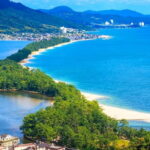
- Stop 2: Amanohashidate’s Pine Sandbar and the Upside-Down Tradition
- Chionji Temple: The Wisdom-and-Success Stop at the South End
- Kayabuki-no-sato Kitamura: Thatched Roof Houses and Rural Scale
- Price and Value: Is $89.99 Fair for This Amount of Time?
- Pace, Timing, and the Lunch Break You’ll Want to Plan For
- What to Do When the Bus Feels Long
- Who This Tour Suits Best (and Who Might Feel Crowded)
- Should You Book This Osaka Day Trip?
- FAQ
- Is admission included for the main sightseeing stops?
- How long is the tour from Osaka?
- What time and where do I meet for the tour?
- Where does the tour end?
- What stops are included in the day?
- Does the guide speak English?
- Is there lunch during the tour?
- What should I do if traffic delays happen?
- What happens if the weather is poor?
- Are there age-related requirements for children or seniors?
- Is this a small group?
Key Highlights You’ll Feel Immediately
- Ine Funaya’s funaya boathouses give you that Venice-of-Japan feel along the shoreline
- Amanohashidate’s 3.6 km pine sandbar lets you walk and take in wide views at a relaxed pace
- Chionji Temple at the south end connects the day to a wisdom-and-success message tied to Monju Bosatsu
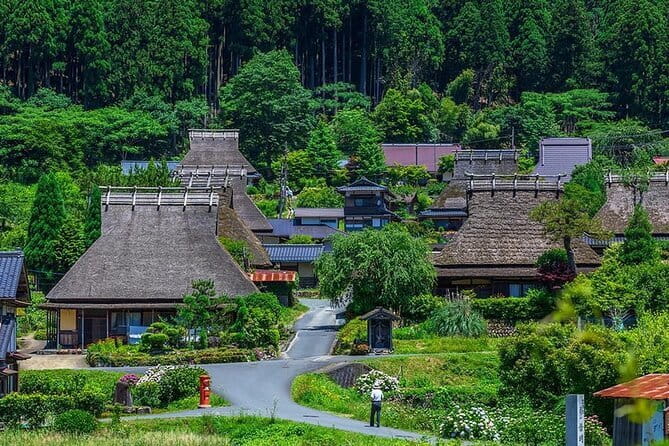
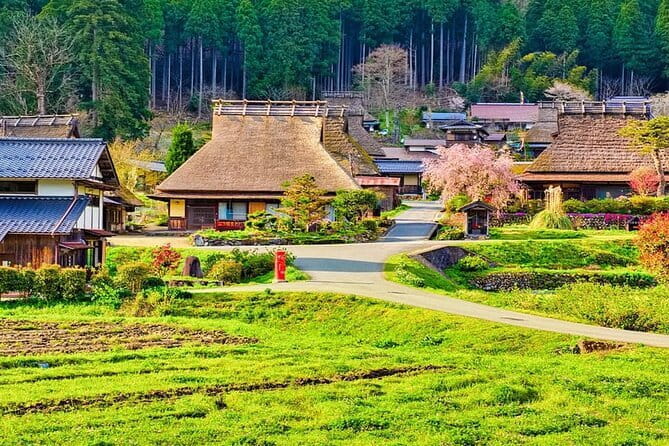
- Kayabuki-no-sato Kitamura shows about 50 preserved thatched-roof homes, the kind you’d otherwise only see in photos
- Free admission tickets are listed for all main stops on the itinerary
- Multilingual guide support helps you get oriented quickly for self-guided time
North to the sandbar and the boathouses of Ine
A One-Day Circuit: Why Ine Funaya and Amanohashidate Work Together
If you like scenery that changes the moment the light shifts, this day has that built in. You start along the coastal rhythm of Ine Fishing Village, then move to a pine-covered natural sandbar at Amanohashidate, and the day ends in a village scene that feels like a step back in time.
I like the logic of the route: it groups sights that are visually different but thematically connected by place. Coastal Japan in the morning. A famous viewpoint with a built-in tradition next. Then a temple stop that gives the day meaning, and finally thatched houses for texture, scale, and atmosphere.
The pacing is also designed for real life. You get short, focused blocks at each stop (40 minutes here, 1.5 hours there), plus travel time that keeps everything possible in one outing. It’s not a slow travel fantasy day, but it is a high-contrast sampler that still feels coherent.
Morning Logistics From Osaka: How the 7:20 Start Sets the Tone
Meet time is 7:20 am at 1-chōme-3 Nipponbashi Parking in Osaka. If you’re the type who hates rushing, treat this like a planned early wake-up, not a surprise. The tour is a carpooling format, and being late is explicitly risky: you’re expected to arrive on time, and late arrivals can mean you miss the plan with no refund.
The group size cap is up to 46 travelers, so you’ll usually have enough people to make it social but not so many that you can’t find your place. This matters because most of your time at each attraction is sightseeing on the ground, not everything happening in a single packed viewing platform.
Also, the day includes travel time in the total duration, so the 9–10 hours doesn’t mean 9–10 hours at the sights. You’ll be on the move for a big chunk, which is often the trade-off for fitting four major areas into one go.
Stop 1: Ine Funaya (Fuga) and the Coastal Boathouses Effect
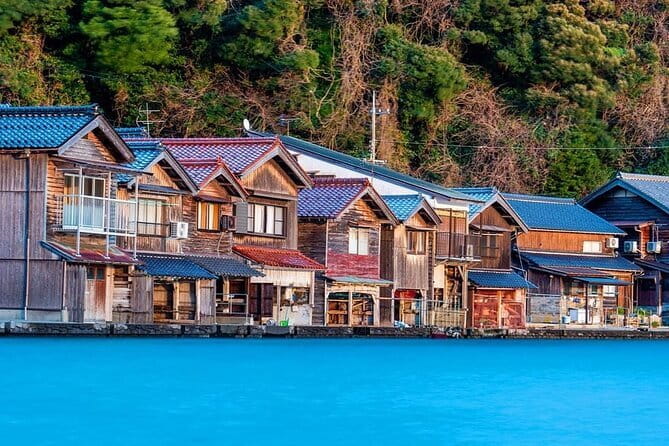
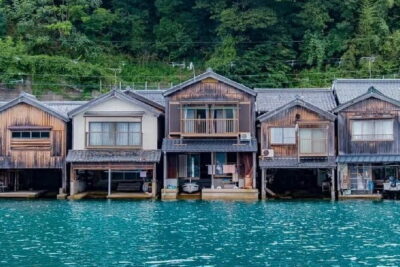
Your first sightseeing block is at Ine Funaya, Fuga, also known as Ine Fishing Village—often nicknamed the Venice of Japan. The core reason it’s memorable is simple: you’re looking at traditional wooden boathouses (funaya) built right along the coastline. That changes everything about the feeling of the place; the views aren’t just scenic, they’re structured by the fishing village itself.
You’ll have about 40 minutes here, with free admission listed for the stop. That’s enough time to walk the shoreline areas, pause for photos, and get a sense of how the buildings sit against the water. The day’s overview also notes you may have options to walk or cycle along the water’s edge, which is a nice fit if you want to get your legs moving early without overcommitting.
A practical consideration: 40 minutes sounds short until you realize it’s timed to keep the entire route on track. If you’re the kind of person who likes to linger at every angle, I’d focus on choosing two or three photo points early, then enjoy the rest as slow stroll time.


Stop 2: Amanohashidate’s Pine Sandbar and the Upside-Down Tradition

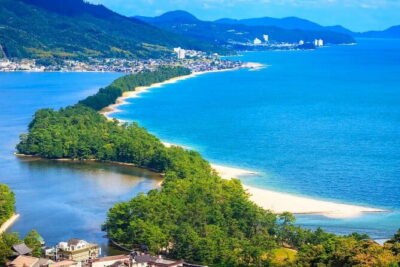
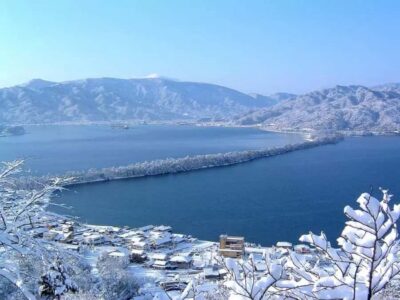
After Ine, the day swings to Amanohashidate—one of Japan’s top scenic spots. This is the one most people come for, and it’s easy to see why once you understand what you’re looking at: a 3.6-kilometer-long natural sandbar lined with over 8,000 pine trees.
You get about 1 hour 30 minutes here, again with free admission listed. This stop works well because you have time to do it your way. The overview notes the exploration is self-guided, meaning you can walk toward viewpoints that match your energy level.
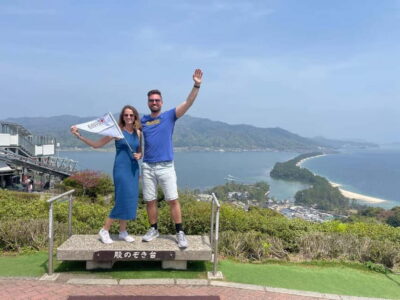
The special attraction is the tradition of viewing the sandbar upside down. The tour includes it as something you don’t want to miss, so if you see people setting up for it, that’s your cue. Even if you’re not chasing the exact method, it’s worth seeking out the spot where the viewpoint is possible—because it turns a classic view into a funny, memorable moment.
I also like that Amanohashidate is a natural feature, so you’re not stuck inside a schedule of exhibits. You’re outdoors, changing with wind and light. Bring patience for crowds at popular angles, but remember: you’re still on a long sandbar, so moving a little changes the feel fast.
Chionji Temple: The Wisdom-and-Success Stop at the South End
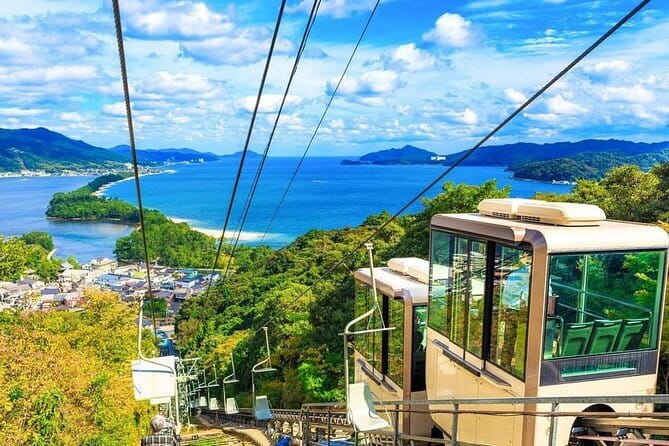
From Amanohashidate, you head to Chionji-ji (Chion-ji Temple) at the southern end. This stop is shorter—about 30 minutes with free admission listed—but it’s a great reset after a long walking viewpoint.
Chionji is known for its connection to academic success. The tour theme ties it to prayer for wisdom and success, and the temple dedication is to Monju Bosatsu, the Bodhisattva of wisdom. If you’ve ever felt like Japan’s big sightseeing days need one moment of stillness, this is that break: you’re not chasing a photo, you’re stepping into a quiet ritual space where you can slow down and breathe.
A realistic note: 30 minutes is plenty to find the key prayer areas and walk through without feeling rushed. But if you’re aiming for a deep reading of temple details, you may wish you had more time. The value here is that the temple gives the day a cultural spine rather than turning it into only scenery chasing.
Kayabuki-no-sato Kitamura: Thatched Roof Houses and Rural Scale
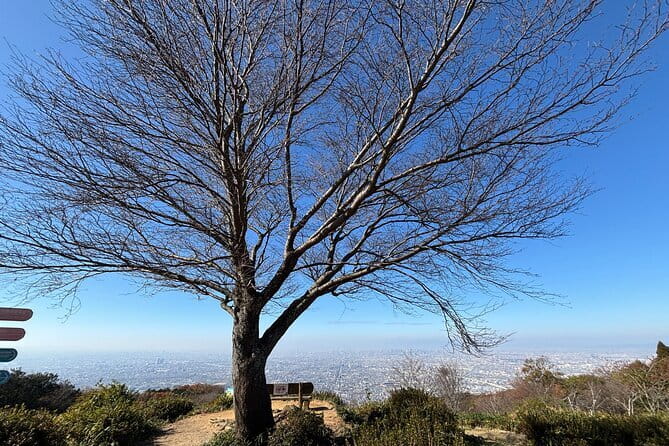
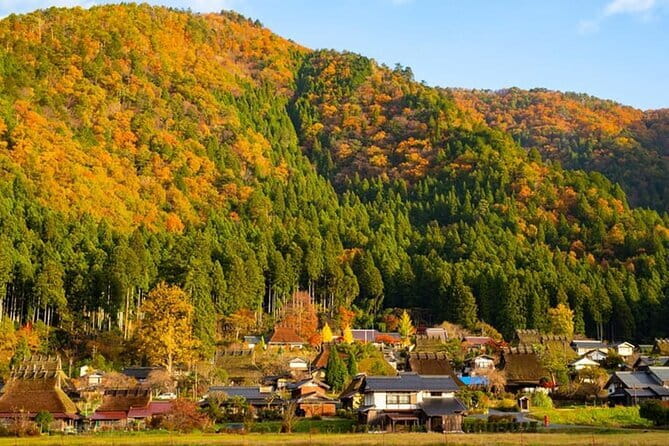
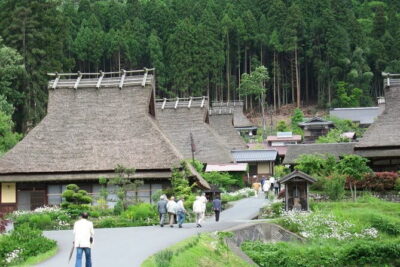
The final sightseeing stop is Miyama Kayabuki no Sato, Kayabuki-no-sato Kitamura. This is the rural architecture payoff, with about 50 preserved thatched-roof homes. If you like the visual difference between old buildings and modern streets, this is a satisfying contrast.
You get around 40 minutes here, again with free admission listed. The overview emphasizes the thatched roofs and the preserved homes, so expect a walking-style visit where the details are the point: roof shapes, the spacing between houses, and the way the village layout feels like a small world.
What makes it especially worth the effort in a one-day Osaka tour is that you’re seeing a living-looking version of traditional Japan’s rural character. In many places, you only get a single preserved building. Here, you get a group of homes that lets you understand scale.
The main drawback is the same one-day timing problem: 40 minutes means you’ll need to choose how you experience it. If you want photos plus a relaxed stroll, you’ll do fine. If you want to read every sign closely, you might feel compressed.
Price and Value: Is $89.99 Fair for This Amount of Time?

At $89.99 per person, this day trip isn’t cheap in a casual sense, but it’s also not priced like a boutique private tour. The value comes from the structure: multiple major areas packed into a single outing, with a guide who can communicate in four languages and with free admission at each listed stop.
Here’s the math that matters for you: when you string together coastal village views, a famous sandbar, a temple, and a preserved village, you’re paying for transportation plus coordination. Without a tour, you’d be spending a lot of time planning transfers and timing your day so you don’t lose half the day getting around.
So the question isn’t just whether $89.99 is low or high. It’s whether you want to trade your planning time for guided routing and a schedule that hits the big four. If you prefer seeing maximum highlights with minimal stress, it tends to feel like fair value.
Pace, Timing, and the Lunch Break You’ll Want to Plan For
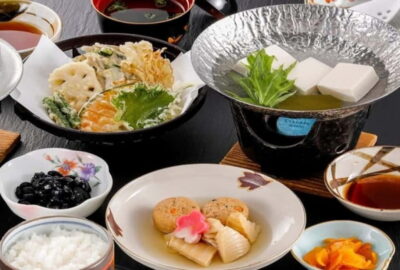
The day is built to include lunch featuring fresh local seafood, described as part of the experience. Since the details of what’s included aren’t spelled out here, I’d treat lunch as part of the day’s plan and make sure you’re ready to spend a little time eating without expecting a long, sit-down meal window.
Timing matters because your sightseeing blocks are short and evenly distributed. If lunch runs long on a day you’re also trying to hit viewpoint timing (like Amanohashidate), you can feel the pressure. My advice: keep lunch efficient, then use your 1-hour-30-minute slot at the sandbar for the time you care about most.
Also, weather matters. The overall experience notes it requires good weather, and if it’s canceled due to poor weather, you’ll be offered a different date or a full refund. If Amanohashidate is a top dream for you, you’ll be glad the operator plans around conditions rather than forcing a bad-visibility experience.
What to Do When the Bus Feels Long
One thing this tour makes clear is that you’re spending real time traveling, and traffic jams can happen. The tour explicitly warns that if you run into traffic delays, the company won’t cover subsequent costs caused by those delays. It also says the guide can adjust the order of attractions based on weather or traffic with your consent, without reducing the number of stops.
So your mindset should be: flexible, not frantic. If the order shifts slightly, it doesn’t mean something is broken; it means the day is being managed to protect the number of highlights.
When I’m on a long day like this, I focus on what I can control:
- bring something simple for the ride (water, a light snack if allowed, and something to keep you comfortable)
- keep your camera accessible so you can act quickly when a viewpoint opens up
- use each stop like a mini-mission: one walk, one viewpoint, one photo zone, then move on
Who This Tour Suits Best (and Who Might Feel Crowded)
This works especially well if you’re doing an Osaka base trip and you want a Kyoto-area day without plotting trains, transfers, and timing from scratch. It also suits you if you like variety: coastal village, famous sandbar, temple pause, and a traditional thatched-house village.
It may not suit you as well if you hate tight schedules. The stops are short by design, so if you want 2–3 hours at each place, you’ll feel the compression. It also isn’t a casual day if you’re prone to being late; the tour emphasizes punctuality and mentions no refund if you’re late and you’re responsible for what happens after lateness.
One more factor: seniors aged 70+ should present a medical certificate before participating. And children aged 0–2 are free as long as they don’t occupy separate seats. If you fit either category, plan ahead.
Should You Book This Osaka Day Trip?
Book it if you want a one-day, high-signal route that covers four top visual experiences with free admission listed at each stop and multilingual guide support. I think it’s a smart pick for first-time visitors who want Ine Funaya’s boathouse charm, Amanohashidate’s sandbar scale, Chionji’s wisdom-and-success prayer theme, and Kayabuki-no-sato’s thatched-roof village feel in a single day.
Skip it (or consider an alternative) if you need lots of slow time in each place. This trip is built for momentum, not wandering. If you’re picky about spending an extra hour at one sight, you’ll likely wish you had more breathing room.
FAQ
Is admission included for the main sightseeing stops?
The itinerary lists admission tickets as free for each of the four named stops: Ine Funaya, Amanohashidate, Chionji-ji Temple, and Kayabuki-no-sato Kitamura.
How long is the tour from Osaka?
The total duration is about 9 to 10 hours, including travel time.
What time and where do I meet for the tour?
The start time is 7:20 am, meeting at 1-chōme-3 Nipponbashi Parking in Osaka.
Where does the tour end?
The tour ends with disbanding in the Shinsaibashi and Dotonbori areas.
What stops are included in the day?
You’ll visit Ine Funaya (Fuga), Amanohashidate, Chionji-ji Temple (Chion-ji), and Miyama Kayabuki no Sato (Kayabuki-no-sato Kitamura).
Does the guide speak English?
Yes. The guide is listed as speaking Chinese, Japanese, English, and Korean.
Is there lunch during the tour?
The tour overview says you’ll enjoy a lunch of fresh local seafood as part of the day.
What should I do if traffic delays happen?
The tour notes that delays due to traffic jams can occur and the company won’t bear costs caused by those delays. The guide may also adjust the order based on real conditions, with guest consent.
What happens if the weather is poor?
This experience requires good weather. If it’s canceled due to poor weather, you’ll be offered a different date or a full refund.
Are there age-related requirements for children or seniors?
Children aged 0–2 are free if they don’t occupy separate seats. Seniors aged 70+ should present a medical certificate before participating.
Is this a small group?
The tour has a maximum of 46 travelers.
More Tour Reviews in Osaka
- Osaka Go Karting Tour with Funny Costume★ 5.0 · 2,658 reviews
- Osaka Castle: Museum and Tower Entry Ticket★ 4.5 · 2,380 reviews
- Osaka: Shinsekai Food Tour with 13-15 Dishes at 5 Eateries★ 4.8 · 2,204 reviews
- Osaka Food Tour: 13 Dishes at 5 Local Eateries★ 5.0 · 2,149 reviews
- Hungry Osaka Street Food Tour:15 Tastings & 3 Drinks with a Local★ 5.0 · 1,727 reviews
The Sandbar and the Sea
- Osaka Day Tour: Amanohashidate & Ine Bay★ 5.0 · 280 reviews
- Osaka/Kyoto: Amanohashidate & Miyama Tour with Boat & Lunch★ 4.6 · 207 reviews
- Amanohashidate & Ine Funaya Sightseeing Full Day Trip from Kyoto★ 4.5 · 62 reviews
- Amanohashidate & Ine Boathouse Full-Day Tour from Kyoto or Osaka★ 4.5 · 48 reviews
- From Osaka/Kyoto: Amanohashidate Day Tour【Including tickets】★ 3.7 · 20 reviews
The Newest Osaka Write-Ups
- Private Photoshoot in Osaka with a Professional Photographer
★ 5.0 · 3 reviews - Osaka Early Morning Osaka Castle Tour Avoid Crowds
★ 5.0 · 3 reviews - Nara Private Tour with Pick and Drop and English Speaking Driver
★ 3.5 · 3 reviews - Osaka: Modern Vegetarian Sushi Cooking Class
★ 5.0 · 3 reviews - Nara Day Trip from Osaka with a Licensed Guide
★ 5.0 · 3 reviews
Amanohashidate & Ine Bay Day Trips, compared.
 ★ 5.0Osaka Day Tour: Amanohashidate & Ine BayFrom $84280 reviews
 ★ 4.6Osaka/Kyoto: Amanohashidate & Miyama Tour with Boat & LunchFrom $71207 reviews
 ★ 4.5Amanohashidate & Ine Funaya Sightseeing Full Day Trip from KyotoFrom $6462 reviews
 ★ 4.5Amanohashidate & Ine Boathouse Full-Day Tour from Kyoto or OsakaFrom $4848 reviews
 ★ 3.7From Osaka/Kyoto: Amanohashidate Day Tour【Including tickets】From $5820 reviews
 ★ 4.5Amanohashidate & Ine Funaya Kyoto coast day trip from Osaka/KyotoFrom $8417 reviews
 ★ 4.1Amanohashidate, Ine Bay, Miyama with lunch Day TripFrom $12810 reviews
 ★ 4.5From Osaka/Kyoto: Amanohashidate & Miyama 1-Day Bus Tour w/ MealFrom $797 reviews
Browse the lists this tour appears in